7 common concrete leveling mistakes to avoid
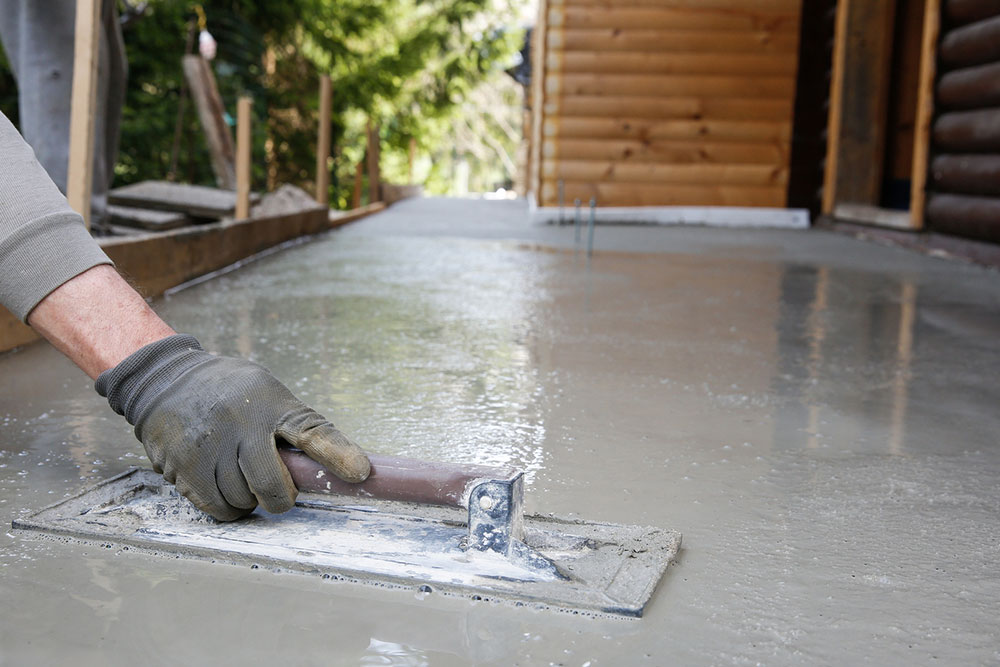
Concrete leveling, also known as concrete lifting, raising, and slabjacking, is an activity that utilizes concrete to correct uneven or sunken surfaces. This process involves lifting, elevating, and straightening concrete to restore it to its original position. It also involves a lot of planning, installing, and maintaining the concrete. Hiring contractors or home repair experts is recommended for the job, as looking for DIY options may lead one to make common mistakes.
Failing to have all the necessary tools
Many concrete leveling mistakes overlap with those in concrete pouring, as these two tasks have several similarities and serve the same purpose. One of the most elementary errors people make during DIY concrete leveling is not having the necessary tools before starting the project. Concrete dries quickly, so if a person has already filled in wet cement within a gap on a concrete surface, they have limited time to smooth out the surface before the cement hardens. The entire project can be compromised if one does not have the required tools to smoothen and level the surface in time. So, one must create a checklist of all the tools needed for the leveling project before starting the task.
Assuming that all concrete is the same
Many assume that all concrete available in the market is the same. In reality, the type of concrete used depends on the intended use. Although all concrete is made of three basic components— water, Portland cement, and aggregates (usually sand as a fine aggregate and gravel as a coarse aggregate)— the proportions of each component can vary depending on the desired results. One can create a concrete mix based on different factors like aesthetic appearance and the uniformity of a given concrete surface.
Not understanding the amount of concrete required
When filling in small inconsistencies, potholes, and gaps, a small amount of filling will suffice. But, for larger leveling tasks, additional materials and large quantities of concrete will be required for the mix. Using too much or too little concrete can cause issues during the leveling process. Excessive use can develop undulations on the surface once the cement dries up while using less material will result in gaps and inadequate filling of the surface. One can consult with a contractor or repair expert to determine the exact amount needed to be used in the mix and the percentage of concrete that should be blended in order to achieve the best results when leveling a concrete surface.
Not contacting an expert
Contractors and other certified experts are qualified to perform the leveling task compared to individuals who are more likely to be inexperienced and incompetent for the job. Concrete leveling can be expensive as the cost of cement and other ingredients required for the mix are usually high and prone to damage. So, it is important that people who carry out the leveling tasks have the necessary knowledge and expertise. While doing the DIY leveling task, one may save some money; a single mistake in the process can lead to bigger problems and may require one to call an expert to correct the mistakes.
Using old cement
Cement undergoes a gradual degradation, which means it loses certain components over time, leading to a deterioration in quality. Portland cement, the most critical component of concrete, is perishable in nature. So, if one uses months-old cement and adds water to the mix, the result will almost certainly be substandard. Old and dry cement may often create hard lumps, which reduces its ability to be malleable or harden effectively. This happens if the dry cement is stored in humid or moist areas. One must use new cement for the concrete leveling task to avoid such issues.
Using self-leveling concrete
Self-leveling concrete can be a tricky material to use. If one does not know how to handle and use it, it can often cause errors in the leveling process. The product is also expensive, meaning that every mistake can result in a significant financial loss. It is best to avoid using such products when opting for a leveling task. Redoing the whole project can also burn a hole in the pocket.
Using incorrect proportions of the ingredients
This is an extension of the previous point about using the right quantity of cement. While the earlier point discussed the amount of cement required for the project, this one focuses on the overall proportion of the ingredients that will form the mix used for the final leveling operation.
The mix needs to be just right for different kinds of surfaces. Floors, driveways, foundations, and load-bearing support require a specific amount of industrial concrete that is neither too thin nor too thick. If the amount is too thin, the surface will crack and collapse. For example, the common slab thickness for sidewalks is 4 inches, and for residential driveways, it is 6 inches or more; for commercial driveways, the mix needs to be 8 to 10 inches thick, while for loading docks or dumpster pads, the mix needs to be 10 to 12 inches thick. Water makes the mix more malleable, so it must be used accordingly.