9 mistakes to avoid when dealing with a flat tire
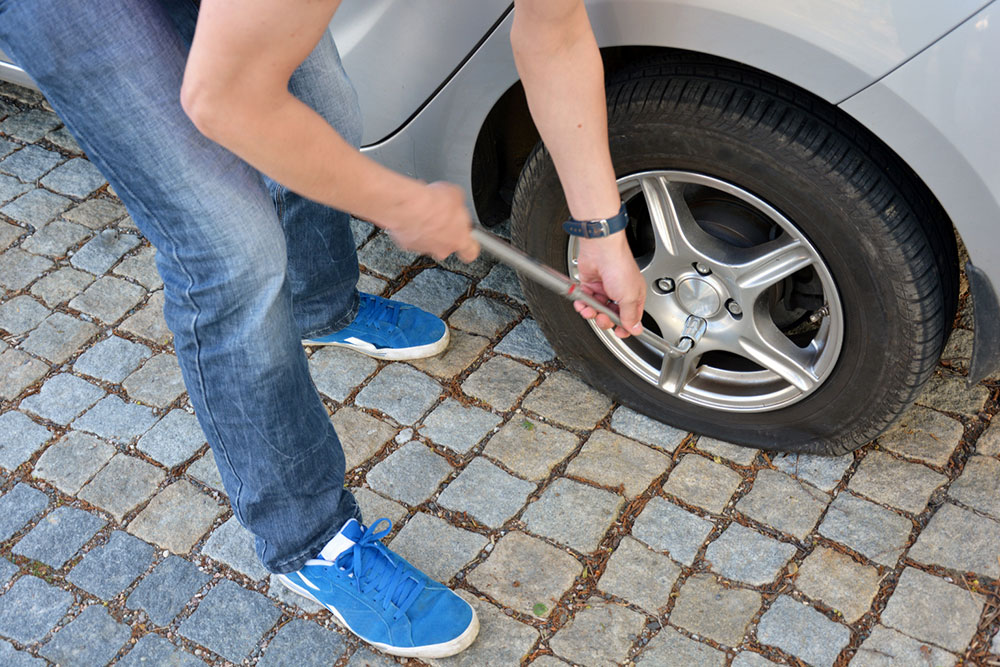
An automobile has several moving parts, with each being vital to the vehicle’s overall performance. For instance, the tires ensure the car smoothly glides from one destination to the next. However, a puncture can result in a flat tire, which must be dealt with or replaced immediately. Most individuals, especially new drivers, are unaware of what to do when dealing with a flat wheel, which can lead to common yet avoidable mistakes.
Leaving the vehicle in neutral
When changing a tire on a car with a manual gearbox, it is important to first turn off the engine and engage the handbrake. Leaving the car in neutral can cause the wheels to move, making it difficult to remove the bolts. To prevent this, shift the car into the first reverse gear. This will lock the other two wheels and keep the car from moving. Those with an automatic transmission should put the car in the “P” or parking gear mode before removing and replacing a flat tire.
Never paying attention to the spare wheel
Generally, a car comes with a spare wheel for emergencies. However, since punctures are uncommon, one may never pay attention to the spare in the back. The lack of maintenance might cause the spare wheel to deteriorate over time. So, if one has a flat tire, the poor quality of the spare wheel may require professional roadside assistance, such as a towing truck, which costs a lot of money. One should regularly check the spare tire and ensure it is properly inflated if they ever need to install it.
Changing it on the road
Experiencing a flat tire while on the road can be a stressful situation. However, it’s important to handle the situation safely. Do not attempt to change the tire while on the road. Instead, take a deep breath and move your vehicle to a safe location off the road. If one is on the freeway, try to pull over as far to the right as possible. Turn on the hazard lights to let others know about a distressed situation. Following this, one can safely pull over and proceed to change the flat tire.
Swapping out a flat on an incline
Swapping tires on an incline is a common mistake one must avoid. Raising a car on a jack on an incline can cause the vehicle to tip over, potentially damaging the car and causing injuries. So, before jacking up the car, finding a safe and stable surface is necessary. Moreover, wheel wedges should be placed behind or in front of the tires to prevent the vehicle from rolling over when replacing the flat tire.
Checking the vehicle on the jack
While jacking the car will help replace the tire, it isn’t the best tool for performing checks underneath the vehicle. To check the bottom of the vehicle, one must use the appropriate tools. Alternatively, if there is any suspected damage, it is recommended to take the vehicle to a nearby service garage, where an expert can help determine the issue and resolve it promptly.
Letting passengers sit in the vehicle
If one needs to change a flat tire and has found an ideal location to proceed with the swap, one should ensure no one is inside the vehicle. Having additional weight inside the car might apply additional pressure on a jack and cause it to fail. As a result, the vehicle may slip off and get damaged or lead to injuries. Ensuring that no one is seated in the car will make the automobile much lighter and ensure a smooth tire-swapping process.
Placing the jack at the wrong points
It is possible for people to accidentally place the jack under a car and lift it. Each vehicle has specific points on the underside designed for the jack. Overlooking this factor can potentially damage the underside of the vehicle or even cause it to fall off the jack. It is important to refer to the vehicle’s manual for detailed information on the correct jacking points specific to the model. This will help one place the jack at the appropriate points.
Incorrect lug tightening
Improperly tightening the lugs on a car’s tire could lead to them being left loose. As a result, the spare tire can wobble or even come off while the car is in motion, creating an extremely dangerous situation that must be avoided. To tighten the lugs correctly, one must use a wrench and turn them clockwise. Additionally, it’s crucial to apply all of your body weight to ensure the lugs are tightened to the greatest extent possible.
Not calling a professional
If one is a new driver and unable to change a tire, it’s always recommended to safely park the car and seek help from a professional. Roadside assistance services can take the flat tire off and replace it with a spare tire for a fee. While one waits for a technician to arrive, one could help speed up the process by cleaning out the trunk to make the spare tire more accessible. One could always look for roadside assistance packages online, which could help them save on costs such as those associated with flat tire replacements and towing.