Why the Distinction Matters
The words flexibility, mobility, and stretching are often used interchangeably in fitness conversations — but they describe meaningfully different things. Conflating them can lead to incomplete training, where someone stretches diligently but still struggles with stiff, restricted movement during exercise or daily life.
Think of it this way: a person with hypermobile joints may have exceptional passive flexibility — their muscles can lengthen dramatically — yet lack the muscular control to move those joints safely through their full range. That gap between range and control is exactly where injuries tend to occur.
Understanding what each term means helps you train more purposefully and address the real source of any movement limitations you're experiencing.
Flexibility Is Joint-Specific
There's no such thing as being universally flexible or inflexible. A person can have excellent shoulder flexibility and poor hip mobility at the same time. This is why a whole-body assessment — rather than a single test like touching your toes — gives a more complete picture of where movement limitations actually exist.
Flexibility: Passive Range and Muscle Length
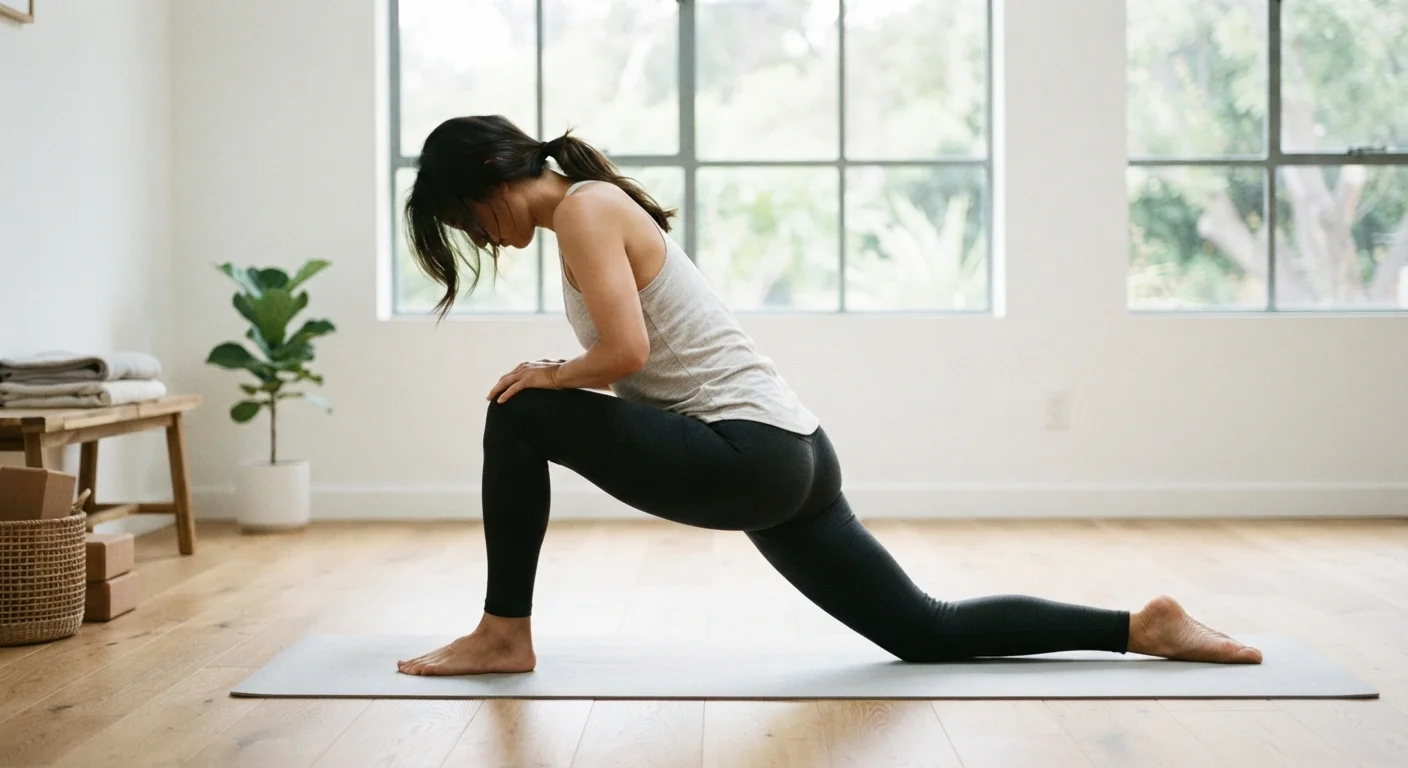
Flexibility describes how far a muscle, tendon, or group of soft tissues can be passively lengthened. It's measured when an external force — gravity, a partner, or a prop — does the work of moving the body into a stretched position. The classic hamstring stretch, where you reach toward your toes or hold a straight-leg stretch on the floor, is a test of passive flexibility.
Flexibility is influenced by several factors: muscle fiber length, connective tissue elasticity, nervous system tension, and even the architecture of a joint. Some of these are trainable; others, like basic joint structure, are largely fixed by anatomy.
Static stretching — holding a lengthened position for 20–60 seconds — is the most common method for improving flexibility. Over weeks and months of consistent practice, it can produce measurable increases in passive range of motion. For context on how stretching fits into a broader exercise routine, see our overview of warm-up and cool-down physiology.
Mobility: Active Control Through Range of Motion
Mobility goes further than flexibility. It is the ability to actively move a joint through its available range of motion — using your own muscles to control the movement, not relying on outside forces. Hip mobility, for example, isn't just whether your hip can be pushed open; it's whether you can lift and rotate your leg through that range with stability and intent.
This distinction makes mobility more functional. When you squat, step up onto a curb, or reach overhead to grab something from a shelf, you're relying on mobility — not just passive flexibility. Adequate joint mobility also allows muscles to work efficiently and reduces the compensatory movement patterns that can strain surrounding tissues.
Training mobility typically involves dynamic exercises: leg swings, hip circles, controlled articular rotations (CARs), and bodyweight movements that challenge the range while requiring muscular engagement. Strength training through a full range of motion also builds mobility, not just raw muscle. For a fuller picture of how different types of exercise affect the body, see our article on aerobic vs. anaerobic exercise.
Build Mobility Into Your Daily Routine
You don't need a dedicated gym session to improve mobility. Spending a few minutes each morning on hip circles, shoulder rolls, and ankle rotations can accumulate meaningful benefit over time. Pairing these active drills with your existing workout warm-up is one of the most practical ways to address mobility consistently.
How Stretching Fits In — and Where It Falls Short
Stretching is a tool, not a destination. It contributes to flexibility, and when done dynamically — through movement rather than static holds — it also warms up joints and primes mobility. But stretching alone is rarely sufficient to resolve significant mobility limitations, particularly around joints like the hips, shoulders, or ankles.
If a restricted range of motion stems primarily from tight muscles, stretching can help. But if the limitation comes from joint capsule stiffness, weak stabilizing muscles, or habitual movement patterns, you'll likely need a broader approach: joint mobility drills, progressive loaded movement, and sometimes guidance from a physical therapist.
~1 in 3
Adults report limited physical function due to musculoskeletal issues
According to CDC data, musculoskeletal conditions are among the most common causes of limited physical activity and functional impairment in U.S. adults.
4–8 weeks
Typical time to see flexibility gains from consistent stretching
Research published in physical therapy literature generally indicates meaningful range-of-motion improvements occur within 4–8 weeks of regular stretching, depending on frequency and baseline.
The key practical insight: add deliberate mobility work — not just more stretching — to your movement routine. Even 5–10 minutes of targeted joint circles, active range drills, and controlled bodyweight movement can meaningfully improve how a joint feels and functions over time. For specific guidance on when different stretching methods are most appropriate, see our guide to static vs. dynamic stretching.
This article is for general informational purposes only and does not constitute medical advice. If you are experiencing pain, limited range of motion, or recovering from an injury, consult a qualified healthcare professional or licensed physical therapist before beginning a new stretching or mobility program.