Your Nervous System Has Two Modes — Breathing Controls the Switch
When you feel threatened — whether by a looming deadline or a loud noise — your body activates the sympathetic nervous system, often called the "fight-or-flight" response. Heart rate climbs, muscles tense, and breathing becomes shallow and rapid. This is a survival mechanism, not a flaw. But it becomes a problem when it fires repeatedly in the absence of real physical danger.
The counterpart is the parasympathetic nervous system, sometimes called "rest and digest." This mode slows your heart rate, eases muscle tension, and supports digestion and recovery. Deep breathing is one of the few deliberate actions you can take to shift between these two states — because breath is unique in being both automatic and under conscious control.
To understand what stress does to your body and mind, it helps to see the nervous system as a dial, not a switch. Deep breathing doesn't eliminate the stress response — it turns the dial toward calm.
Stress and Anxiety Are Distinct but Related
Stress and anxiety are often used interchangeably, but they differ in important ways. Stress is typically a response to an identifiable external trigger; anxiety often persists without a clear cause. Both involve the sympathetic nervous system, and both can be influenced by breathwork — but chronic or severe anxiety warrants professional evaluation. See common misconceptions about anxiety for more context.
The Vagus Nerve: The Physiological Highway Behind the Calm
The vagus nerve is the longest cranial nerve in the body, running from the brainstem down through the heart, lungs, and digestive organs. It is the primary conduit of the parasympathetic nervous system, and it plays a central role in why controlled breathing works.
When you inhale slowly and deeply, the diaphragm descends and presses against nearby organs. On a long, slow exhale, pressure in the chest changes in ways that stimulate vagal activity — signaling the heart to slow and the body to ease its alert state. This is reflected in a measure called heart rate variability (HRV), the variation in time between heartbeats. Higher HRV is generally associated with better stress resilience and emotional regulation, and slow breathing consistently increases it.
↑ HRV
Effect of slow breathing on heart rate variability
Multiple studies, including research published in journals such as Frontiers in Psychology, show slow-paced breathing (around 6 breaths per minute) reliably increases heart rate variability, a marker of parasympathetic activity.
~6 breaths/min
Optimal breathing rate for vagal stimulation
Research on resonance frequency breathing identifies approximately 6 breaths per minute as particularly effective for activating the parasympathetic nervous system in many adults.
Minutes
Time to measurable physiological effect
Studies indicate that even brief sessions of slow, controlled breathing — as short as 5 minutes — can produce statistically significant reductions in self-reported stress and physiological arousal markers.
Researchers have also found that nasal breathing, as opposed to mouth breathing, tends to generate stronger vagal stimulation — one reason many breathwork practices emphasize breathing through the nose.
The Role of Carbon Dioxide — Not Just Oxygen
Most people assume that breathing deeply is primarily about getting more oxygen. In reality, the balance between oxygen and carbon dioxide (CO₂) plays a critical role. When you breathe rapidly and shallowly — a pattern called hyperventilation — CO₂ is expelled faster than the body produces it, causing blood vessels to constrict and contributing to dizziness, tingling, and heightened anxiety.
Slow, controlled breathing restores a healthier CO₂-to-oxygen balance, relaxing blood vessels and allowing more stable oxygen delivery to the brain. This is part of why people who hyperventilate during panic are sometimes advised to breathe slowly rather than take large, rapid gulps of air.
“The way we breathe directly influences our mental and physical state. Slow, deliberate breathing is one of the few things we can consciously control that has an almost immediate effect on the stress response.”
— Andrew Huberman, Professor of Neurobiology, Stanford University School of Medicine
This physiological mechanism also explains why extended exhalations are particularly calming: a longer exhale slows the breath rate, supports CO₂ balance, and drives stronger parasympathetic activation than a matched inhale alone.
How to Apply This in Real Life
Understanding the science makes breathwork feel less like a wellness cliché and more like a practical tool. If you experience moments of overwhelm or anxiety, pairing deep breathing with grounding techniques can create a more robust response to acute stress.
For those curious about how it compares to other practices, mindfulness meditation and deep breathing work through different but complementary pathways. And because emotional regulation doesn't happen in isolation, it's worth noting that sleep quality also shapes your ability to regulate emotions — breathwork before bed may support both.
Start Simple: Extend Your Exhale
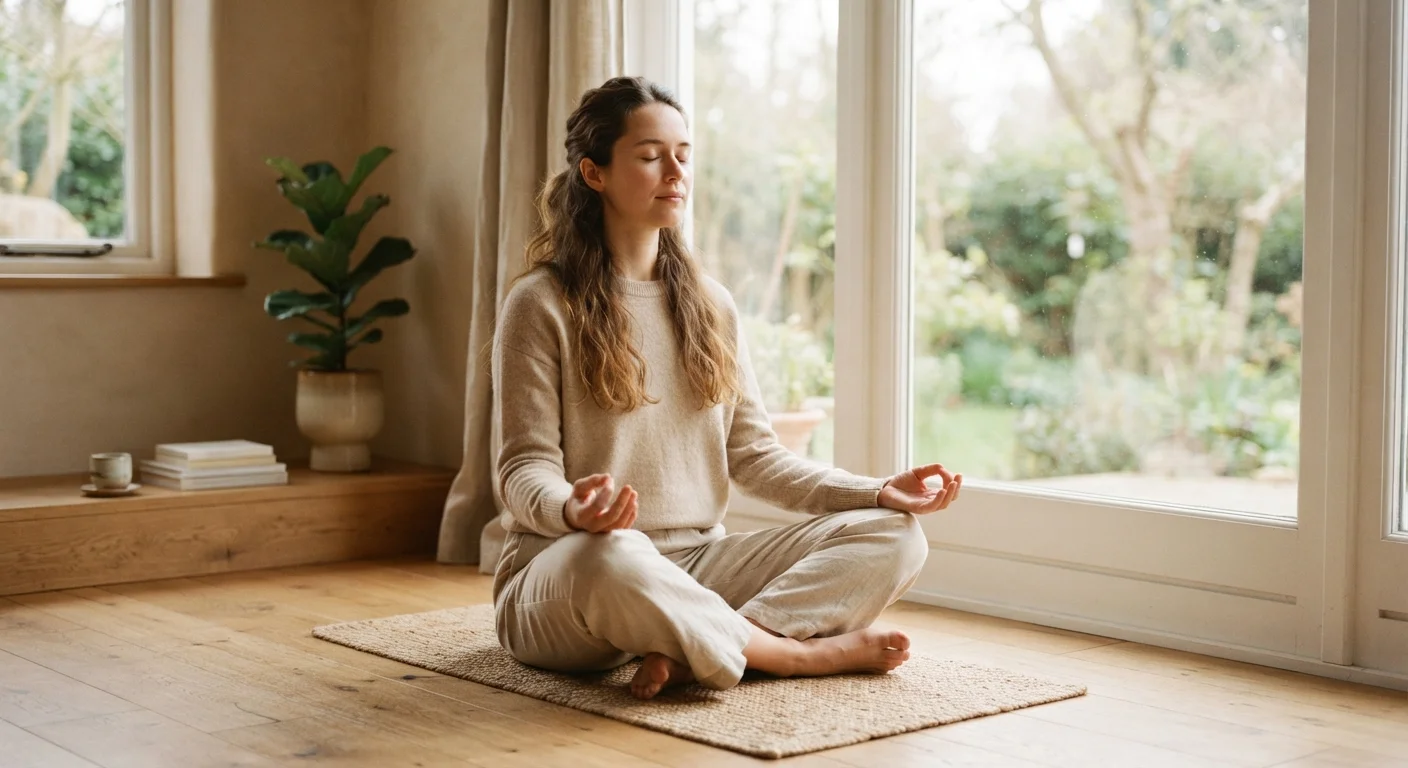
You don't need a formal technique to begin. Simply try making your exhale about twice as long as your inhale — for example, inhale for 4 counts, exhale for 8. This ratio tends to produce the strongest parasympathetic activation for most people. Practice for 3–5 minutes in a quiet setting to get comfortable with the rhythm before using it in high-stress moments.
Deep breathing requires no equipment, no cost, and no prescription. As a general health tool, it is among the most accessible interventions supported by evidence — though it is not a treatment for diagnosed conditions. Anyone dealing with chronic anxiety or stress-related disorders should work with a qualified healthcare or mental health professional.
This article is for informational and educational purposes only and does not constitute medical advice. Consult a qualified healthcare professional for guidance about your individual health needs.