The Biology Behind the Pressure
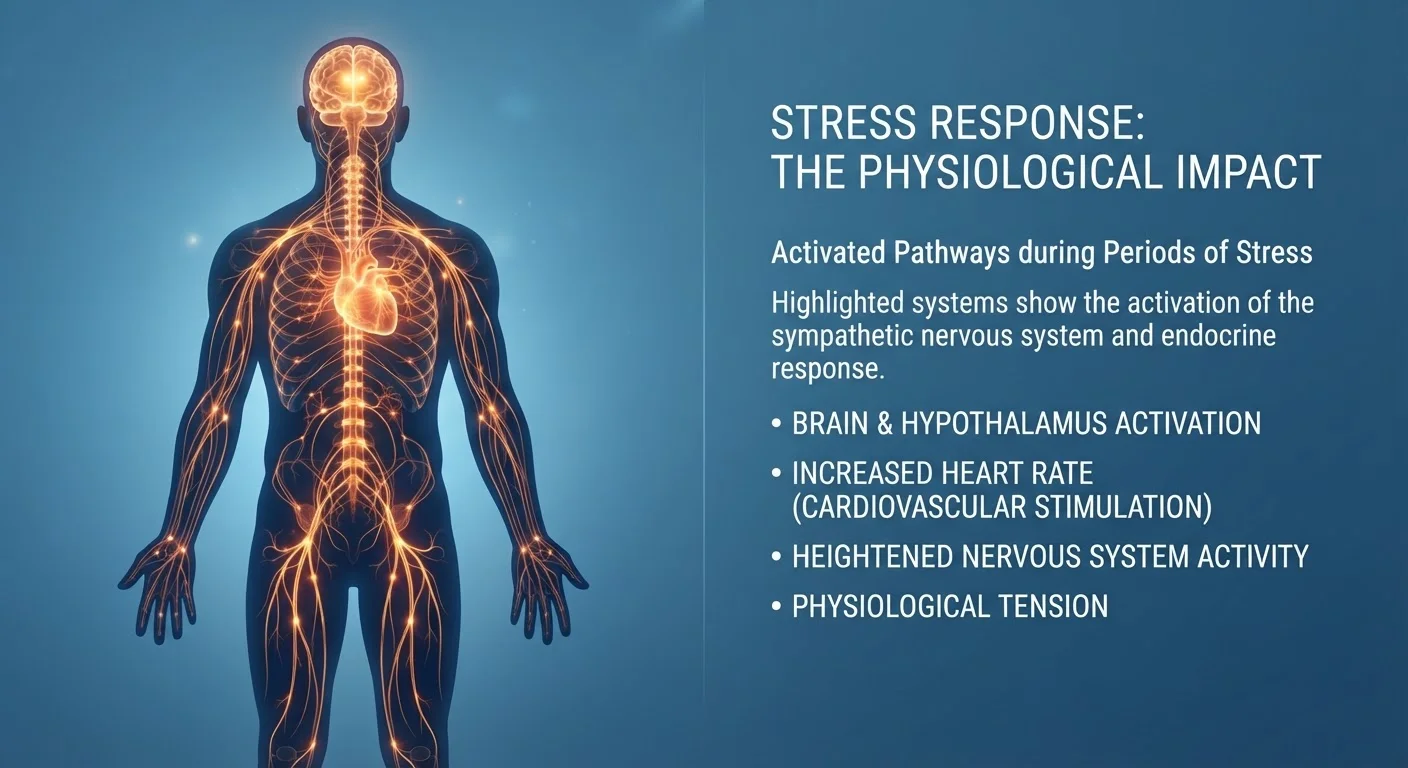
When your brain detects a threat — whether it's a car cutting you off in traffic or an overflowing inbox — it triggers an ancient survival system. The hypothalamus signals the adrenal glands to flood the bloodstream with cortisol and adrenaline. Heart rate climbs. Breathing quickens. Blood is diverted away from digestion toward major muscle groups. Your body is preparing to fight or flee.
This response is elegant in short bursts. It sharpens reaction time, narrows focus, and delivers a burst of available energy. The problem isn't the response itself — it's when the off-switch never gets pulled.
77%
Adults reporting physical symptoms of stress
According to the American Psychological Association's Stress in America survey, a significant majority of U.S. adults report experiencing physical symptoms they attribute to stress.
3x
Higher cardiovascular risk with chronic stress
Research published in medical literature has associated sustained psychological stress with approximately triple the risk of cardiovascular events compared to low-stress populations.
40%
Adults losing sleep due to stress
The American Psychological Association has reported that roughly four in ten American adults say stress has caused them to lie awake at night in the past month.
For a deeper look at how the nervous system coordinates all of this, see what the stress response actually does to your body.
What Happens When Stress Becomes Chronic
Sustained stress keeps cortisol levels elevated well beyond what the body was designed to handle. Over time, this contributes to a measurable set of physical consequences.
- Cardiovascular system: Chronic high cortisol contributes to elevated blood pressure and inflammation, both recognized risk factors for heart disease according to the American Heart Association.
- Immune function: Prolonged stress suppresses immune activity, making the body slower to fight off infections and slower to recover.
- Digestion: Stress disrupts gut motility and can worsen conditions like irritable bowel syndrome (IBS). The gut-brain connection is a well-documented bidirectional pathway.
- Sleep: Cortisol competes with melatonin, making restful sleep harder to achieve and sustain.
Recovery Is Part of the Equation
The stress response itself isn't the enemy — inadequate recovery is. Building deliberate downtime into your day, even in short increments, gives the HPA axis a chance to reset. Activities like a short walk, a few minutes of slow breathing, or simply stepping away from a screen can signal the nervous system that the threat has passed.
Knowing when ordinary pressure has crossed into something more persistent is an important health skill. Signs that everyday stress may have become chronic can help you recognize the difference.
How Stress Reshapes the Brain
Stress doesn't just affect your body — it physically alters brain structure and function when sustained over time. The hippocampus, a region central to memory and learning, is sensitive to cortisol exposure. Research has found that chronic stress can reduce hippocampal volume, impairing the ability to consolidate new memories and regulate emotional responses.
The prefrontal cortex — responsible for planning, judgment, and impulse control — also shows reduced activity under prolonged stress. Meanwhile, the amygdala, the brain's threat-detection center, becomes more reactive. The net effect: stress makes it harder to think clearly and easier to feel anxious or irritable.
“The brain is not only the organ most affected by stress — it is also the organ that determines how we perceive and respond to stress in the first place. Understanding that relationship gives us more leverage over it.”
— Robert Sapolsky, Professor of Biology and Neurology, Stanford University; author of research on stress physiology
This is why stress often feels like it compounds itself. Difficulty concentrating leads to more mistakes, which creates more pressure. Recognizing this loop is the first step to interrupting it.
Evidence-Based Ways to Reset the Response
The stress response can be actively down-regulated. While no single technique works for everyone, several approaches have meaningful support in the scientific literature:
- Controlled breathing: Slow, deep breathing activates the parasympathetic nervous system — the body's "rest and digest" counterbalance to the stress response.
- Physical movement: Exercise helps metabolize stress hormones and supports mood regulation. Exercise and mental health research is more nuanced than headlines suggest, but consistent moderate activity shows genuine benefit.
- Social connection: Human contact has documented effects on cortisol reduction and emotional buffering.
- Sleep hygiene: Protecting sleep quality breaks the cortisol-insomnia cycle and restores resilience.
This article is for general informational and educational purposes only and is not a substitute for professional medical advice. If you have concerns about your stress levels or mental health, please consult a qualified healthcare provider.