
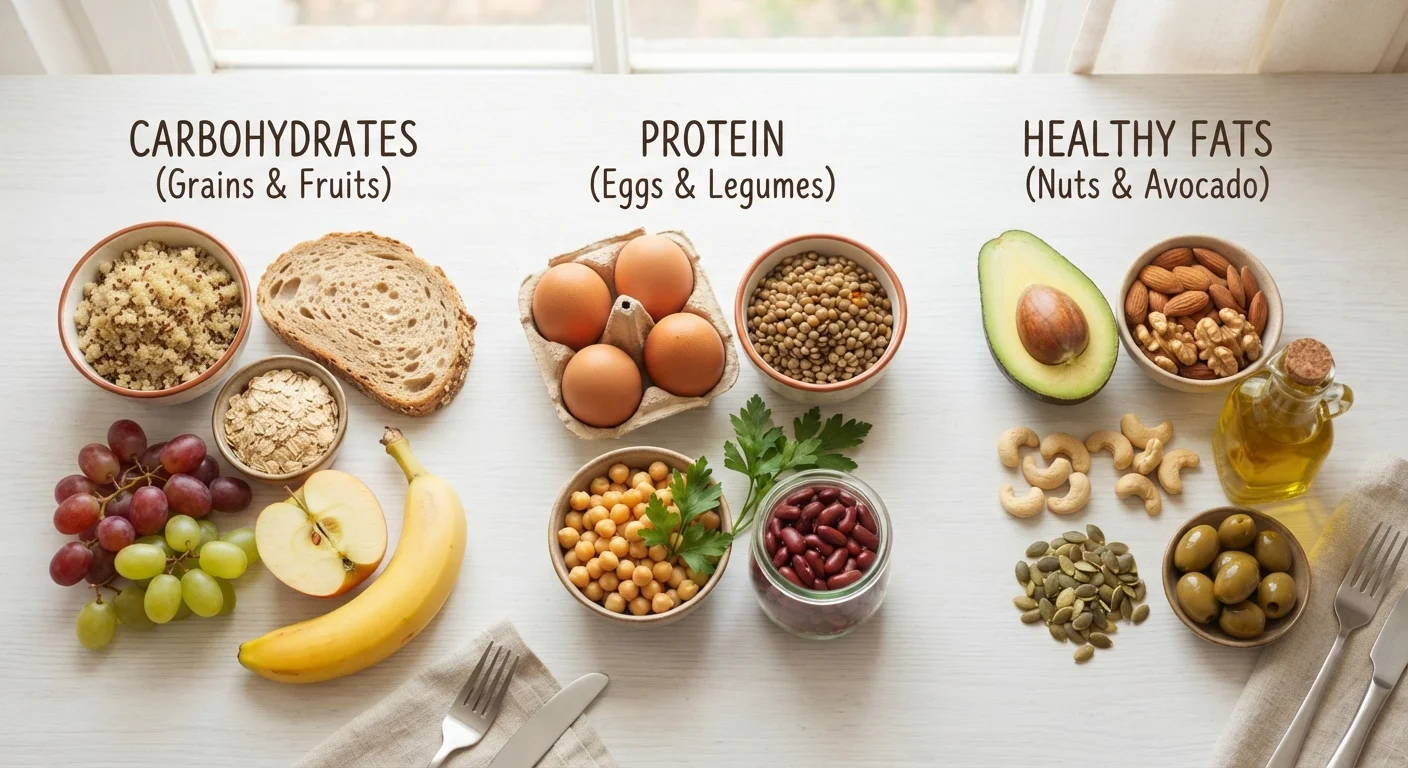
Carbohydrates: Your Body's First Choice for Fuel
Carbohydrates are the body's primary and most readily available energy source. When you eat carbs — whether from bread, fruit, beans, or vegetables — your digestive system breaks them down into glucose, a simple sugar that cells use directly for energy. Your brain alone relies almost exclusively on glucose to function.
Not all carbohydrates behave the same way. Simple carbohydrates (found in fruit, milk, and added sugars) are digested quickly, producing a faster rise in blood glucose. Complex carbohydrates (found in whole grains, legumes, and starchy vegetables) digest more slowly thanks to their fiber content, providing more sustained energy and supporting digestive health.
Fiber — a form of carbohydrate the body cannot fully digest — plays its own important role. It slows glucose absorption, feeds beneficial gut bacteria, and is associated with reduced risk of cardiovascular disease and type 2 diabetes, according to guidance from the American Heart Association.
Focus on Food Quality First
Rather than fixating on hitting specific macronutrient percentages, most nutrition experts recommend prioritizing whole, minimally processed foods. A diet built around vegetables, whole grains, legumes, lean proteins, and healthy fats naturally tends to land within healthy macronutrient ranges — without a calculator.
Understanding how carbohydrate quality affects your health is also relevant when interpreting health screenings. See our explainer on blood pressure, cholesterol, and blood sugar to understand how blood sugar fits into your broader health picture.
Protein: Building Blocks for Nearly Every Function
Protein is composed of smaller units called amino acids, which the body uses to build and repair tissues — including muscle, skin, enzymes, and immune cells. Of the 20 amino acids, nine are considered essential, meaning the body cannot manufacture them and must obtain them through food.
Complete proteins — found in animal products like meat, fish, eggs, and dairy — contain all nine essential amino acids. Plant-based sources like beans, lentils, and tofu generally provide incomplete amino acid profiles on their own, but eating a varied plant-based diet over the course of a day can cover all essential amino acids without difficulty.
Protein also plays a role in satiety. It tends to be more filling per calorie than carbohydrates or fat, partly because it takes longer to digest and influences hormones that signal fullness. This is one reason higher-protein diets are often studied in the context of weight management — though outcomes vary widely by individual.
10–35%
Recommended calorie share from protein
The Dietary Guidelines for Americans suggest protein make up 10–35% of total daily calories for adults, reflecting a wide healthy range.
45–65%
Recommended calorie share from carbohydrates
The Dietary Reference Intakes established by the National Academies recommend carbohydrates provide 45–65% of total daily energy intake for most adults.
20–35%
Recommended calorie share from fat
The National Academies' Dietary Reference Intakes recommend dietary fat account for 20–35% of total calories, with an emphasis on unsaturated fat sources.
Dietary Fat: More Essential Than Its Reputation Suggests
Fat has spent decades as the dietary villain in popular nutrition culture, but the science tells a more nuanced story. Dietary fat is essential for absorbing fat-soluble vitamins (A, D, E, and K), producing hormones including sex hormones, protecting organs, and maintaining healthy cell membranes. The brain is roughly 60% fat by dry weight, making adequate fat intake important for neurological function.
The type of fat matters considerably more than total fat intake. Unsaturated fats — found in olive oil, avocados, nuts, and fatty fish — are broadly associated with cardiovascular health benefits in research. Saturated fats, found in butter, red meat, and full-fat dairy, have a more complex relationship with heart disease that researchers continue to study. Artificial trans fats, which were largely phased out of the U.S. food supply following FDA action, are associated with increased cardiovascular risk.
It's worth noting that dietary fat is calorie-dense — 9 calories per gram compared to 4 for carbs and protein — so portion context still matters within an overall balanced diet. For a closer look at how these patterns interact with measurable health outcomes, the guide on body weight and body composition offers useful perspective.
“There are no good or bad macronutrients. What matters is the overall pattern of eating — the quality of foods chosen, the portions, and how they fit into a person's life over time.”
— Walter Willett, Professor of Epidemiology and Nutrition, Harvard T.H. Chan School of Public Health
Why Balance Matters More Than Elimination
Popular diets often frame one macronutrient as the problem — carbs caused the obesity epidemic, fat clogs arteries, too much protein stresses the kidneys. The reality is that the research on macronutrient ratios is far less decisive than headlines suggest. Decades of nutrition science point consistently toward one conclusion: overall diet quality and calorie context matter more than which macronutrient you emphasize or restrict.
Eliminating an entire macronutrient category has real physiological consequences. Very low-fat diets can impair vitamin absorption and hormonal health. Very low-carb diets can cause short-term fatigue and, in some populations, require medical supervision. Excessively high protein intakes over long periods remain under study for effects on kidney health, particularly in people with pre-existing kidney disease.
For most people, a diet built around whole foods — varied vegetables, whole grains, quality protein sources, and healthy fats — naturally achieves a reasonable macronutrient distribution without precise tracking. If you're curious about common misconceptions around when you eat rather than what you eat, our article on nutrition timing myths breaks down what the evidence actually supports.
This article is for general informational and educational purposes only and is not a substitute for professional medical or nutritional advice. Speak with a qualified healthcare provider or registered dietitian before making significant changes to your diet, especially if you have a chronic health condition.