
What the Scale Actually Tells You
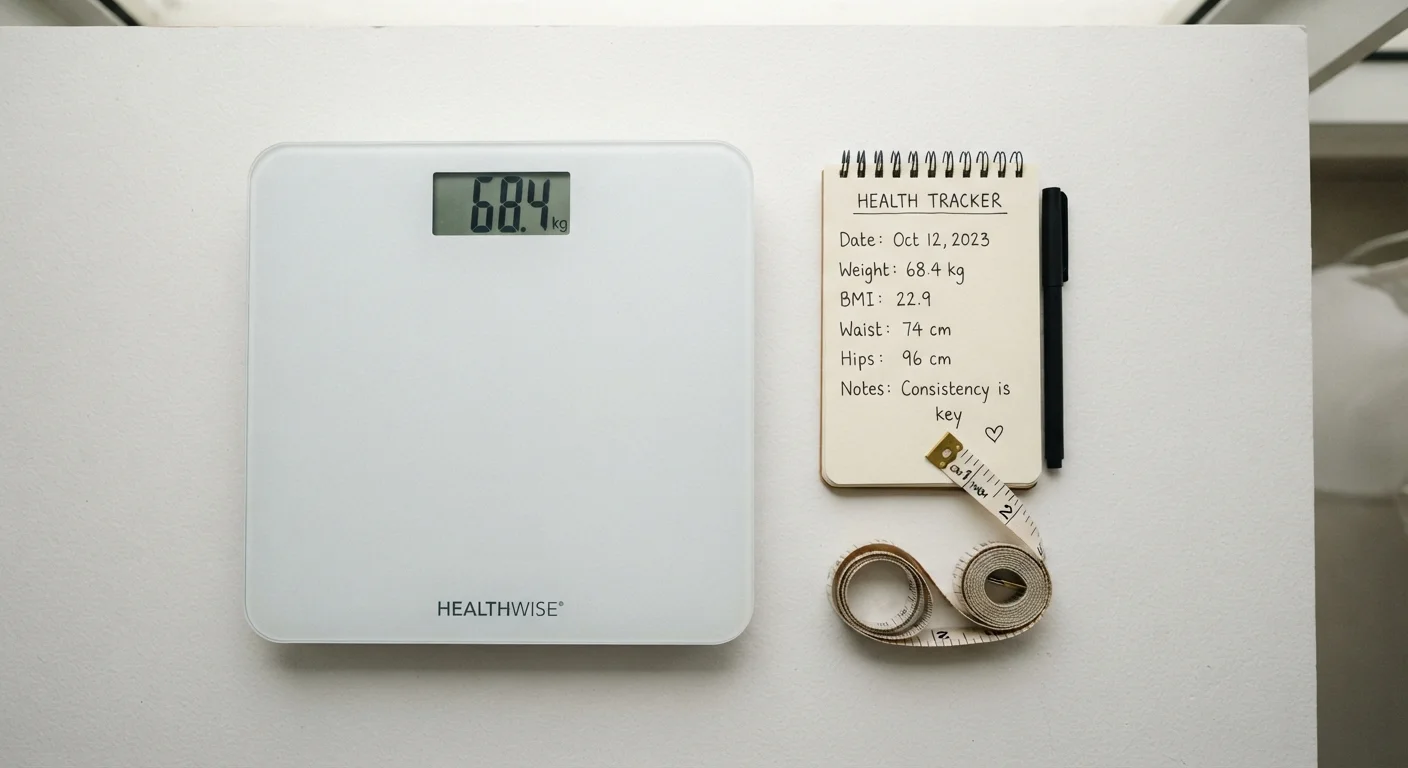
Step on a bathroom scale and you get one number: total body mass. That figure includes muscle, fat, bone, organs, water, and the contents of your digestive tract at that moment. It tells you how much you weigh — nothing more.
Body weight is useful as a rough tracking tool. Significant, unexplained changes over time — either direction — can signal something worth discussing with a doctor. But weight on its own cannot tell you whether you are gaining muscle, losing fat, or retaining water. A person who loses 10 pounds of muscle and gains 10 pounds of fat will weigh exactly the same on the scale while their health profile shifts considerably.
Weight also fluctuates naturally throughout a single day by several pounds due to food intake, hydration, and normal physiological processes. Treating any single weigh-in as a precise health verdict misses this reality entirely.
How BMI Works — and Where It Falls Short
Body Mass Index (BMI) is calculated by dividing weight in kilograms by height in meters squared. The CDC and NIH use standard categories: underweight (below 18.5), normal weight (18.5–24.9), overweight (25–29.9), and obese (30 and above). These thresholds were designed for use across large populations in research and public health settings.
The core limitation of BMI is that it inherits all the problems of body weight — it still cannot distinguish fat from muscle — while adding a height adjustment that does not account for body composition, age, sex, or ethnicity. A highly trained athlete may register as "overweight" due to muscle density. An older adult may fall in the "normal" range while carrying a relatively high fat percentage because muscle mass typically declines with age.
~39%
U.S. adults classified as obese by BMI
According to CDC national survey data, approximately 39% of American adults fall into the obese BMI category, highlighting the scale of the metric's use in public health tracking.
Up to 30%
BMI misclassification rate in some studies
Research published in peer-reviewed journals has found that BMI misclassifies metabolic health status in a substantial portion of individuals when compared against direct body composition measures.
2–4 lbs
Normal daily body weight fluctuation
Physiological factors including food intake, fluid consumption, and digestive activity can cause body weight to shift by two to four pounds within a single day, independent of fat change.
Research has also shown that BMI classifications can perform differently across racial and ethnic groups. Some medical bodies, including the American Diabetes Association, use lower BMI thresholds when assessing risk in certain Asian American populations, reflecting this variability.
BMI remains a practical first-pass screening tool precisely because it requires only two easy-to-measure inputs. But clinicians are trained to use it as a starting point, not a conclusion. Paired with core metabolic markers like blood pressure and blood sugar, it becomes part of a broader picture rather than a standalone verdict.
Body Composition: A More Detailed View
Body composition analysis separates total weight into its components — primarily fat mass and lean mass (muscle, bone, water, and organs). This distinction matters because the health implications of carrying excess fat tissue differ substantially from carrying excess muscle.
Visceral fat — the fat stored around internal organs in the abdominal cavity — is associated with elevated cardiovascular and metabolic risk, according to NIH research. Subcutaneous fat, stored just under the skin, carries different risk profiles. Neither distinction is visible in a BMI number.
Add Waist Measurement to Your Routine
Measuring your waist circumference takes less than a minute and adds context that a scale cannot provide. Measure at the level of your navel, without sucking in your stomach. The CDC recommends discussing results with your doctor if your measurement exceeds 40 inches (men) or 35 inches (women), as elevated abdominal fat is associated with increased cardiovascular and metabolic risk.
Waist circumference is a practical, low-tech proxy for abdominal fat distribution. The CDC notes that a waist measurement above 40 inches for men or 35 inches for women is associated with increased health risk, regardless of BMI category. Measuring waist circumference alongside BMI adds meaningful context that neither metric provides alone.
More precise body composition assessments — such as DEXA scans or bioelectrical impedance analysis — provide estimates of fat percentage and lean tissue. These tools vary in cost and accuracy, and results can be influenced by hydration, recent meals, and device calibration. If you are interested in a formal body composition assessment, a healthcare provider can help determine which method makes sense for your situation.
Building and maintaining lean muscle mass is one of the most consistently supported strategies for long-term metabolic health. Strength training — even without gym equipment — is well-supported by research as a way to support that goal.
Reading These Metrics in Context
No single number tells the full story of your health. Body weight, BMI, and body composition measurements are each tools with specific uses and specific blind spots. Understanding what each one captures — and what it misses — helps you interpret your own results more clearly and have more productive conversations with your healthcare provider.
Nutrition also plays a role in body composition over time. How your body uses carbohydrates, proteins, and fats influences both fat storage and muscle development. And reading food labels accurately — including understanding serving sizes and nutrient content — is a practical skill that supports informed everyday choices. See our guide to reading nutrition labels for a plain-language breakdown.
If you are concerned about any of these metrics, the right first step is a conversation with your doctor rather than a self-diagnosis based on a single number. Health is multidimensional, and these measurements are most useful when interpreted alongside your personal history, lifestyle, and other clinical indicators.
This article is for general informational and educational purposes only and is not a substitute for professional medical advice, diagnosis, or treatment. Always consult a qualified healthcare provider with questions about your individual health.