
Why Subscription Audits Matter
Subscription services are designed to be easy to start and easy to forget. A streaming platform here, a meal kit pause there, a software tool you signed up for during a free trial — individually small, collectively significant. The average household may be spending more on recurring charges than it realises, and many of those charges persist long after the service stops being used.
This isn't just a budgeting curiosity. Subscription creep — the gradual accumulation of recurring costs — is one of the most common hidden spending patterns that quietly erode household budgets. The fix isn't dramatic: a focused, one-time audit followed by periodic check-ins is enough to take back control. This checklist walks you through exactly how to do it.
Don't Rely on Memory Alone
Most people underestimate how many subscriptions they carry because small charges blend into the background of a bank statement. Research consistently suggests that self-reported subscription counts fall well short of actual billing records. Always verify against real statements rather than trying to recall from memory.
What You'll Need Before You Start
Gather your tools before diving in. Having everything in one place prevents you from missing charges that live on a card you rarely check.
Bank and credit card statements (last 3 months)
The primary source for identifying all recurring charges across every payment method you use.
Email inbox access
Used to search for billing confirmations and renewal notices that reveal subscriptions not visible on statements.
Spreadsheet or note-taking app
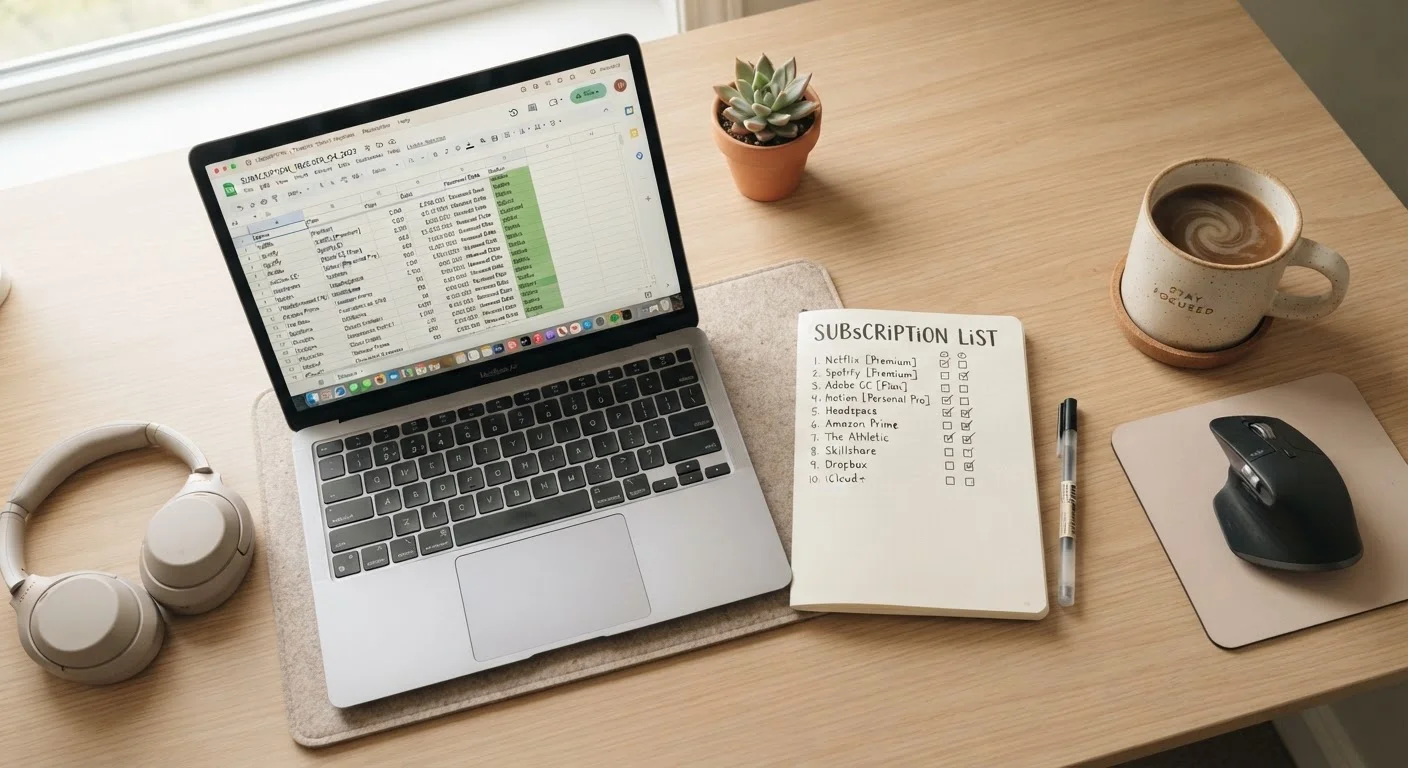
Tracks every subscription you find, its cost, its payment method, and your keep/cancel decision in one place.
App store purchase history
Surfaces in-app subscriptions billed through Apple or Google that may not appear on your bank statement directly.
Digital wallet transaction history (PayPal, etc.)
Catches recurring authorisations set up through payment platforms rather than directly with a bank card.
The Subscription Audit Checklist
Work through these steps in order. The first phase uncovers what you're actually paying for; the second helps you decide what to keep; the third locks in the savings.
Phase 1 — Find Every Subscription
Phase 2 — Evaluate Each Subscription
Phase 3 — Take Action and Follow Through
Unrecognised Charges May Signal Fraud
If you find a recurring charge you genuinely did not authorise — and it isn't a forgotten free trial — treat it as a potential fraud issue, not just a stray subscription. Contact your card issuer or bank promptly to dispute the charge and request a new card number if necessary. Letting unauthorised charges sit uncontested can complicate the resolution process.
Turning the Audit Into a Lasting Habit
A one-time audit is valuable, but subscription creep returns quickly — especially after holiday promotions, free trial sign-ups, or household membership changes. Build a lightweight routine to stay ahead of it.
The most practical approach: schedule a brief subscription check as part of your monthly budget review so it never slips. For a structured format to do that month after month, the monthly budget review checklist provides a ready-made framework you can follow consistently. If you're working toward specific savings goals, pairing this habit with broader strategies from the Saving & Debt hub can help you direct the recovered funds intentionally rather than letting them dissolve back into spending.
Finally, don't overlook insurance when reviewing recurring costs. Annual policy renewals are another category worth scrutinising — the annual insurance coverage review checklist covers what to check before each renewal period.
This article is for general informational purposes only and does not constitute personalised financial or legal advice. For guidance tailored to your specific situation, consult a qualified financial professional.