
Why a Quarterly Schedule Works
Most homeowners intend to stay on top of maintenance — but without a clear schedule, tasks get deferred until something breaks. A quarterly approach ties specific jobs to seasonal transitions, when systems are either coming out of heavy use or preparing for it. That timing matters: checking your air conditioning before the first heat wave, or clearing gutters before winter ice forms, is far more effective than reacting after damage appears.
This checklist covers 28 items spread across all four quarters. Each item is labeled by priority so you can triage if time is tight. Keep in mind that some tasks — particularly those involving electrical systems, roofing, or structural elements — may warrant a licensed contractor rather than a DIY approach.
While you're doing your annual home audit, it's also a smart time to review your coverage. See our home insurance review checklist to make sure your policy reflects your home's current condition and value.
Q1 — Winter to Spring (January–March)
Q2 — Spring to Summer (April–June)
Q3 — Summer to Fall (July–September)
Q4 — Fall to Winter (October–December)
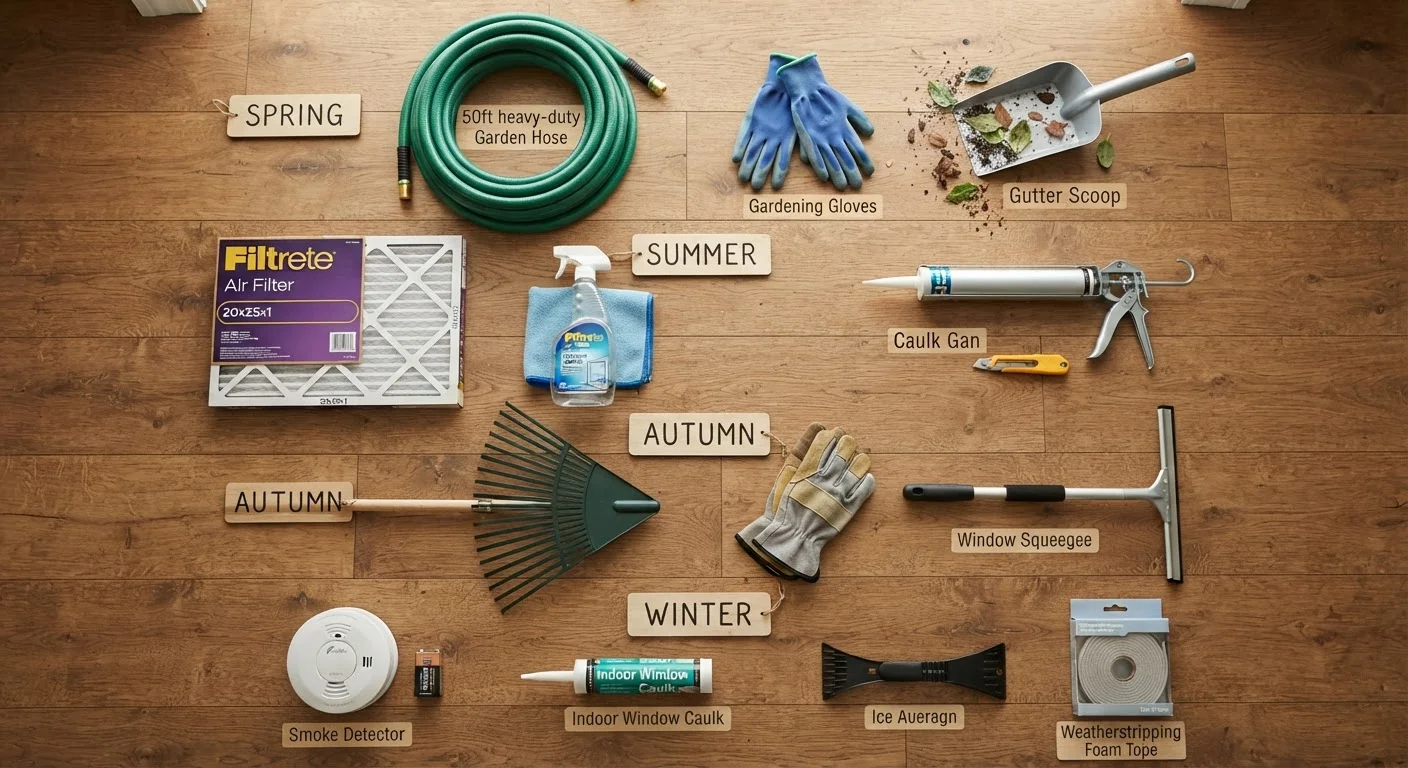
Tools and Supplies to Keep on Hand
Having the right supplies ready before you start each quarter prevents tasks from stalling at the hardware store run. The items below cover the most common maintenance categories in this checklist.
HVAC air filters (1-inch or 4-inch, matched to your unit)
Replaced quarterly to maintain airflow efficiency and indoor air quality.
Dryer vent cleaning brush kit
Clears lint buildup from the full vent run, reducing a leading cause of house fires.
Caulk gun and all-purpose exterior caulk
Seals gaps around windows, doors, and penetrations to block air and moisture infiltration.
Voltage tester (non-contact)
Safely confirms live current when testing outlets or inspecting electrical connections.
Extendable gutter scoop or blower attachment
Clears debris from gutters twice yearly without requiring a ladder in many configurations.
Smoke and CO detector tester spray
Simulates smoke or gas to verify that detector sensors respond correctly during testing.
Wet/dry vacuum
Useful for clearing sump pump pits, cleaning refrigerator coils, and removing debris from tight spaces.
Budgeting for maintenance supplies is easier when you plan quarterly. If you're looking to time larger purchases — like a new HVAC filter system or appliances — our seasonal shopping timing guide outlines when prices typically dip for common household categories.
What to Know Before You Start
Gas, Electrical, and Roof Work: Know Your Limits
Tasks involving gas appliances, your main electrical panel, or steep roofing should be evaluated carefully before attempting them yourself. Incorrect work on these systems can create fire, electrocution, or structural hazards. When a task feels outside your skill level or requires specialized tools, the cost of hiring a licensed contractor is almost always justified. Local building codes may also require permitted work for certain repairs.
Some of the tasks in this checklist — particularly anything related to gas appliances, electrical panels, or structural roof work — carry real safety risks if done without proper knowledge or equipment. When in doubt, hire a licensed professional. The cost of a service call is almost always less than the cost of a mistake.
Also note that not every item on this list will apply to every home. A condo owner, for instance, may not be responsible for gutters or exterior caulking. Adapt the checklist to your specific property type and local climate. Homeowners in regions with harsh winters will want to weight the Q3 weatherization tasks more heavily; those in humid climates should prioritize mold and moisture checks in Q2.
For tasks that quietly cause expensive failures when skipped — like dryer vent cleaning and water heater flushes — see our companion piece on overlooked maintenance tasks most homeowners skip.
Don't Skip Detector Tests — Even If Nothing Seems Wrong
Smoke and carbon monoxide detectors can fail silently — a low battery or degraded sensor may not trigger any visible alert. Most detector manufacturers recommend replacing units every 7–10 years regardless of apparent function. Check the manufacture date printed on the back of each unit and note it in your maintenance log.