What Your Policy Doesn't Say Out Loud
Most homeowners buy a policy, file it away, and assume they're protected. That assumption holds — until a claim gets denied. The uncomfortable truth is that standard homeowners policies are built around specific covered perils, and an entire category of common, costly losses sits outside those boundaries.
The gaps listed here aren't rare edge cases. They're among the most frequently disputed claim denials. Knowing where coverage ends gives you a real choice: accept the gap, add an endorsement, or buy a separate policy. What you can't do is retroactively add coverage after a loss has already happened.
For a broader look at how policy language shapes your payout, see our guide on common policy misreading habits that cost homeowners most.
Flood Damage
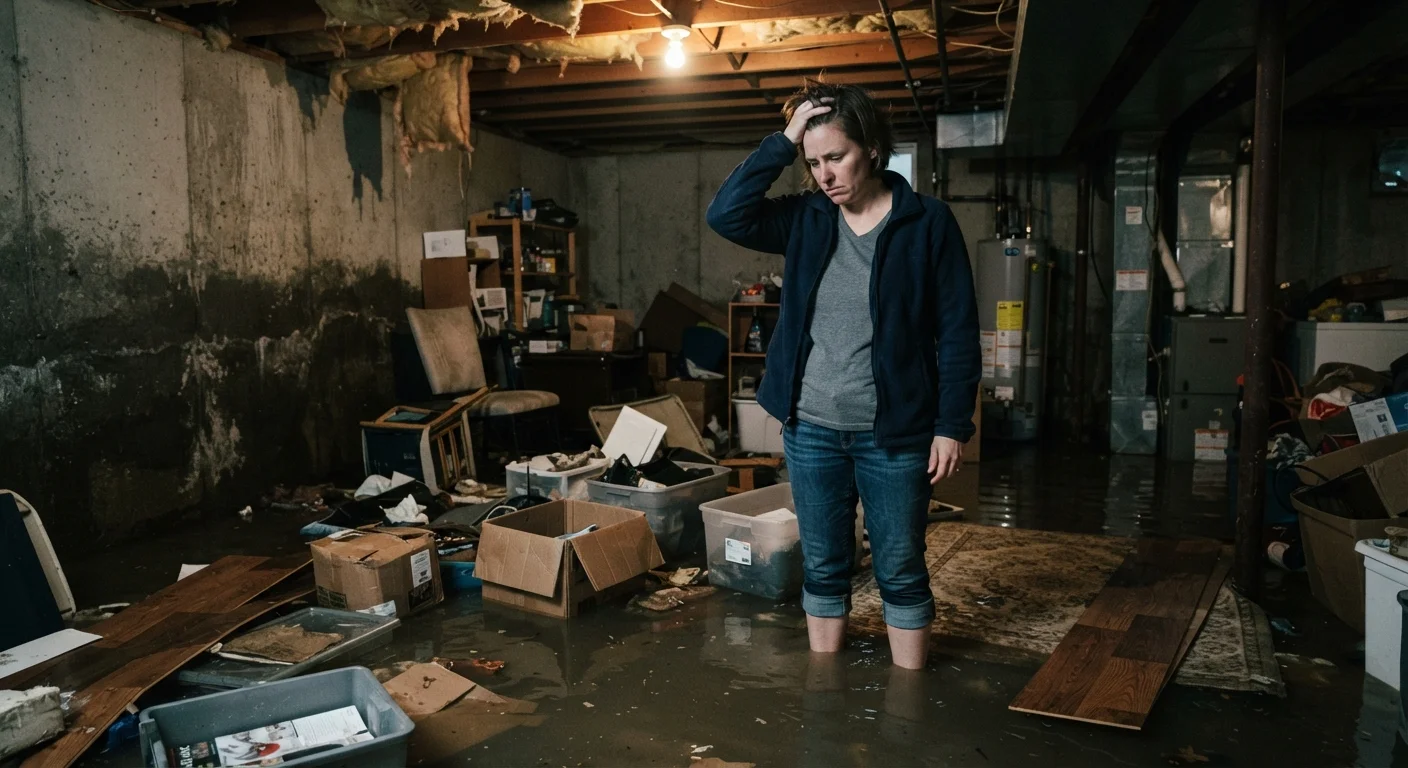
This is the most common and most expensive coverage gap in American homeownership. Standard homeowners policies explicitly exclude flood damage — meaning water that enters your home from the outside, whether from a storm surge, overflowing river, or heavy rainfall pooling against your foundation.
Flood coverage is available through the federally backed National Flood Insurance Program (NFIP) or through private flood insurers. Neither comes bundled with a standard home policy. If you live in a designated flood zone, your mortgage lender may require it; if you don't, it's still worth evaluating given that a significant portion of flood claims come from properties outside high-risk zones.
For a deeper explanation of why floods and earthquakes are excluded from standard policies, see why your homeowners policy may not cover flood or earthquake damage.
Flood coverage is never bundled with a standard homeowners policy — it must be purchased separately.
Mold Remediation
Mold is expensive to remediate and frequently denied. Most policies will only cover mold if it results directly from a covered peril — for example, a burst pipe that was addressed promptly. If the mold grew from long-term humidity, a slow undetected leak, or flooding (which is already excluded), the claim is likely to be denied.
Insurers also look at maintenance history. If an adjuster determines the underlying moisture problem was gradual and preventable, coverage is often withheld on the grounds of homeowner neglect. Some insurers offer mold-coverage endorsements that broaden this protection, but sub-limits apply — commonly $10,000 or less — which may cover only a fraction of a serious remediation job.
Mold from slow leaks or flooding is almost always excluded, regardless of how much damage it causes.
Sewer Backup and Sump Pump Overflow
When a municipal sewer line surcharges during heavy rain and sewage pushes back into your basement, that's a sewer backup — and it's not covered by a standard homeowners policy. The same applies to a sump pump that fails during a storm. The resulting damage to floors, walls, personal property, and HVAC equipment can run into the tens of thousands of dollars.
Water backup coverage (sometimes called sewer backup coverage) is a common endorsement that can be added to most policies, often for a modest additional premium. It's one of the more cost-effective gap-closers available, given how frequently this scenario plays out in older urban neighborhoods with aging infrastructure.
Sewer backup coverage is typically an inexpensive add-on that many homeowners never think to request.
Underground Service Line Breaks
The water line, electrical conduit, and sewer lateral running from your home to the street are often your financial responsibility once they cross the property line — or even before that, depending on local utility rules. A break or collapse in these lines can cost several thousand dollars to excavate and repair, and a standard homeowners policy generally doesn't cover it.
Service line coverage is available as a standalone endorsement from many insurers and is sometimes offered through local utility companies as a subscription service. Before purchasing, check with your municipality about where their maintenance responsibility ends and yours begins.
Underground utility lines on your property are your responsibility — and fixing them is rarely cheap.
Home-Based Business Losses
Running a business from home — even part-time — creates coverage complications that most homeowners don't anticipate. Business equipment (computers, inventory, specialized tools) is typically subject to very low sub-limits under a personal policy, often $2,500 or less. More significantly, business liability — a client injured on your property, a professional error claim — is usually excluded entirely from a personal homeowners policy.
A home-based business endorsement can extend some of these protections for small operations. Larger or more complex businesses typically require a separate business owners policy (BOP). Our article on specialty insurance types most people don't know exist covers additional niche policies worth considering.
A client injured at your home office may not be covered under your personal homeowners liability.
High-Value Personal Property
Standard homeowners policies cover personal property — but with sub-limits that can leave significant gaps for specific categories. Jewelry, fine art, collectibles, firearms, and musical instruments are common examples where base coverage caps out far below actual value. A $5,000 engagement ring may be subject to a $1,500 jewelry sub-limit, leaving the policyholder responsible for the difference.
Scheduled personal property endorsements (sometimes called floaters) allow you to insure specific high-value items at their appraised value, often with broader coverage that includes accidental loss. For a full breakdown of how personal property coverage works and where sub-limits apply, see personal property coverage under a homeowners policy.
Jewelry, art, and collectibles routinely exceed standard policy sub-limits — a scheduled floater closes the gap.
Closing the Gaps Before You Need to File
Each gap above has a corresponding solution — a rider, endorsement, or standalone policy — but none of them can be added after the loss occurs. The time to review your declarations page and exclusions section is now, not when water is rising or a contractor hands you a mold remediation estimate.
Ask Your Agent One Direct Question
When reviewing your policy, ask your agent: 'What are the three most common claims you see denied for homes like mine?' Their answer will often surface gaps specific to your geography, home age, or construction type. This is general information to guide your review — your agent can clarify what applies to your specific policy and situation.
Start by requesting a copy of your full policy document, not just the summary. Read the exclusions section carefully — it's typically labeled "Perils Insured Against" or "Exclusions" and runs several pages. If you're unsure what a clause means, a licensed insurance agent can walk you through it without obligation. You can also reference our article on filing a home insurance claim without undermining your payout for documentation habits that help regardless of what you're covered for.
This article is for general informational purposes only and does not constitute insurance, legal, or financial advice. Coverage terms, exclusions, and availability vary by insurer and state. Always read your actual policy documents and consult a licensed insurance professional for guidance specific to your situation.