What EPOs and PPOs Actually Have in Common
EPOs and PPOs share one feature that sets them apart from HMOs: neither requires a referral to see a specialist. You can call a dermatologist, cardiologist, or orthopedist directly, without first getting approval from a primary care physician. That convenience is real and meaningful for people who manage ongoing health needs.
Both plan types also use a network of contracted providers — doctors, hospitals, labs, and imaging centers that have agreed to negotiated rates with the insurer. When you stay in-network, those rates apply and your cost-sharing (deductible, copay, coinsurance) kicks in as designed. That's where the similarities end.
For a broader comparison of plan structures, see our HMO vs. PPO overview which covers how each model controls costs and access.
The One Difference That Changes Everything
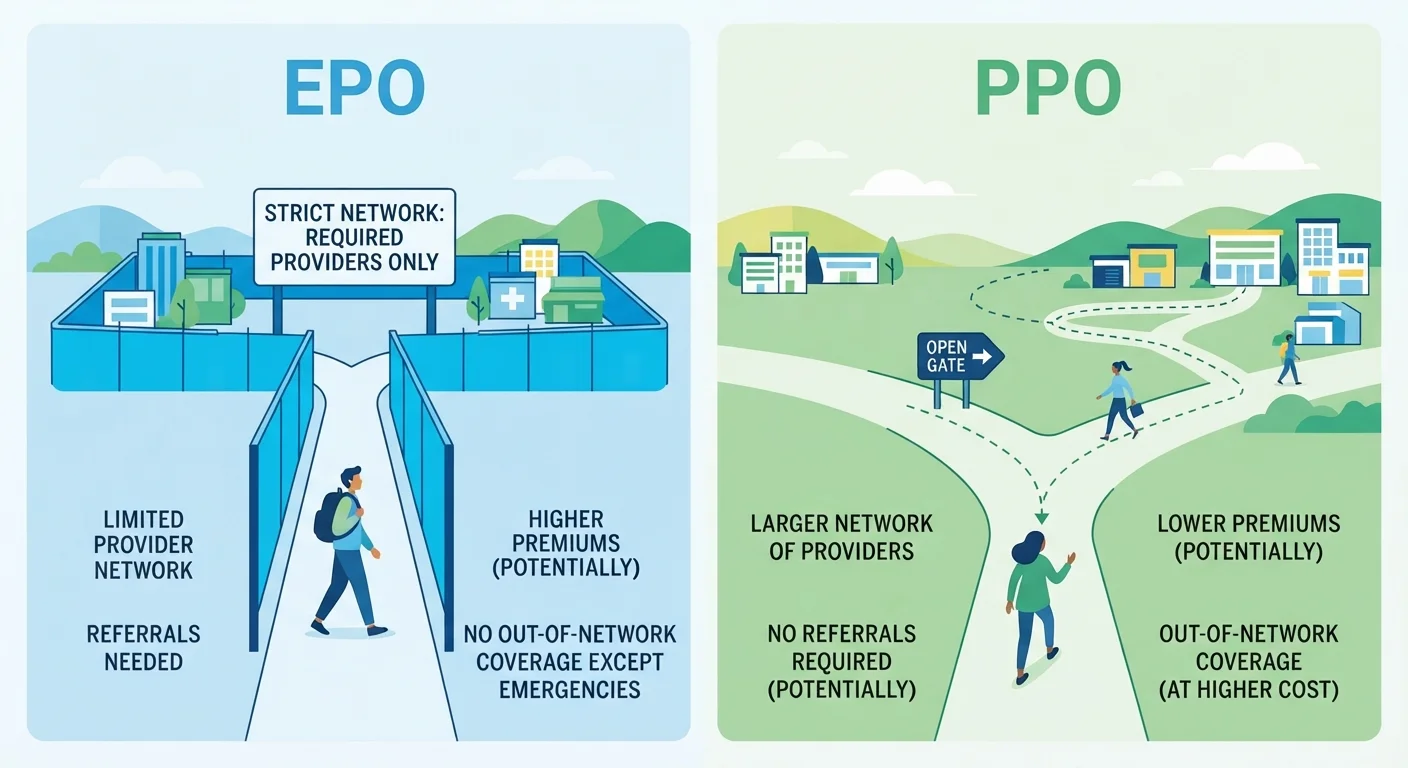
The defining difference between an EPO and a PPO comes down to a single question: what happens if you see a provider outside the network?
With a PPO, going out of network is allowed. You'll pay more — often significantly more — through higher deductibles and coinsurance rates. But the plan still pays a portion of the bill. That out-of-network benefit is the core reason PPO premiums run higher.
With an EPO, going out of network is generally not covered at all, except in a genuine medical emergency. If you see an out-of-network provider for a non-emergency reason, you typically owe the entire bill yourself. The insurer won't apply it to your deductible and won't count it toward your out-of-pocket maximum.
That's the trade-off most people miss when they sign up for an EPO because the premium looked appealing.
| Criterion | EPO | PPO |
|---|---|---|
| Referral required for specialists | No | No |
| Out-of-network coverage | Emergency only | Yes, at higher cost |
| Typical monthly premium | Lower | Higher |
| Network flexibility | Restricted to in-network | In- and out-of-network |
| Best for travelers or multi-state care | No | Yes |
| Out-of-network costs count toward deductible | Generally no | Yes (out-of-network deductible) |
Why Network Size Matters More With an EPO
If you're on a PPO, a narrow network is an inconvenience — you pay more to go outside it. If you're on an EPO, a narrow network is a hard wall. That makes vetting the network before enrollment especially critical for EPO shoppers.
Before choosing an EPO, confirm that your primary care doctor, any current specialists, and your preferred hospital are listed as in-network. Don't rely on the insurer's general claims about network size — use the plan's provider directory to search by name. Networks change annually, and a doctor who was in-network last year may not be this year.
~57%
Workers enrolled in PPO plans
According to the 2023 KFF Employer Health Benefits Survey, PPOs remain the most common plan type among covered workers in the US.
13%
Workers enrolled in HDHP/SO or EPO-type plans
The same KFF survey found EPO and similar narrow-network plan enrollment growing as employers seek to manage premium costs.
Also consider your geography. EPO networks tend to be regional. If you live near a state border, receive care in multiple cities, or travel frequently, the hard boundary of an EPO creates real exposure that a PPO's out-of-network benefit would cover.
Our related piece on common in-network and out-of-network misconceptions explains the specific billing surprises that catch people off guard.
How to Choose Between the Two
The right answer depends on your personal situation, not on which plan type sounds better in the abstract. A few practical questions can point you in the right direction:
- Are all your current providers confirmed in-network? If yes, an EPO may give you the same access at a lower premium.
- Do you anticipate needing a specialist not yet in the network? If you're managing a complex or evolving condition, a PPO's out-of-network safety net has real value.
- How much is the premium difference? Run the math. If the EPO saves you $100/month but your out-of-network exposure is $5,000, the calculus shifts quickly if you ever need care outside the network.
- Where do you receive care? Multi-state situations almost always favor a PPO.
Neither plan type is inherently superior. EPOs are well-suited to people whose care is predictable and local. PPOs suit people whose care isn't. For a scenario-based look at when a narrower network can actually work in your favor, see EPO vs. PPO: When a Narrower Network Works.
This article is for general informational purposes only and does not constitute personalized insurance, financial, or medical advice. Coverage terms, network structures, and costs vary by plan and provider. Always review your actual policy documents and consult a licensed insurance professional before making enrollment decisions.