
Why These Three Terms Matter
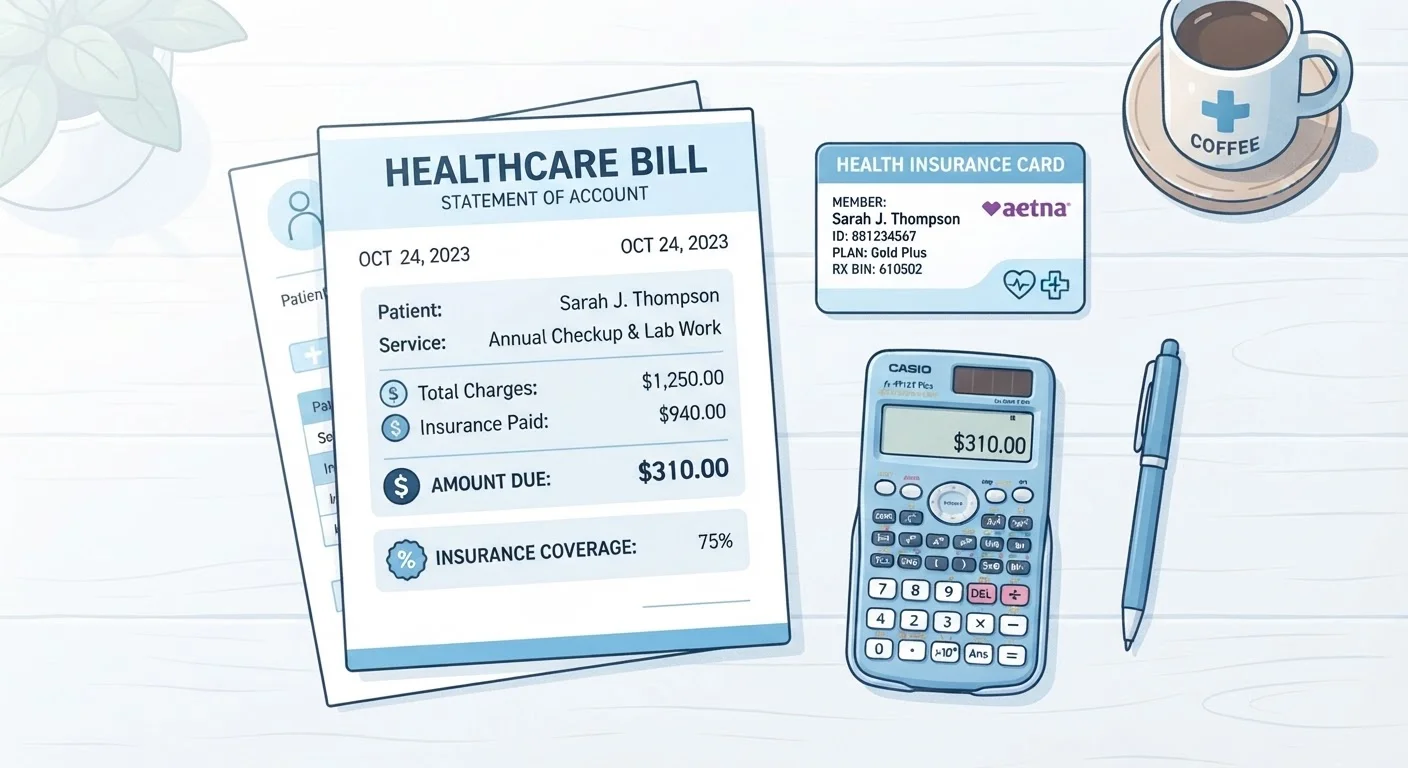
When a medical bill arrives, most people focus on the total — not on how that number was calculated. But understanding deductibles, copays, and coinsurance is the difference between being caught off guard and knowing exactly what to expect. These three mechanisms are how health insurers share costs with you, and every health plan in the U.S. uses some combination of them.
If you've ever wondered why your insurer paid nothing for a service you thought was covered, or why one doctor visit cost $30 while a follow-up cost $200, cost-sharing is usually the explanation. For a broader look at policy language, see our plain-English guide for first-time enrollees.
$1,763
Average individual deductible for employer plans
According to the 2023 KFF Employer Health Benefits Survey, the average deductible for single coverage in employer-sponsored plans was $1,763.
83%
Workers with a general annual deductible
KFF's 2023 survey found that 83% of covered workers in employer plans faced a general annual deductible for single coverage.
The Deductible: What You Pay Before Coverage Kicks In
A deductible is the amount you must pay out of pocket for covered medical services each plan year before your insurance begins sharing costs. If your deductible is $1,500, you pay the first $1,500 in covered medical bills — then the insurer steps in.
Not everything requires you to meet the deductible first. Most plans cover certain preventive care services — like annual wellness visits and recommended screenings — at no cost to you, even if you haven't touched your deductible yet.
Family plans often have two deductibles: an individual deductible (what one person must meet) and a family deductible (the combined threshold). Once the family deductible is hit, coverage typically applies to all members regardless of individual totals.
Check What Counts Before Your Deductible
Most plans exempt certain preventive services — such as annual physicals, recommended vaccines, and cancer screenings — from the deductible entirely. Review your plan's Summary of Benefits to see which services you can access at no cost even early in the plan year. This can significantly reduce your out-of-pocket spending if you use these services routinely.
Copays: The Flat Fee You Probably Know Best
A copay (short for copayment) is a fixed dollar amount you pay for a specific service at the time of care — for example, $25 for a primary care visit or $50 for a specialist. The amount is set by your plan and printed in your benefits summary.
Copays are straightforward precisely because they don't change with the size of the bill. Whether your doctor spends 15 minutes or 45 minutes with you, the copay is the same. This predictability makes budgeting easier for routine care.
One important nuance: copays for different service types vary. Your plan might charge $20 for a primary care visit, $60 for a specialist, and $15 for a generic prescription — all as separate flat fees. Always confirm the copay tier that applies to the type of visit you're scheduling.
Coinsurance: Splitting the Bill by Percentage
Coinsurance is the percentage of a covered medical cost you pay after you've met your deductible. A common split is 80/20 — your insurer covers 80%, you cover 20%. On a $2,000 procedure (after your deductible is already met), that means you owe $400.
Unlike a copay, coinsurance scales with the cost of care. The more expensive the service, the larger your share in dollar terms. This is why a hospital stay can generate a substantial bill even when you have insurance — coinsurance on large costs adds up quickly.
For a deeper look at how these terms interact and where people most often confuse them, see our article on health insurance terms that sound similar but mean very different things.
“Most people don't understand what they owe until the bill arrives — and by then it's too late to make a different choice. Reading your Summary of Benefits before you need care is one of the most practical things you can do.”
— Karen Pollitz, Senior Fellow, KFF (Kaiser Family Foundation), specializing in health insurance market regulation
How They Work Together: A Simple Example
These three cost-sharing tools rarely appear in isolation. Here's how they might combine in a single plan year:
- You see a specialist in January. Your deductible isn't met, so you pay the full contracted rate — say, $300 — toward your $1,500 deductible.
- After several visits, you finally meet your deductible in March. From that point on, coinsurance applies: you pay 20%, your plan pays 80%.
- Meanwhile, your $40 specialist copay may apply at each visit regardless of deductible status — depending on your plan's structure.
- Eventually, your out-of-pocket maximum is reached. After that, covered in-network services cost you nothing for the rest of the year.
Your plan's Summary of Benefits and Coverage will spell out exactly how these layers interact. For a full glossary of terms you'll encounter reading those documents, visit our health insurance glossary.
A Note on Out-of-Pocket Maximums
The out-of-pocket maximum is the ceiling on how much you can owe in a given plan year. Once you hit it — through deductibles, copays, coinsurance, or any combination — your plan covers 100% of in-network covered costs for the remainder of the year.
Federal law sets limits on out-of-pocket maximums for plans that comply with the Affordable Care Act, providing a hard financial backstop for major medical events. However, costs outside your network or for non-covered services typically do not count toward this cap.
Understanding all of these terms together is part of becoming a more informed policyholder. For foundational insurance vocabulary beyond health plans, see reading the fine print: key insurance terms.
This article is for general informational and educational purposes only and does not constitute personalized financial, insurance, or medical advice. Coverage terms, costs, and rules vary by insurer, plan, and state. Always review your actual plan documents and consult a licensed insurance professional for guidance specific to your situation.