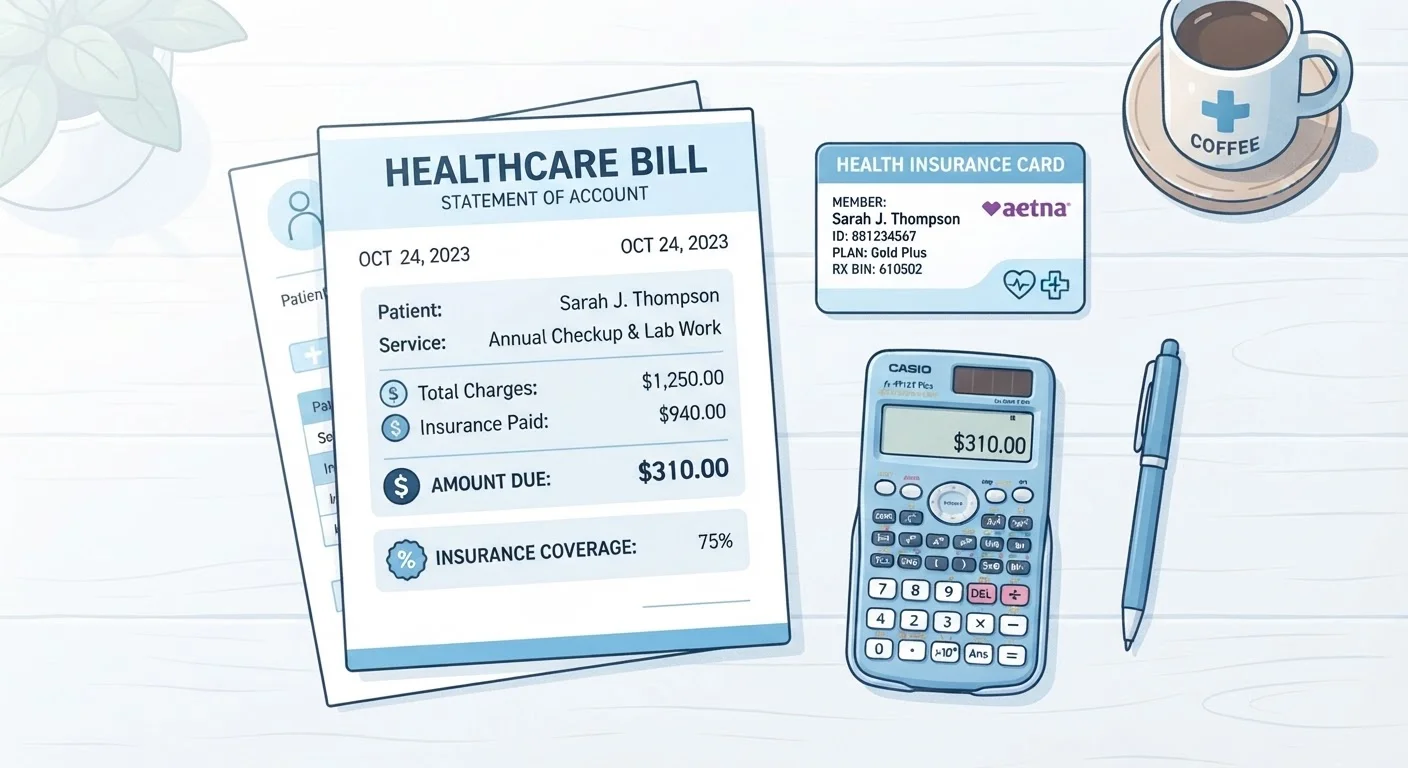

Why Health Insurance Feels So Complicated
Health insurance is one of the few purchases most Americans make without fully understanding what they're buying. The terminology is dense, the plan structures are genuinely complex, and the consequences of a wrong choice can show up months later as a surprise bill. None of that is your fault — the system wasn't designed to be transparent.
This guide cuts through that by translating the most important concepts into plain English. Whether you're enrolling through work for the first time, shopping the federal marketplace, or aging off a parent's plan, the same core logic applies. Once you understand it, comparing plans becomes far less intimidating.
This article is for general informational purposes only and is not personalized insurance, financial, or legal advice. Coverage terms, costs, and eligibility vary by plan and state. Always read your actual policy documents and consult a licensed insurance agent or navigator for guidance specific to your situation.
The Core Terms You Must Know
Before you can meaningfully compare plans, you need a working vocabulary. These six terms appear in every health insurance context.
Premium
The fixed monthly amount you pay to keep your insurance active, regardless of whether you use any medical services that month.
Deductible
The amount you pay out of pocket for covered services before your insurance starts sharing costs. A $1,500 deductible means you pay the first $1,500 of covered care each plan year.
Copay
A flat fee you pay at the time of a service, such as $30 for a primary care visit. Copays often apply even before you meet your deductible, depending on the plan.
Coinsurance
After you meet your deductible, coinsurance is the percentage of costs you and your insurer split. With 20% coinsurance, you pay 20% of a covered bill and your insurer pays 80%.
Out-of-Pocket Maximum
The most you'll pay for covered services in a single plan year. Once you reach this limit, your insurer pays 100% of covered in-network costs for the rest of the year.
Network
The group of doctors, hospitals, and facilities that have a contract with your insurer. Staying in-network keeps your costs lower; going out-of-network usually costs significantly more.
Notice how these terms interact: a plan with a low premium often has a high deductible. That tradeoff is intentional — you pay less each month, but carry more risk upfront when you actually need care. For a deeper reference, see the Health Insurance Glossary Every American Should Bookmark or our Health Insurance Glossary: 40 Terms Decoded in Plain English.
Plan Types Explained
The letters on plan names — HMO, PPO, EPO, HDHP — tell you how the plan controls your access to care and who pays for what.
- HMO (Health Maintenance Organization)
- You choose a primary care physician (PCP) who coordinates your care. You need a referral to see a specialist, and coverage is generally limited to in-network providers. Lower premiums, less flexibility.
- PPO (Preferred Provider Organization)
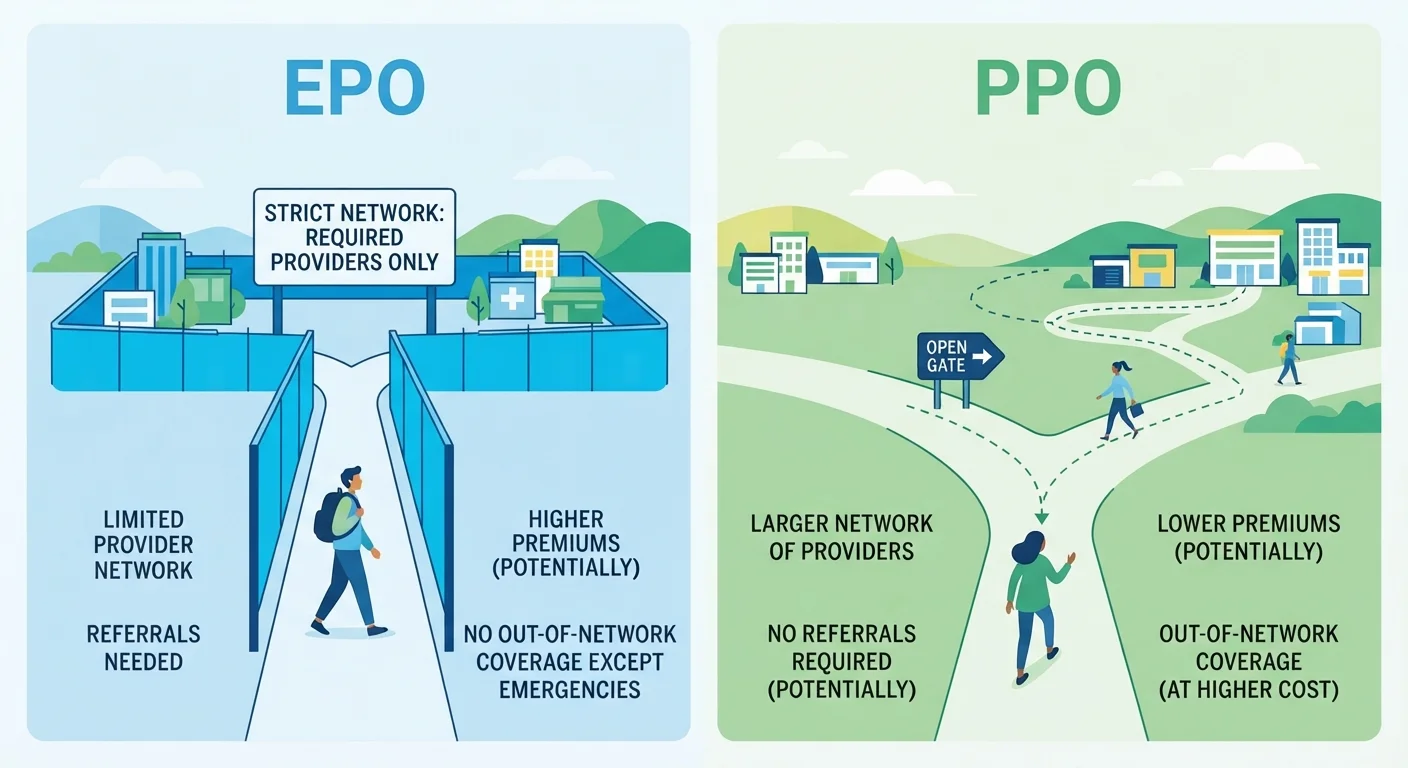
- No referral required. You can see specialists and out-of-network providers, though out-of-network costs are higher. More flexibility, higher premiums.
- EPO (Exclusive Provider Organization)
- Like a PPO in that you don't need referrals, but like an HMO in that out-of-network care is almost never covered (except emergencies). Mid-range cost.
- HDHP (High-Deductible Health Plan)
- Paired with lower premiums and a higher deductible threshold set by IRS guidelines. Eligible for a Health Savings Account (HSA), which lets you save pre-tax dollars for medical costs.
Match Your Plan Type to Your Usage
If you see a specific doctor regularly or take ongoing prescriptions, verify they're covered in a plan's network and formulary before enrolling. A cheaper premium won't save you money if your preferred provider is out-of-network or your medication isn't covered.
For a broader look at how these structures fit into the American system overall, see The Complete Picture of How American Health Insurance Works.
How Enrollment Actually Works
You can't sign up for health insurance on any random day. There are defined windows, and knowing them prevents gaps in coverage.
- Open Enrollment (OE): The annual period when anyone can enroll in or change a marketplace plan. Employer plans have their own OE windows, typically in fall.
- Special Enrollment Period (SEP): A 60-day window triggered by qualifying life events — losing job-based coverage, marriage, divorce, birth, or moving to a new coverage area.
- Medicaid and CHIP: These government programs have year-round enrollment for those who qualify based on income and household size.
Marketplace Subsidies Are Income-Based
Premium tax credits and cost-sharing reductions through the health insurance marketplace are calculated using your projected annual household income relative to the federal poverty level. Eligibility rules and subsidy amounts can change, so check the current guidelines at healthcare.gov or your state's exchange when you enroll.
If you qualify for subsidies through the federal marketplace (healthcare.gov) or your state's exchange, those are applied at enrollment based on your estimated household income. Subsidies can substantially lower your monthly premium — but it's important to report income changes during the year to avoid owing money back at tax time.
Reading a Plan Before You Commit
Every plan sold through the marketplace is required to provide a Summary of Benefits and Coverage (SBC) — a standardized, plain-language document that spells out what the plan covers, what it costs you, and what it excludes. This is your most reliable comparison tool.
When reviewing an SBC, focus on:
- The coverage examples — two standardized scenarios (having a baby, managing a chronic condition) that show estimated costs in real terms.
- Your cost-sharing structure — deductible, copays, coinsurance, and out-of-pocket maximum for both in-network and out-of-network care.
- Excluded services — services the plan simply won't cover, regardless of medical necessity.
Learn exactly how to use this document in What a Summary of Benefits and Coverage Document Actually Tells You. For broader policy literacy, Reading the Fine Print: Key Terms Every Insurance Policyholder Should Know covers the terms you'll encounter across all insurance types.
HealthCare.gov Plan Finder
The federal marketplace tool for browsing, comparing, and enrolling in ACA-compliant health plans. Also screens for subsidy eligibility based on your household income.
Health Insurance Glossary: 40 Terms Decoded
A plain-language reference covering every major health insurance term you're likely to encounter, from actuarial value to utilization review.
Summary of Benefits and Coverage Guide
Explains how to read the standardized SBC document every plan must provide — so you can compare plans accurately rather than guessing.
This article is for general informational purposes only and is not personalized insurance or financial advice. Consult a licensed insurance agent or navigator before making enrollment decisions.