The One Rule That Separates These Two Plans
EPOs and PPOs share one notable similarity: neither requires you to get a referral from a primary care physician before seeing a specialist. That shared feature trips a lot of people up, leading them to assume the plans are nearly identical. They're not.
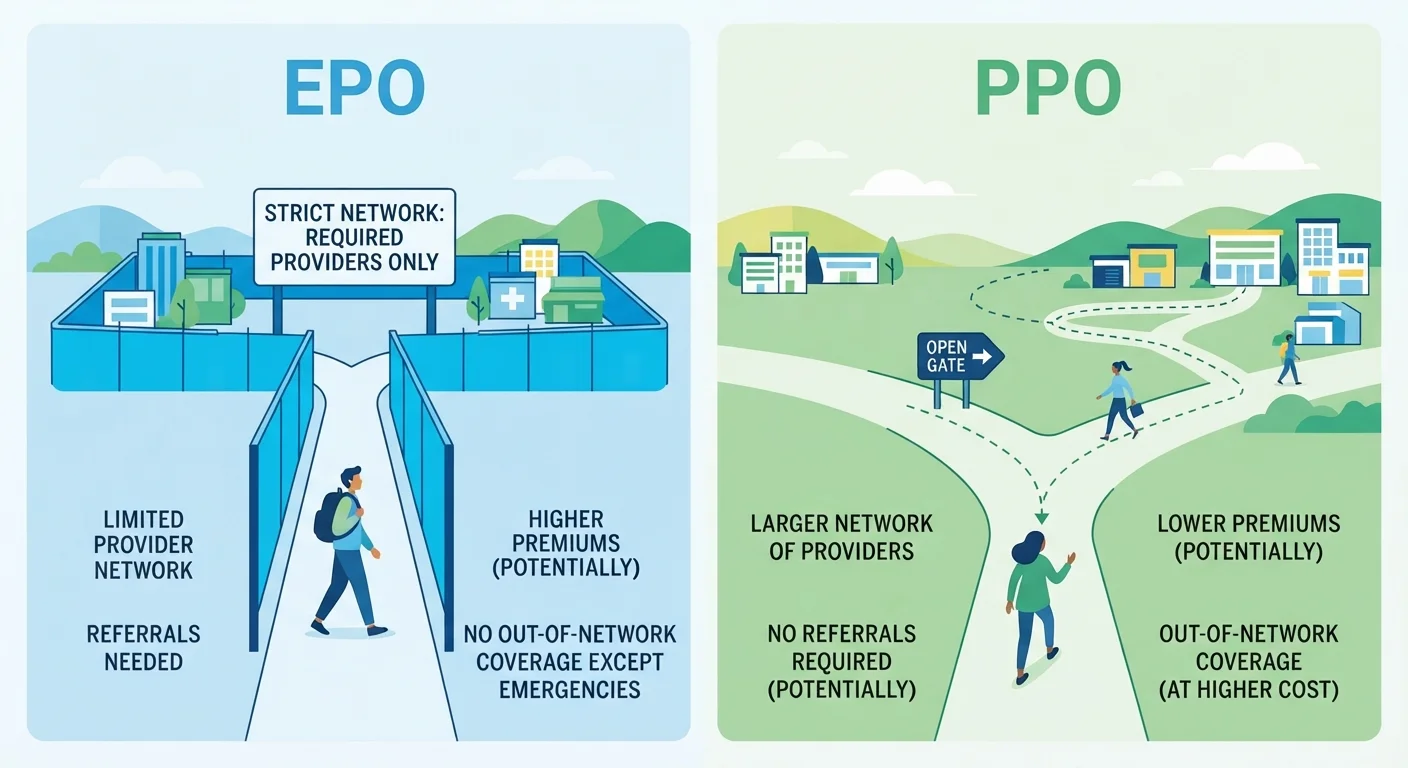
The defining difference is what happens when you step outside the plan's network. With a PPO, going out-of-network costs more — but the plan still pays a share. With an EPO, going out-of-network means the plan pays nothing at all, except in a genuine medical emergency. That single rule reshapes almost every practical decision you'll make about care.
For a broader look at how plan structures compare, see how HMOs and PPOs differ — EPOs sit somewhere in between those two models.
| Criterion | EPO | PPO |
|---|---|---|
| Referral required | No | No |
| Out-of-network coverage | Emergencies only | Yes, at higher cost |
| Monthly premium (typical) | Lower | Higher |
| Network size | Narrower | Broader |
| Cost predictability | High (single tier) | Moderate (two tiers) |
| Best for travelers | No | Yes |
Why Anyone Would Choose a Narrower Network
At first glance, an EPO sounds like a raw deal. You lose the out-of-network safety net, so why would anyone choose it?
The answer is almost always cost. Because EPOs limit their liability to in-network providers, insurers can price them with lower monthly premiums than equivalent PPO plans. If your regular doctors are already in the plan's network, you get the same specialist access — without the referral hassle — at a lower price per month.
EPOs also tend to have more predictable cost-sharing. When every covered visit is in-network by design, deductibles and copays follow a single, consistent schedule. There's no second tier of out-of-network coinsurance to track.
~$600+
Typical annual premium difference, EPO vs. PPO
Kaiser Family Foundation employer health benefits surveys indicate PPO enrollees generally pay meaningfully more in annual premiums than those in more restricted plan types, though exact figures vary by employer and region.
46%
Share of covered workers enrolled in PPO plans
According to KFF's 2023 Employer Health Benefits Survey, PPOs remain the most common plan type among employer-sponsored coverage in the United States.
The calculus changes quickly, though, if the network is thin. Before enrolling in any EPO, verify that your current physicians, any specialists you see regularly, and your preferred hospital system are all listed as in-network providers — and confirm their status directly with the insurer, not just the provider's office.
When the PPO's Flexibility Is Worth the Extra Cost
A PPO makes the most sense when you genuinely need access beyond a single local network. That includes people who:
- See specialists at academic medical centers or regional referral hospitals that may not join every EPO network
- Split time between states — a situation where an EPO's geographic limits become a real coverage gap
- Manage ongoing conditions that may require second opinions or care from a narrow pool of subspecialists
If any of those apply to you, the key factors for choosing a plan with a chronic condition are worth reviewing before you decide.
The PPO's out-of-network benefit isn't unlimited generosity — you'll still pay a higher deductible and higher coinsurance for non-preferred providers — but it means one unexpected specialist visit won't leave you with an entirely uncovered bill.
Out-of-Network Billing Can Still Surprise You
Even with a PPO, out-of-network providers can bill you for the difference between what the insurer pays and the provider's full charge — a practice sometimes called balance billing. Federal protections under the No Surprises Act limit this in certain situations, such as emergency care and some services at in-network facilities, but the rules don't cover all scenarios. Understanding your plan's out-of-network cost-sharing structure before you need it is always worthwhile.
How to Evaluate Either Plan for Your Situation
The plan type matters less than how that type fits your actual care patterns. Before open enrollment closes, work through these questions:
- Is your care local and predictable? If yes, an EPO's network restriction may be a non-issue in practice.
- Have you verified in-network status? Call the insurer and confirm each provider's participation — directory errors are common.
- What's the realistic premium difference? Calculate the annual savings an EPO offers and weigh that against the financial exposure of one uncovered out-of-network visit.
- Do you travel or live in multiple states? If so, the EPO's emergency-only out-of-network rule is a structural risk, not a minor inconvenience.
For a step-by-step approach to comparing plans during enrollment season, open enrollment without the guesswork walks through the process clearly. And if you want a deeper look at the network trade-off specifically, the network access trade-off most people overlook covers what to watch for in more detail.
This article provides general health insurance information for educational purposes only and is not personalized insurance, financial, or legal advice. Coverage terms, networks, premiums, and regulations vary by insurer, plan, and state. Always review your actual policy documents and consult a licensed insurance agent or adviser before making coverage decisions.