
Why Open Enrollment Trips People Up
Open enrollment is one of the few financial decisions most Americans make every year that directly affects both their health and their budget — yet most people spend less than an hour on it. The terminology is dense, the plan options look nearly identical on the surface, and the window to act is short. The result is that millions of people either skip the process and get auto-enrolled in whatever they had before, or they make a quick guess based on premium alone.
Neither approach is ideal. Plan networks shift. Drug formularies change. Your own healthcare needs evolve. Taking even 30 to 60 focused minutes each enrollment season can prevent costly surprises mid-year.
If you want to avoid the common thinking errors that lead to poor plan choices, health insurance myths that lead to costly mistakes is worth reading alongside this guide.
What you will need
What You'll Need Before You Start
Having the right information on hand before you open any enrollment portal makes the process significantly faster and reduces the chance of error. Gather your documents, access your tools, and you'll be ready to move through the steps below with confidence.
HealthCare.gov or your state's Marketplace website
Used to compare and enroll in Marketplace health plans if you don't have employer coverage.
Your employer's benefits enrollment portal
The platform through which employer-sponsored plan options are presented and elections are submitted.
Summary of Benefits and Coverage (SBC) documents
Standardized plan summaries that let you compare costs and coverage across different plan options side by side.
Formulary (drug coverage list)
A list of medications covered by a plan, used to verify your prescriptions are included before you enroll.
Provider directory
A searchable list of in-network doctors and facilities, used to confirm your preferred providers are covered.
Step-by-Step: Navigating Open Enrollment
Follow these steps in order. Each one builds on the last, and skipping ahead — especially to the final submission step before doing the cost comparison — is how people end up locked into a plan that doesn't fit.
Confirm your enrollment window and pathway
Open enrollment dates vary depending on how you access insurance. For federal Marketplace plans, enrollment typically runs from November 1 through January 15 (dates can shift slightly by year). Employer-sponsored enrollment windows are set by each company — often in October or November. Medicaid and the Children's Health Insurance Program (CHIP) accept applications year-round. Know which pathway applies to you before anything else. See how each enrollment pathway works for a deeper breakdown of who qualifies for what.
Review your healthcare usage from the past year
Pull together your EOBs, pharmacy receipts, or even a rough count of doctor visits. Ask yourself: Did you hit your deductible last year? Did you use specialist care? Are you managing a chronic condition? This honest self-assessment tells you whether a low-premium, high-deductible plan will actually save you money — or cost you more out of pocket than a richer plan would have.
Learn the five terms that matter most
You don't need to memorize an insurance glossary, but five terms will unlock most plan comparisons:
- Premium: Your monthly payment to maintain coverage, regardless of whether you use care.
- Deductible: The amount you pay out of pocket before insurance starts sharing costs.
- Copay: A fixed fee you pay per visit or service (e.g., $30 per primary care visit).
- Coinsurance: Your percentage share of costs after the deductible is met (e.g., you pay 20%, insurer pays 80%).
- Out-of-pocket maximum: The most you'll ever pay in a plan year; after this, insurance covers 100%.
If these terms are still fuzzy, Health Insurance Decoded walks through each one in plain English.
Check that your doctors and drugs are covered
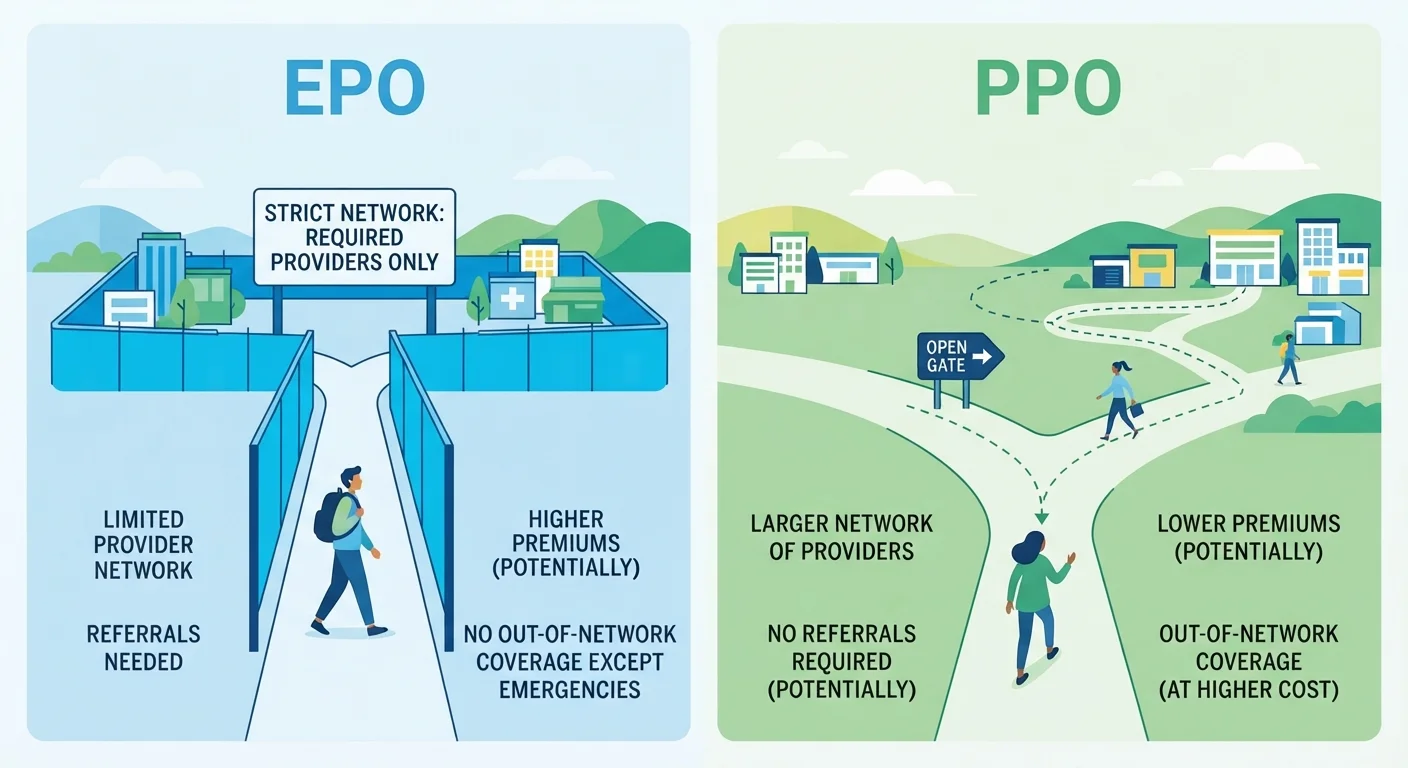
Every plan has a network — a set of providers who have agreed to negotiated rates with the insurer. Seeing an out-of-network provider can cost dramatically more, or may not be covered at all depending on the plan type. Use the plan's provider directory to verify your primary care doctor and any specialists are in-network. Separately, check the plan's formulary to make sure your regular medications are on the covered drug list and note which tier they fall under, since tier placement affects your cost.
Run a real cost comparison across two or three plans
Don't compare premiums alone. Use the plan's Summary of Benefits and Coverage (SBC) to estimate your total annual cost under a realistic scenario. A simple formula: Annual premium + estimated out-of-pocket costs = true annual cost. If you visited the doctor four times last year and filled two prescriptions monthly, plug those numbers into each plan's cost structure. A plan with a $150/month lower premium but a $2,000 higher deductible may not be cheaper for your actual situation.
Submit your enrollment before the deadline
Once you've selected a plan, complete your enrollment through the appropriate portal — your employer's benefits system or your Marketplace account. Double-check that dependents are correctly listed, your income estimate is accurate (for Marketplace subsidies), and you receive a confirmation. Missing the deadline means waiting until next year unless you experience a qualifying life event such as job loss, marriage, or the birth of a child. Learn more about what those exceptions look like in what happens if you miss the open enrollment window.
Use the Summary of Benefits and Coverage
Every plan is required by federal law to provide a standardized Summary of Benefits and Coverage (SBC) document. It's designed to make apples-to-apples comparison easier. Request the SBC for each plan you're considering and focus on the deductible, out-of-pocket maximum, and coverage examples section.
After You Enroll: What to Do Next
Enrollment confirmation is not the finish line. Once you receive your member ID card and plan documents, take a few minutes to verify the effective date of your coverage and confirm your plan type (HMO, PPO, EPO, or HDHP). If you enrolled in an HDHP, look into opening or contributing to an HSA — contributions are tax-deductible and the funds roll over year to year.
For a more detailed walkthrough of evaluating your final options before you lock in, see our step-by-step plan selection guide.
Plan Details Can Change Year to Year
Even if you're happy with your current plan, review it during every open enrollment period. Insurers can change premiums, deductibles, provider networks, and drug formularies annually. A doctor or medication that was covered last year may not be covered this year under the same plan name.
This article is for general informational purposes only and does not constitute personalized insurance, financial, or legal advice. Coverage terms, costs, eligibility, and enrollment rules vary by plan, employer, and state. Always review your actual plan documents and consult a licensed insurance agent or benefits adviser for guidance specific to your situation.