The Core Coverage Types — What Each One Actually Does
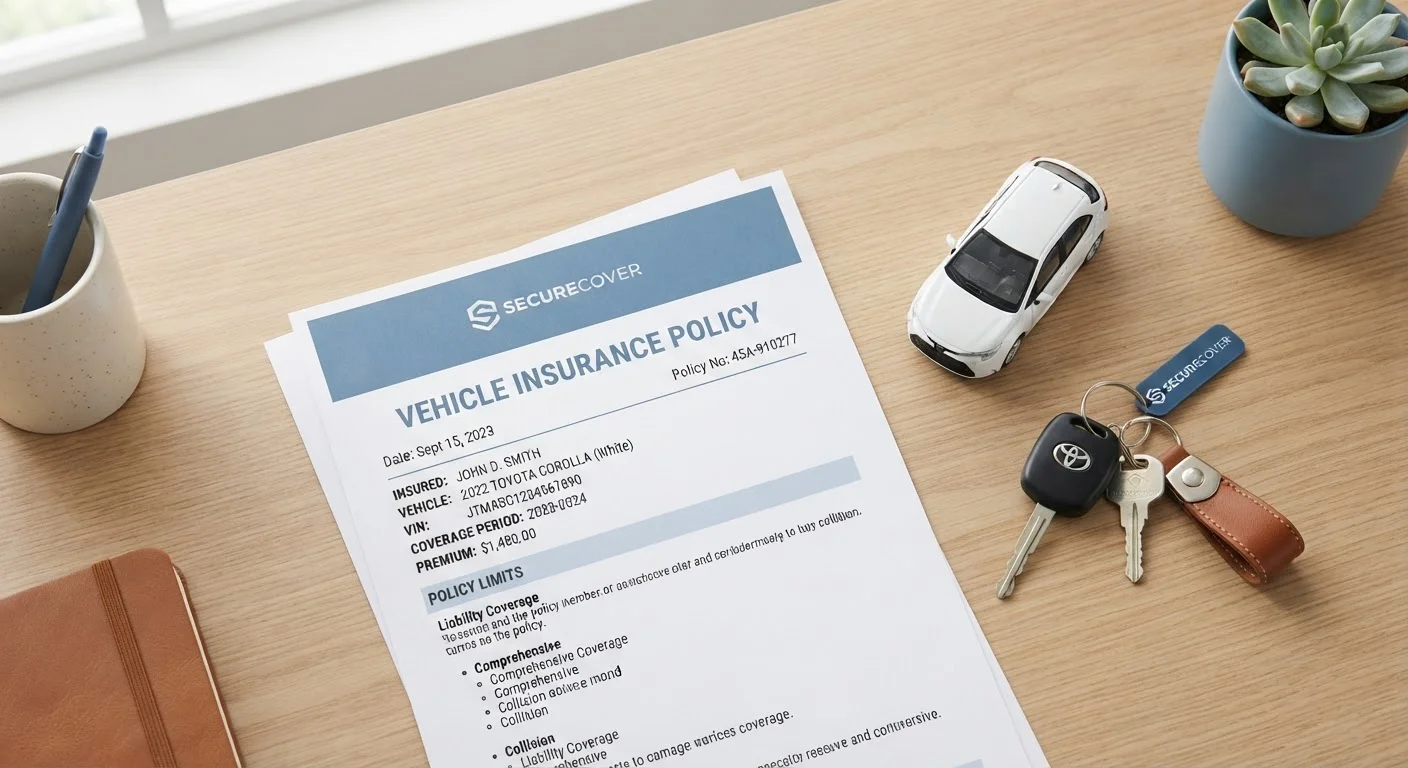
A standard personal auto policy isn't a single blanket of protection — it's a stack of separate coverage modules, each with its own rules. Here's what each one covers:
- Liability (Bodily Injury & Property Damage): If you cause an accident, liability pays for the other party's medical bills and vehicle repairs. It does not pay anything toward your own injuries or your own car. Most states require a minimum amount, but those minimums are often low relative to real-world accident costs.
- Collision: Pays to repair or replace your vehicle after a crash — with another car, a guardrail, or a pothole — regardless of fault. Subject to your deductible.
- Comprehensive: Covers vehicle damage from events other than collisions: theft, fire, hail, flooding, falling objects, and animal strikes. Also subject to a deductible.
- Medical Payments (MedPay) / Personal Injury Protection (PIP): Covers medical expenses for you and your passengers after an accident, regardless of fault. PIP is broader than MedPay and is required in no-fault states.
- Uninsured/Underinsured Motorist (UM/UIM): Steps in when the at-fault driver has no insurance or insufficient coverage to pay for your losses.
For a closer look at how liability-only compares to carrying all three main coverages together, see Liability vs. Full Coverage.
Check Your Deductible Before You Need It
Your collision and comprehensive deductibles are the amounts you pay out of pocket before insurance kicks in. A higher deductible lowers your premium but increases your cost at claim time. Review the how deductibles work explainer to make sure your current deductible aligns with what you can realistically afford to pay after a loss.
Common Exclusions: What Your Policy Won't Pay For
Exclusions are where most policyholders get surprised. Even a policy with liability, collision, and comprehensive has real limits on what it covers:
"Full Coverage" Is Not a Defined Term
Insurers and agents use "full coverage" loosely to mean liability plus collision plus comprehensive — but there's no industry-standard definition, and significant gaps can still exist within that bundle. Always ask specifically which coverage types are included, what the limits are, and what endorsements you may need.
- Mechanical breakdown and wear: Auto insurance is not a maintenance contract. Engine failure, worn brakes, and routine deterioration aren't covered — that falls under a warranty or service contract.
- Personal belongings in the vehicle: Comprehensive won't cover a stolen laptop or camera bag. Those items may be covered under your renters or homeowners policy — see what renters insurance covers for context.
- Intentional damage: Damage you deliberately cause is excluded across the board.
- Commercial use gaps: Using your personal vehicle for rideshare, delivery, or other paid services can void coverage unless you've added a specific endorsement.
- Custom parts and equipment: Aftermarket upgrades — custom wheels, audio systems, lift kits — typically aren't covered under standard collision or comprehensive without a separate endorsement.
Coverage gaps are more common than most drivers realize. Common insurance coverage gaps explains why they happen and how to spot them in your own policy.
1 in 8
U.S. drivers estimated to be uninsured
According to the Insurance Research Council, roughly one in eight drivers on U.S. roads carries no auto insurance — making UM/UIM coverage a meaningful protection for everyone else.
~13%
Share of drivers without any auto insurance
The Insurance Information Institute has reported that uninsured motorist rates vary widely by state, with some states exceeding 20% of drivers uninsured.
Reading Your Policy So You Know Where You Stand
The fastest way to know what you actually have is to read your declarations page — the one-to-two-page summary at the front of your policy packet. It lists every coverage type you've purchased, your coverage limits, and your deductibles in plain columns. If a coverage type isn't listed there, you don't have it.
How to read your declarations page walks through each line item so you can interpret what you're looking at. For situations where your auto or home policy limits still fall short of a serious liability claim, umbrella insurance is worth understanding as a separate layer of protection.
This article is for general informational purposes only and does not constitute insurance, financial, or legal advice. Coverage terms, exclusions, and state requirements vary by policy and insurer. Always read your actual policy documents and consult a licensed insurance professional for guidance specific to your situation.