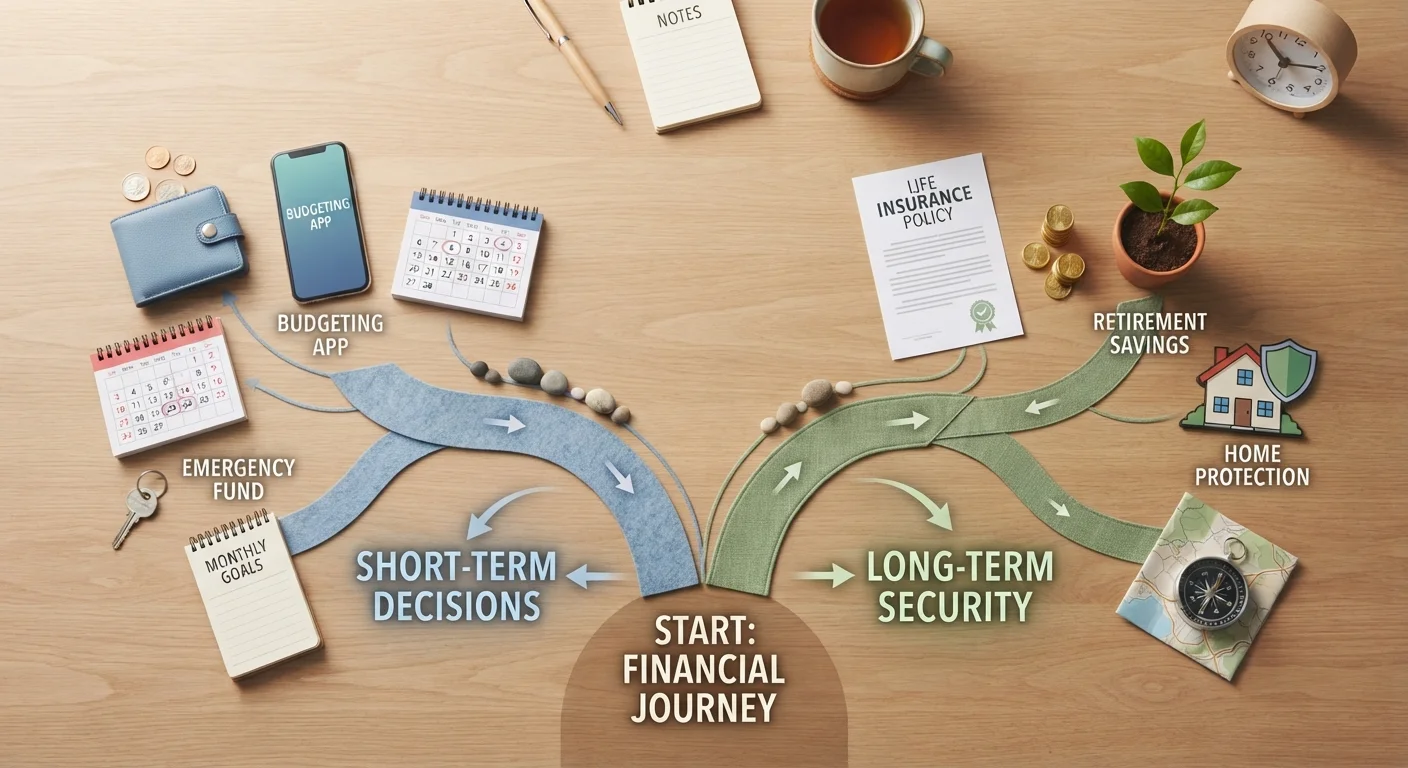
How Each Policy Type Is Structured
At its core, life insurance pays a death benefit — a lump sum — to your named beneficiaries when you die. The two main policy structures differ significantly in how long that coverage lasts and what else the policy does while you're alive.
Term life insurance covers you for a specific period — commonly 10, 20, or 30 years. If you die within the term, your beneficiaries receive the death benefit. If the term expires and you're still living, the coverage ends with no payout. Some policies offer a renewal or conversion option, but at higher rates.
Whole life insurance is a form of permanent life insurance, meaning it does not expire as long as premiums are paid. In addition to the death benefit, whole life policies accumulate cash value — a savings-like component that grows at a guaranteed rate set by the insurer. You can borrow against this cash value or, in some cases, surrender the policy for it. For a plain-language breakdown of terms like cash value and beneficiary, see our Life Insurance Glossary.
| Criterion | Term Life | Whole Life |
|---|---|---|
| Coverage duration | Fixed term (e.g., 10–30 years) | Lifetime (permanent) |
| Premium cost | Lower for same death benefit | Significantly higher |
| Cash value | None | Grows at guaranteed rate |
| Death benefit | Paid only if death occurs in term | Paid whenever death occurs |
| Policy loans | Not available | Can borrow against cash value |
| Best for | Income replacement, fixed obligations | Estate planning, lifelong coverage |
| Premium flexibility | Fixed during term | Fixed for life |
Cost Differences: Why Premiums Vary So Much
Premium cost is often where the decision becomes concrete. Term life is substantially less expensive than whole life for the same death benefit amount. The reason is straightforward: a term policy is a pure insurance product. The insurer bets that most policyholders will outlive the term — and statistically, most do.
Whole life premiums are higher because the insurer must fund both the guaranteed death benefit (which will eventually be paid) and the cash value growth. Premiums are also typically fixed for life, which provides predictability but requires a long-term commitment.
~$28/mo
Typical term life premium for healthy 30-year-old
LIMRA industry data suggests a healthy 30-year-old can secure a 20-year, $500,000 term policy for roughly $25–$35 per month, though actual rates vary by insurer and health classification.
~5–15×
Whole life premium multiple vs. comparable term
Insurance industry analyses generally show whole life premiums running five to fifteen times higher than term for the same death benefit amount, reflecting permanent coverage and cash value funding.
Age and health status affect premiums for both policy types. Buying earlier generally locks in lower rates. A licensed agent can provide actual quotes based on your specific situation — costs vary considerably by insurer, health classification, and coverage amount.
When One Genuinely Fits Better Than the Other
The choice isn't about which policy is objectively superior — it's about which structure matches your financial life stage and goals.
Term life tends to make sense when:
- You have dependents who rely on your income and want to protect them through specific milestones (children finishing school, a mortgage being paid off).
- Budget constraints make whole life premiums difficult to sustain.
- Your need for coverage is temporary and tied to a specific financial obligation.
Whole life tends to make sense when:
- You want coverage that will definitely pay out, regardless of when you die.
- You're looking for a conservative, tax-advantaged savings vehicle alongside coverage.
- Estate planning is a factor — permanent policies can help with wealth transfer strategies.
It's worth noting that some people use both: a term policy for large income-replacement needs now, and a smaller whole life policy for long-term or estate planning purposes. This isn't a one-size-fits-all decision. For context on how employer-sponsored coverage might fit alongside a personal policy, see Group Life vs. Individual Policy.
What Happens When a Term Policy Expires
If you're still living when a term policy ends, coverage simply stops — there is no payout and no refund of premiums in most standard term policies. Some insurers offer a 'return of premium' rider that refunds premiums if you outlive the term, but this adds cost. Others allow conversion to a permanent policy, typically without a new medical exam, up to a specified deadline. Check your policy language carefully for these options.
This article is for general informational purposes only and does not constitute personalized insurance, financial, or legal advice. Coverage terms, premiums, and eligibility vary by insurer, state, and individual circumstances. Read actual policy documents carefully and consult a licensed insurance agent or financial adviser before making coverage decisions.