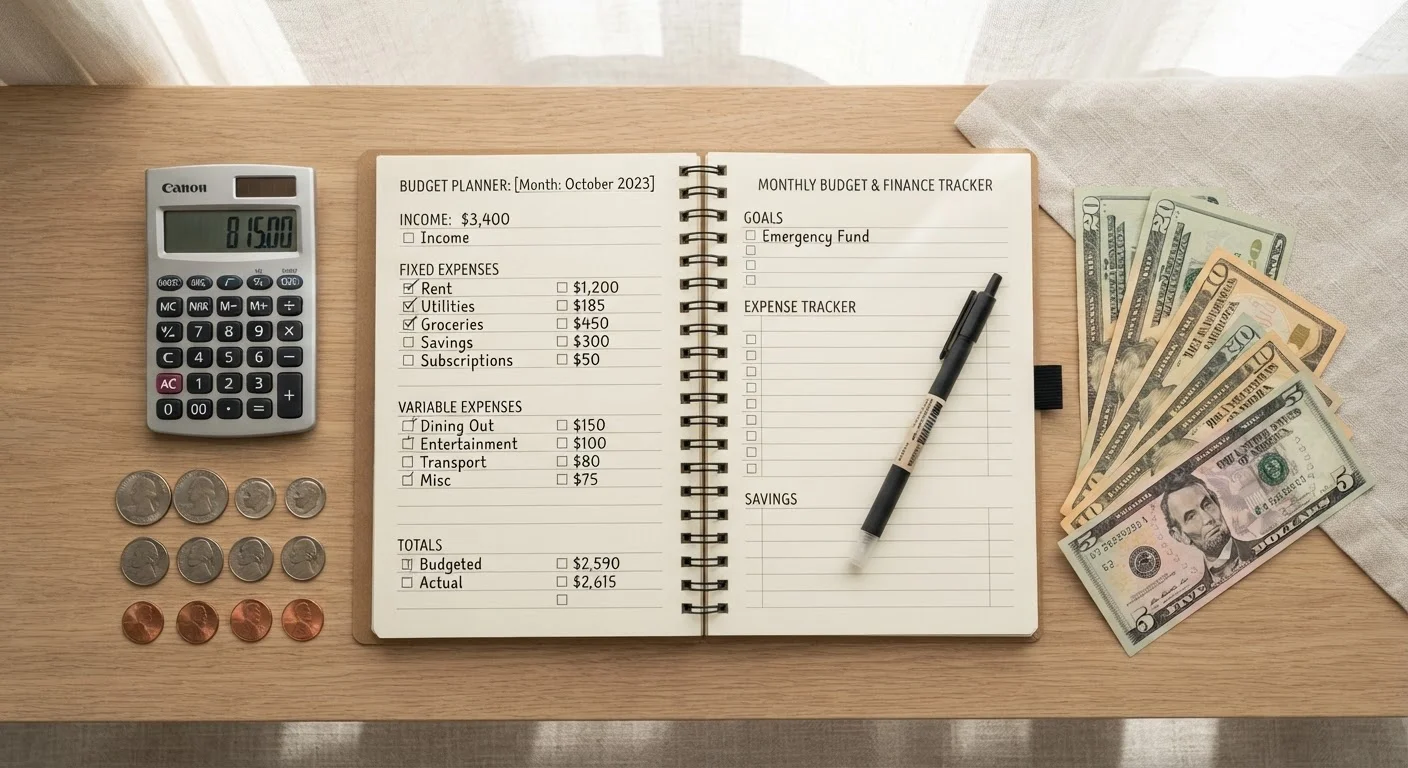

Why Budget Categories Matter
A budget category is simply a label you assign to a group of related expenses. Categories give structure to your spending, making it easier to see where your money goes and to spot imbalances before they become problems. Without them, a list of transactions is just noise.
Most American households operate with more categories than they realize — housing, food, transportation, and subscriptions are just the start. Organizing these into logical groups is the first step toward a budget that actually reflects your life. For a broader introduction to budgeting fundamentals, see Personal Budgeting From the Ground Up.
| Most common largest budget category | Housing (U.S. Bureau of Labor Statistics, Consumer Expenditure Survey) |
| Recommended emergency fund size | 3–6 months of essential expenses (Widely cited personal finance guidance) |
| 50/30/20 rule — Needs allocation | 50% of net income (Common budgeting framework) |
| 50/30/20 rule — Wants allocation | 30% of net income (Common budgeting framework) |
| 50/30/20 rule — Savings & debt allocation | 20% of net income (Common budgeting framework) |
| Average number of household budget categories | 8–12 for most households (General personal finance guidance) |
Core Budget Categories at a Glance
The categories below represent the most common groupings used in personal budgets across the United States. Every household is different — treat this as a reference framework, not a rigid prescription.
Housing
Typically the largest single budget line. Includes rent or mortgage payment, property taxes (if paid directly), homeowner's or renter's insurance, HOA fees, and routine maintenance or repairs.
Food
Divided into groceries (food purchased for home preparation) and dining out (restaurants, takeout, delivery apps). Keeping these separate helps identify where food spending actually goes.
Transportation
Covers car payments, auto insurance, fuel, parking, tolls, public transit passes, and routine vehicle maintenance. Rideshare costs typically belong here as well.
Utilities
Electricity, gas, water and sewer, trash collection, and internet service. Some households also include a basic cell phone plan in this category; others treat it separately.
Healthcare
Health insurance premiums paid out of pocket, prescription costs, copays, dental, vision, and any out-of-pocket medical expenses. This category can be unpredictable — a small buffer helps.
Debt Payments
Any fixed obligation to repay borrowed money: student loans, personal loans, credit card minimum payments, and similar commitments. For strategies to tackle these balances, explore the Saving & Debt hub.
Savings and Emergency Fund
Treating savings as a budget category — rather than whatever is left over — is a widely recommended approach. This line typically covers both a general emergency fund and specific savings goals such as a down payment or vacation fund.
Personal and Household
Clothing, cleaning supplies, toiletries, and personal care. These are easy to underestimate; tracking them for a month or two before budgeting helps set realistic figures.
Entertainment and Subscriptions
Streaming services, gym memberships, hobbies, concerts, books, and similar discretionary costs. Subscriptions in particular have a way of accumulating — a periodic audit is worthwhile.
Childcare and Education
Daycare, after-school programs, school supplies, extracurricular fees, and tuition. For households without children, this category often covers continuing education or professional development instead.
Giving
Charitable donations, religious contributions, and gifts for birthdays or holidays. Including this category explicitly helps households align spending with values.
Fixed expense
A cost that stays the same amount each billing period, regardless of usage — such as a rent payment or car loan installment. Fixed expenses are generally the easiest to plan around in a budget.
Variable expense
A cost that changes month to month, such as groceries, fuel, or utility bills. Variable expenses require more active tracking because the amounts are not predetermined.
Discretionary spending
Money spent on wants rather than needs — dining out, entertainment, hobbies, and similar non-essential purchases. Discretionary categories are typically the most flexible when a budget needs trimming.
Sinking fund
A savings sub-category where money is set aside gradually for a predictable future expense, such as car registration or holiday gifts. Sinking funds prevent irregular large costs from disrupting a monthly budget.
Net income
Take-home pay after taxes, benefits deductions, and other withholdings have been removed. Net income — not gross income — is the figure a budget should be built around.
Budget category
A label applied to a group of related expenses to organize and track spending. Categories can be broad (e.g., Transportation) or narrow (e.g., Fuel) depending on the level of detail that is useful.
How to Group and Customize Your Own Categories
No single category structure works for every household. The right level of detail depends on where your money tends to slip away. A useful rule of thumb: if a spending area regularly exceeds a few hundred dollars a month, it likely deserves its own category rather than being buried inside a broader one.
33%
Average share of spending on housing
According to the U.S. Bureau of Labor Statistics Consumer Expenditure Survey, housing consistently accounts for roughly a third of average household expenditures.
~13%
Average share of spending on food
The BLS Consumer Expenditure Survey shows food — groceries and dining combined — represents approximately 13% of average annual household spending.
17%
Average share of spending on transportation
Transportation is typically the second-largest household budget category, per the U.S. Bureau of Labor Statistics Consumer Expenditure Survey data.
Common customization approaches include:
- Merging small categories — If your entertainment and dining-out spending are both modest, a single "Leisure" category may be enough.
- Splitting large categories — A household with high medical costs might separate insurance premiums from out-of-pocket expenses to track each clearly.
- Adding sinking funds — A sinking fund is money set aside gradually for a known future expense (car registration, annual insurance premium, holiday gifts). These work well as sub-categories inside Savings.
Once your categories are established, the next step is building a system around them. The Complete Guide to Personal Budgeting in America walks through that process end to end. You may also find the budgeting terms glossary helpful when you encounter unfamiliar vocabulary.
This article is for general informational and educational purposes only and does not constitute personalized financial advice. For guidance tailored to your individual circumstances, consult a qualified financial professional.