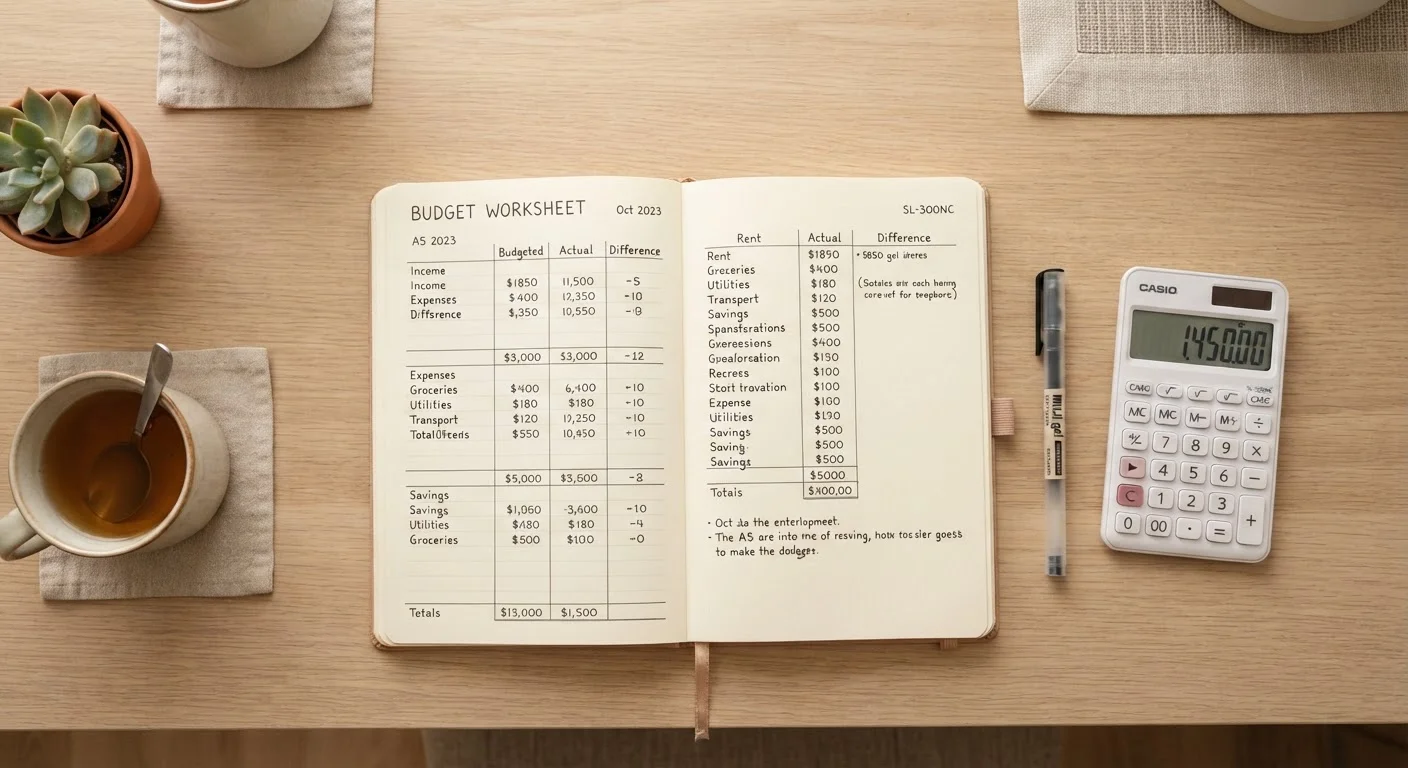

Why Most Budgets Don't Last
Short-term budgeting is relatively easy — motivation is high, the plan is fresh, and the numbers feel manageable. What's far harder is sustaining that discipline across months and years, through income changes, unexpected bills, and the everyday pull of spending. As explored in why budgets fall apart after the first month, the breakdown usually isn't about math — it's about structure and habit.
Durable budgets share a common foundation: they're built around systems, not willpower. The habits below aren't flashy, but they're the ones that hold up when motivation fades.
“A budget is telling your money where to go instead of wondering where it went.”
— Dave Ramsey, Personal finance author and radio host
The Practices That Actually Stick
The following approaches reflect widely recognized budgeting fundamentals. They work not because they're complicated, but because they remove friction, reduce surprises, and align your spending with goals that matter to you.
Automate savings before you spend anything else.
When savings happen automatically at the start of each pay period, they become non-negotiable — like rent. This eliminates the decision fatigue of choosing to save after spending, which research consistently shows leads to lower savings rates.
Build a dedicated category for irregular expenses.
Car registration, annual subscriptions, holiday gifts, and medical co-pays are predictable in the aggregate even when unpredictable in timing. Failing to plan for them is one of the most common reasons budgets break down after month one.
Conduct a structured monthly budget review.
A budget that isn't revisited becomes out of date quickly. Life changes — income shifts, expenses rise — and a plan that reflects last year's reality won't support this year's goals. Regular reviews surface category drift before it becomes a crisis.
Define a clear 'why' behind your budget.
Abstract goals like 'spend less' rarely survive real-world friction. A concrete, personally meaningful goal — paying off a specific debt, building a three-month emergency fund — creates motivation that outlasts initial enthusiasm.
Allow planned flexibility rather than enforcing rigidity.
Overly strict budgets that leave no room for enjoyment or variation tend to collapse entirely when broken even once. Building in a small discretionary buffer acknowledges real human behavior and prevents all-or-nothing thinking.
If you're managing finances alongside a partner or household members, see budgeting as a couple or household for strategies tailored to shared finances. Those with variable income may find additional structure in budgeting on an irregular income.
Start Building Today
The gap between knowing these habits and practicing them is where most people get stuck. The following actions are designed to create immediate traction — each takes under an hour and produces a measurable result.
This Is General Financial Information
The practices described here are educational in nature and do not constitute personalized financial advice. Everyone's income, expenses, and goals differ. For guidance tailored to your specific situation, consider consulting a licensed financial adviser or certified financial planner.
Addressing common misconceptions is also part of sustaining a budget long-term. The budgeting myths that keep people stuck article covers beliefs that quietly undermine progress. And once your budget is stable, directing any surplus toward saving and paying down debt accelerates long-term financial security.
This article is for general informational and educational purposes only and does not constitute personalized financial, tax, or legal advice. Consult a licensed financial professional before making decisions specific to your situation.