
How Compounding Actually Works
Imagine you invest $1,000 at a 6% annual return. After year one, you've earned $60 in interest, giving you $1,060. In year two, you earn 6% on $1,060 — not the original $1,000 — which produces $63.60. That extra $3.60 may seem trivial, but the same mechanism repeated over 30 years turns $1,000 into approximately $5,743, with no additional contributions.
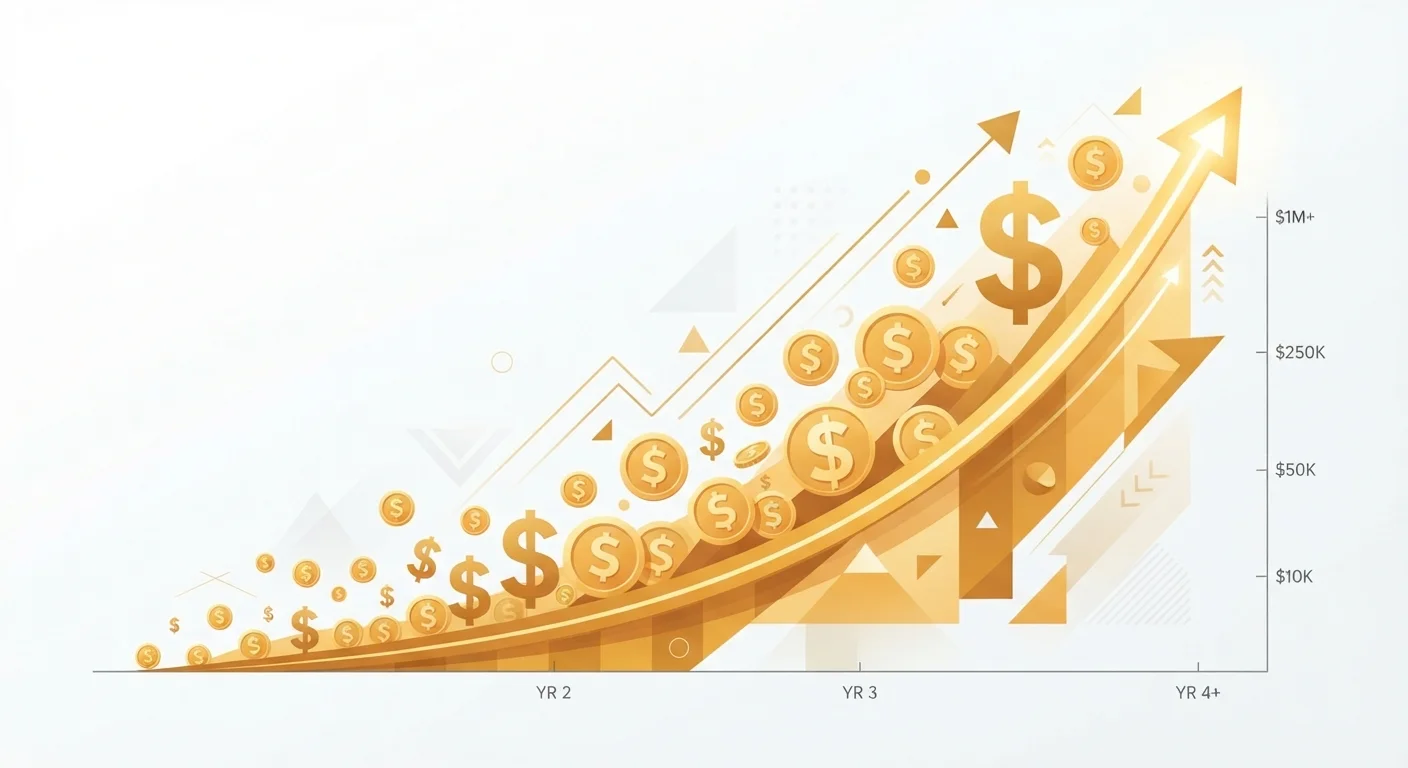
This is the core mechanic: each period's earnings become part of the new base on which future earnings are calculated. The growth curve isn't a straight line — it bends upward, accelerating over time. Understanding this is foundational to what it actually means to invest your money.
$5,743
Growth of $1,000 at 6% over 30 years
Illustrative calculation assuming annual compounding and no additional contributions — demonstrates the long-term compounding multiplier.
72
Rule of 72: years to double at 1% rate
The Rule of 72 is a widely used mental math shortcut: divide 72 by the annual return rate to estimate how long it takes to double an investment.
10 years
Head start that outweighs double contributions
Illustrative modeling consistently shows that starting a decade earlier often outperforms contributing twice as much per month but starting later.
Why Time Is the Most Valuable Input
Of all the variables in compounding — rate of return, contribution size, frequency — time has the greatest impact. Consider two investors: one invests $200 per month starting at age 25, the other starts at 35 with $400 per month. Assuming a 6% average annual return, the earlier investor, despite contributing half as much per month, typically ends up with a larger balance at retirement. The decade head-start is that powerful.
This isn't an argument for panic or regret if you're starting later. It's an argument for starting now. Every year of delay reduces the compounding runway. Equally important, as explored in how time in the market changes everything, staying invested through market fluctuations matters as much as starting early.
Start With What You Have
You don't need a large lump sum to begin benefiting from compounding. Even small, regular contributions to a tax-advantaged account can grow meaningfully over decades. The most important step is simply to start — consistency and time matter more than contribution size in the early years.
The Hidden Threat: Compounding Working Against You
Compound interest doesn't distinguish between assets and liabilities. On a credit card charging 20% APR, an unpaid $2,000 balance compounds monthly — meaning the interest owed itself accumulates interest. Within three years of minimum payments, that balance can grow substantially and prove difficult to eliminate.
This dynamic makes high-interest debt a direct competitor to your investment returns. If your debt is compounding at 20% and your investments return 7%, the math strongly favors paying down the debt first. The Saving & Debt hub offers practical guidance on prioritizing debt repayment alongside long-term savings goals.
The same compounding logic applies to investment fees. A fund charging a 1% annual expense ratio versus a 0.1% alternative may seem like a rounding error — but over 30 years, that difference can erode a meaningful portion of your ending balance. Learn more about how fees quietly erode investment returns to see just how significant this effect is.
Putting Compounding to Work in a Real Portfolio
Compounding applies across asset classes — savings accounts, bonds, dividend-paying stocks, and index funds all generate returns that can reinvest and compound. The key is choosing vehicles that align with your goals and time horizon. Stocks, bonds, and cash each behave differently, and a diversified mix helps balance growth potential with manageable risk.
Tax-advantaged accounts — such as 401(k)s and IRAs — amplify compounding further by deferring or eliminating taxes on growth, meaning more of your returns stay invested and continue compounding. Reinvesting dividends rather than withdrawing them is another straightforward way to keep the compounding engine running.
Compounding Rates Are Never Guaranteed
The examples in this article use illustrative rates for educational purposes. Real investment returns vary year to year and are never guaranteed. Market downturns, inflation, taxes, and fees all affect actual outcomes. Use these illustrations to understand the mechanism, not as a projection of what your portfolio will achieve.
This article is for general informational and educational purposes only and does not constitute personalized financial, investment, or tax advice. Consult a qualified financial professional before making decisions about your own financial situation. All investing involves risk, including the possible loss of principal. Past performance does not guarantee future results.