
What Are the Three Core Asset Classes?
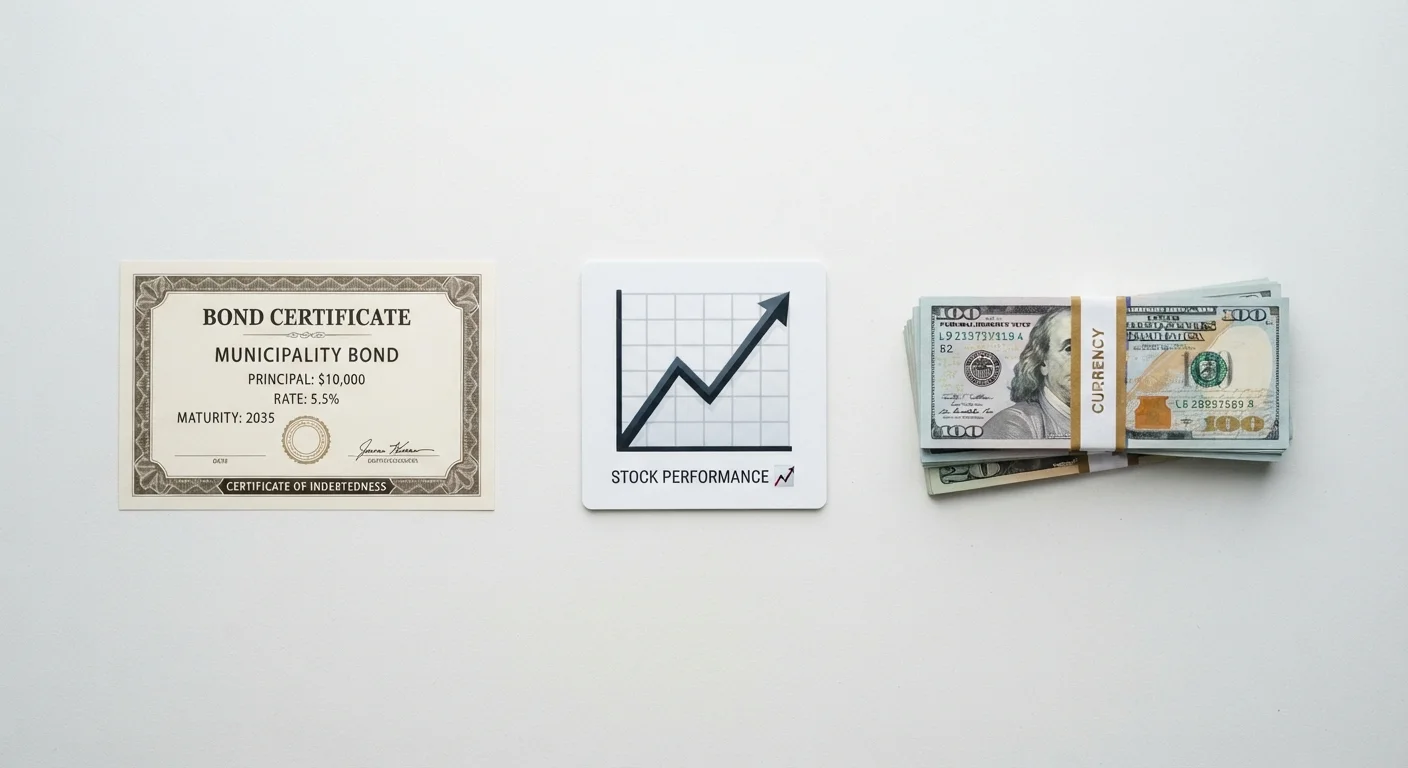
Every investment portfolio is built from some combination of three fundamental asset classes: stocks, bonds, and cash (including cash equivalents). Each behaves differently in response to economic conditions, carries a different risk profile, and serves a different purpose. If you're new to investing, start with foundational investing concepts before diving into how these assets compare.
Stocks (also called equities) represent ownership shares in a company. When you buy stock, you become a partial owner and can benefit if the company grows in value — but you also bear the risk of loss if it struggles.
Bonds are debt instruments. When you purchase a bond, you are effectively lending money to a government or corporation, which agrees to pay you periodic interest and return your principal at a set maturity date.
Cash and cash equivalents include savings accounts, money market funds, Treasury bills, and certificates of deposit (CDs). These are low-risk holdings that prioritize capital preservation and liquidity over growth.
How Each Asset Class Behaves
Understanding how stocks, bonds, and cash respond to market conditions helps explain why investors typically hold all three.
| Stocks | Bonds | Cash & Equivalents | |
|---|---|---|---|
| Growth potential | High | Moderate | Very low |
| Income generation | Variable (dividends) | Regular (interest payments) | Minimal |
| Volatility / price risk | High | Low to moderate | Very low |
| Inflation protection | Generally strong long-term | Partial (eroded by inflation) | Poor (loses purchasing power) |
| Liquidity | High (publicly traded) | Moderate (varies by type) | Very high |
| Typical role in portfolio | Long-term growth engine | Stability and income | Short-term reserves and buffer |
Stocks tend to deliver stronger long-term returns than bonds or cash, but they can lose significant value during market downturns. Bonds generally offer more stability and predictable income, though they are not risk-free — rising interest rates, for example, can push bond prices down. Cash preserves your dollar amount but is quietly eroded by inflation over time.
These relationships are not fixed rules — market environments vary — but they reflect general historical patterns that inform how portfolios are structured. For a full glossary of terms you'll encounter, see investing terms every beginner should know.
~10%
Average annual U.S. stock market return (long-term)
The broad U.S. stock market has historically averaged roughly 10% annually before inflation, though individual years vary widely and past performance does not guarantee future results.
~3–5%
Typical yield range for investment-grade bonds
U.S. investment-grade bond yields fluctuate with interest rate conditions; figures reflect general ranges and can change significantly over time.
Why Investors Hold a Mix
Holding only one asset class introduces concentration risk. A portfolio of only stocks may deliver strong growth in bull markets but suffer steep losses in downturns. A portfolio of only cash is safe from market swings but virtually guaranteed to lose purchasing power over a long horizon as inflation compounds.
Combining asset classes allows investors to pursue growth while managing risk. When stocks fall in value, bonds have historically — though not always — moved in a different direction, providing a partial buffer. Cash ensures that short-term spending needs don't force the sale of long-term investments at an inopportune time.
Rebalancing Keeps Your Mix on Track
Over time, strong stock performance can shift your portfolio well beyond your intended allocation — leaving you with more risk than planned. Periodically reviewing and rebalancing your holdings back to your target mix is a standard practice for staying aligned with your goals. Many financial advisers recommend reviewing your allocation at least once a year.
This principle of spreading investments across different asset classes and categories is called diversification. To understand how it works in practice, see why diversification is central to investing.
Choosing a Mix That Fits Your Situation
There is no universally correct allocation of stocks, bonds, and cash. The right balance depends on several personal factors:
- Time horizon: Investors with many years before they need their money can generally tolerate more stock exposure; those with shorter horizons often shift toward bonds and cash.
- Risk tolerance: How much volatility can you absorb emotionally and financially without abandoning your plan during a downturn?
- Goals: Saving for retirement differs from saving for a home purchase in three years. Each goal may warrant a different mix.
- Income needs: Investors who need regular income from their portfolio may weight bonds more heavily for their coupon payments.
If you're also working on building a financial foundation alongside investing, the saving and debt hub and budgeting basics hub offer practical frameworks for managing those priorities in parallel.
This article is for general informational and educational purposes only and does not constitute personalized financial, investment, tax, or legal advice. Consult a qualified, licensed financial adviser before making decisions about your own investments.