Why Water and Chinchillas Don't Mix
Most pet owners instinctively think of bathing as a water-based activity. For chinchillas, that assumption can cause real harm. A chinchilla's coat is made up of an extraordinary number of hairs packed into each follicle, creating fur so dense that water becomes trapped deep against the skin. Standard air-drying simply doesn't work fast enough, and the sustained moisture creates conditions where fungal or bacterial skin infections can take hold.
In the wild, chinchillas evolved in the cold, arid Andes — an environment where standing water is scarce and the dry, volcanic dust of the mountainside serves as the natural grooming medium. Domestic chinchillas carry the same fur biology as their wild relatives, which means their grooming needs haven't changed just because they live in a living room instead of a mountain range.
Humidity Affects How Often Your Chinchilla Needs a Bath
The moisture level in your home plays a direct role in how quickly a chinchilla's coat becomes oily or damp between baths. In drier climates or during winter when indoor heating lowers humidity, twice-weekly baths may be sufficient. In humid regions or seasons, you may need to increase frequency. A hygrometer — a simple device that measures indoor humidity — can help you track conditions and adjust your bathing schedule accordingly.
How a Dust Bath Actually Works
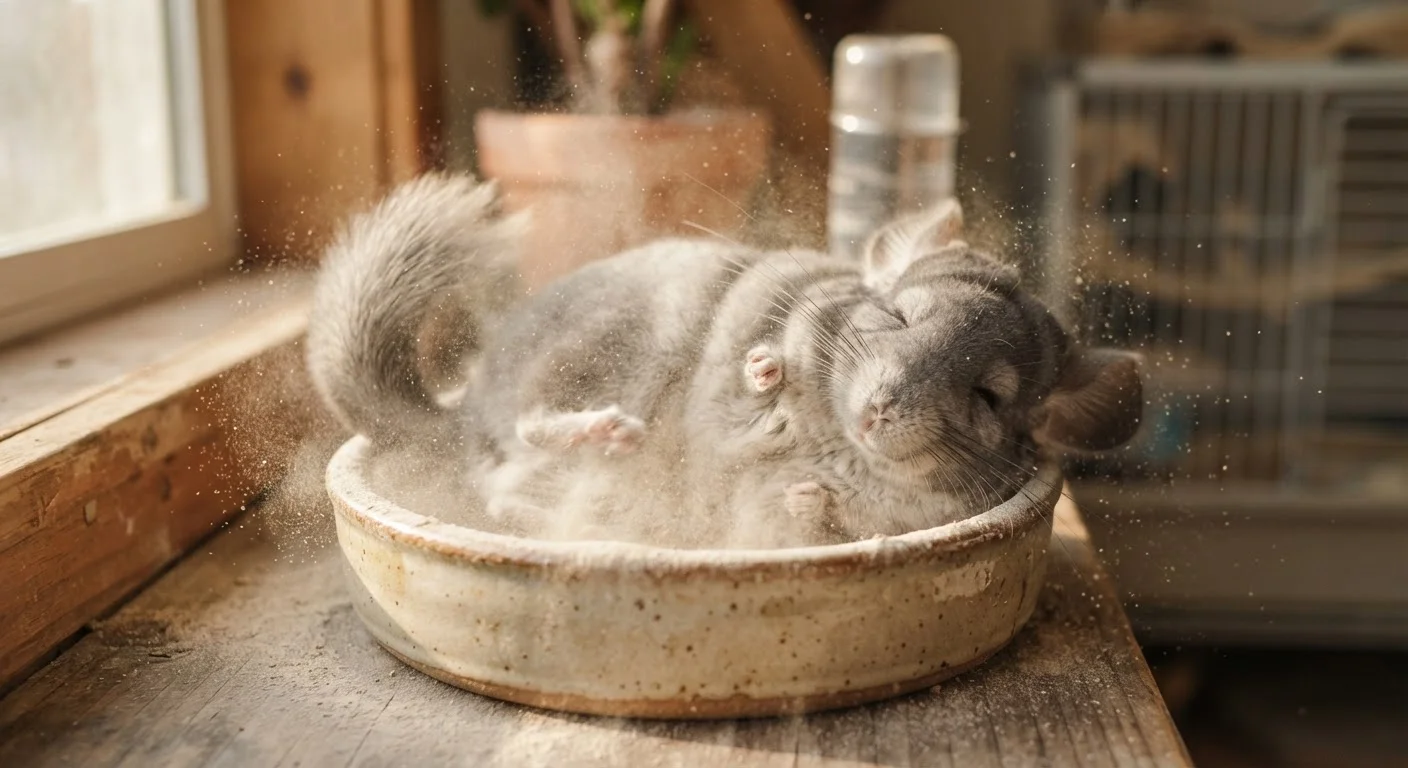
Chinchilla dust functions through a simple physical process: the ultra-fine particles penetrate the dense coat and bind to excess skin oils, moisture, and debris. When the chinchilla rolls and shakes, those particles — along with everything they've absorbed — are flung free of the fur. The result is a coat that looks clean, feels silky, and lies correctly against the body.
The right dust makes a meaningful difference. Products formulated specifically for chinchillas use volcanic ash or pumice powder ground to a very fine consistency. Coarser materials, like regular sand or dirt, won't penetrate properly and can scratch or irritate the skin.
Up to 60
Hairs per follicle in chinchilla fur
Compared to humans, who typically have one hair per follicle, chinchilla fur density is among the highest of any land mammal.
2–4x
Recommended bath sessions per week
Exotic animal care resources and veterinarians commonly recommend two to four dust baths weekly as the appropriate maintenance range for most chinchillas.
To give a bath, place a few inches of fresh dust in a sturdy container — a ceramic crock or a dedicated dust bath house with an opening large enough for your chinchilla to enter and roll freely — and set it in the enclosure. Most chinchillas will take to it immediately and instinctively begin rolling.
What Skipping Baths Actually Does to the Coat
Without regular dust baths, a chinchilla's fur gradually becomes oily, matted, and clumped. The coat loses its characteristic softness and begins to look rough or greasy. Over time, oils building up near the skin can contribute to skin irritation or create an environment more hospitable to parasites and infection.
Behavioral changes can also signal that a chinchilla is overdue for a bath. Some chinchillas become visibly agitated or spend more time trying to groom themselves when their coat isn't clean. Others may scratch more than usual.
Watch Your Chinchilla's Coat as a Health Signal
A healthy chinchilla coat should look full, even, and soft — not clumped, greasy, or patchy. Checking the fur during each bath session is a natural opportunity to spot early signs of skin issues, fur slip, or abnormal shedding. Catching changes early gives you more time to consult a veterinarian before a minor issue becomes a bigger one.
On the flip side, bathing too frequently — daily or near-daily — strips the coat of the natural oils it does need, leading to dry, flaky skin. The goal is balance: enough bathing to keep the coat clean, but not so much that it causes dryness. Two to four times per week is the commonly recommended range, with adjustments based on your home's humidity levels.
Setting Up a Safe, Effective Bath Routine
A dust bath routine doesn't require much equipment, but a few practical habits make it more effective. Always use a container large enough for your chinchilla to roll around in fully without bumping its head or sides. A container with partial enclosure helps reduce the fine dust cloud that baths generate — this protects both the chinchilla's lungs and your furniture.
Conduct bath sessions in a well-ventilated area and remove the container after ten to fifteen minutes. Dust left in the cage as a permanent fixture encourages over-bathing and can also be used as a litter spot. Store used dust in a sealed container, sift out debris between uses, and replace it entirely when it starts to clump or looks visibly dirty.
If your chinchilla develops persistent skin redness, hair loss, or stops bathing voluntarily, those are signs worth discussing with an exotic-animal veterinarian. Routine dust baths are a straightforward part of chinchilla care, but they're not a substitute for professional guidance when something seems wrong.
This article is for general informational purposes only and is not a substitute for professional veterinary advice. Always consult a qualified exotic-animal veterinarian for guidance specific to your pet's health needs.