
Setting Up Before Your Puppy Arrives
The week before your puppy comes home is prime preparation time. Start with puppy-proofing: get down to floor level and look for electrical cords, toxic houseplants, small objects that could be swallowed, and gaps behind appliances where a curious puppy could get stuck. Secure cabinet latches in rooms your puppy will access.
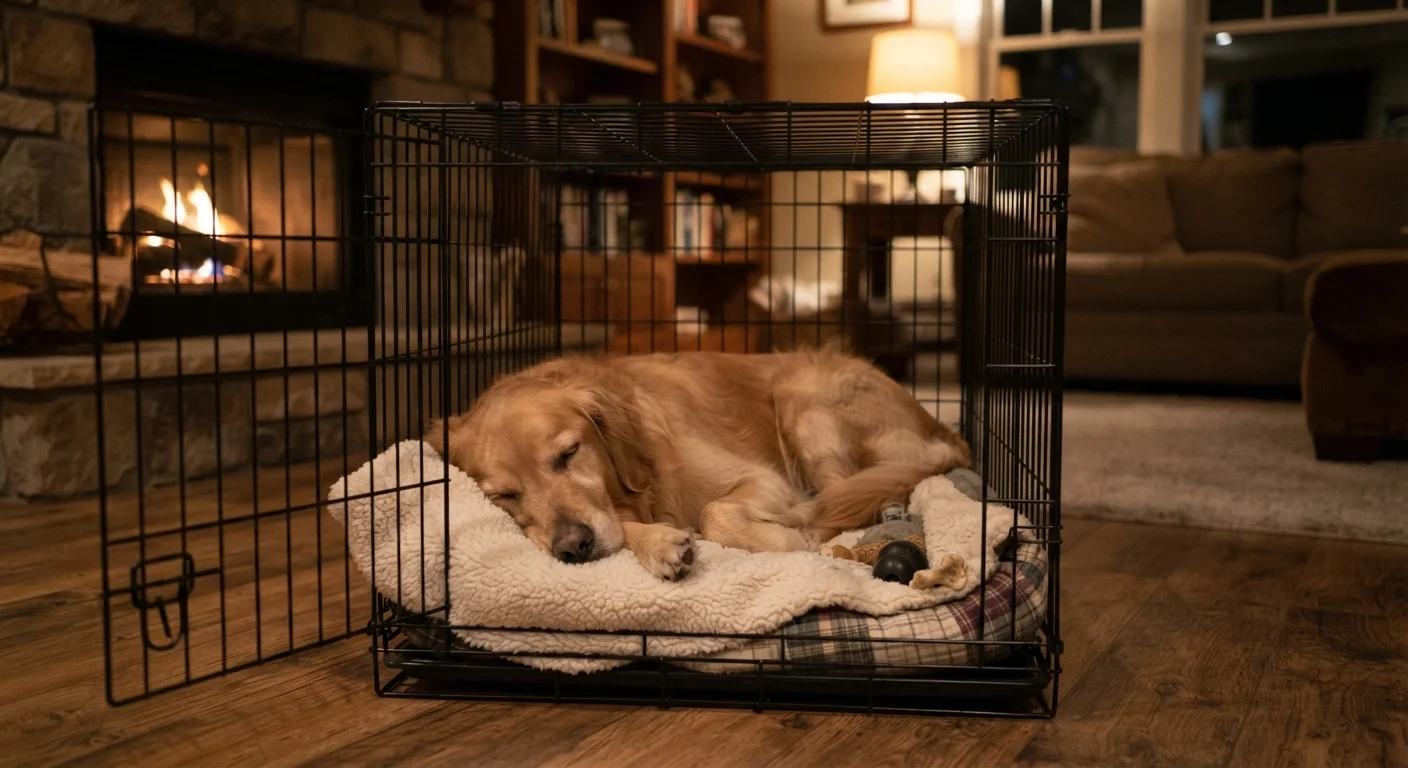
Gather the essentials before arrival day: a properly sized crate, food and water bowls, age-appropriate food (ask the breeder or shelter what the puppy has been eating so you can transition gradually), a collar with an ID tag, a leash, and a few safe chew toys. A cozy crate lined with a soft blanket—placed in a quiet but not isolated spot—gives your puppy a den they can call their own.
Socialization window
A developmental period (roughly 3 to 14 weeks of age) when puppies are especially open to learning that new people, animals, and environments are safe. Positive experiences during this time have a lasting effect on temperament.
Core vaccines
Vaccines recommended for all puppies regardless of lifestyle, covering diseases like parvovirus, distemper, and rabies. They are given in a series over the first few months of life.
Positive reinforcement
A training approach where desired behaviors are rewarded (with treats, praise, or play) to make them more likely to happen again. It avoids punishment and is widely endorsed by veterinary and behavior professionals.
Crate training
Teaching a puppy to accept and feel comfortable in a crate. Used as a safe den space and a tool to support housetraining by encouraging bladder control.
Housetraining
Teaching a puppy to eliminate outdoors (or in a designated indoor spot) by following a consistent schedule and rewarding them for going in the right place.
Puppy-proofing
Modifying your home to remove or secure hazards—such as toxic plants, electrical cords, and small objects—before a puppy arrives, to prevent accidents and injuries.
If you haven't yet done a full review of what owning a dog involves, see our complete guide for new dog owners for a broader look at what to expect.
The First 48 Hours at Home
The first two days set the tone. Keep the household calm—resist the urge to invite everyone over at once. Let your puppy explore one or two rooms at their own pace before expanding their access. Introduce family members one at a time and ask children to sit on the floor rather than reaching down to pick the puppy up.
Expect some whining, hesitation at meals, and disrupted sleep. These are normal signs of adjustment, not red flags. If your puppy refuses food for more than 24 hours or shows vomiting, diarrhea, or lethargy, contact your veterinarian promptly.
Make the First Potty Trip Immediate
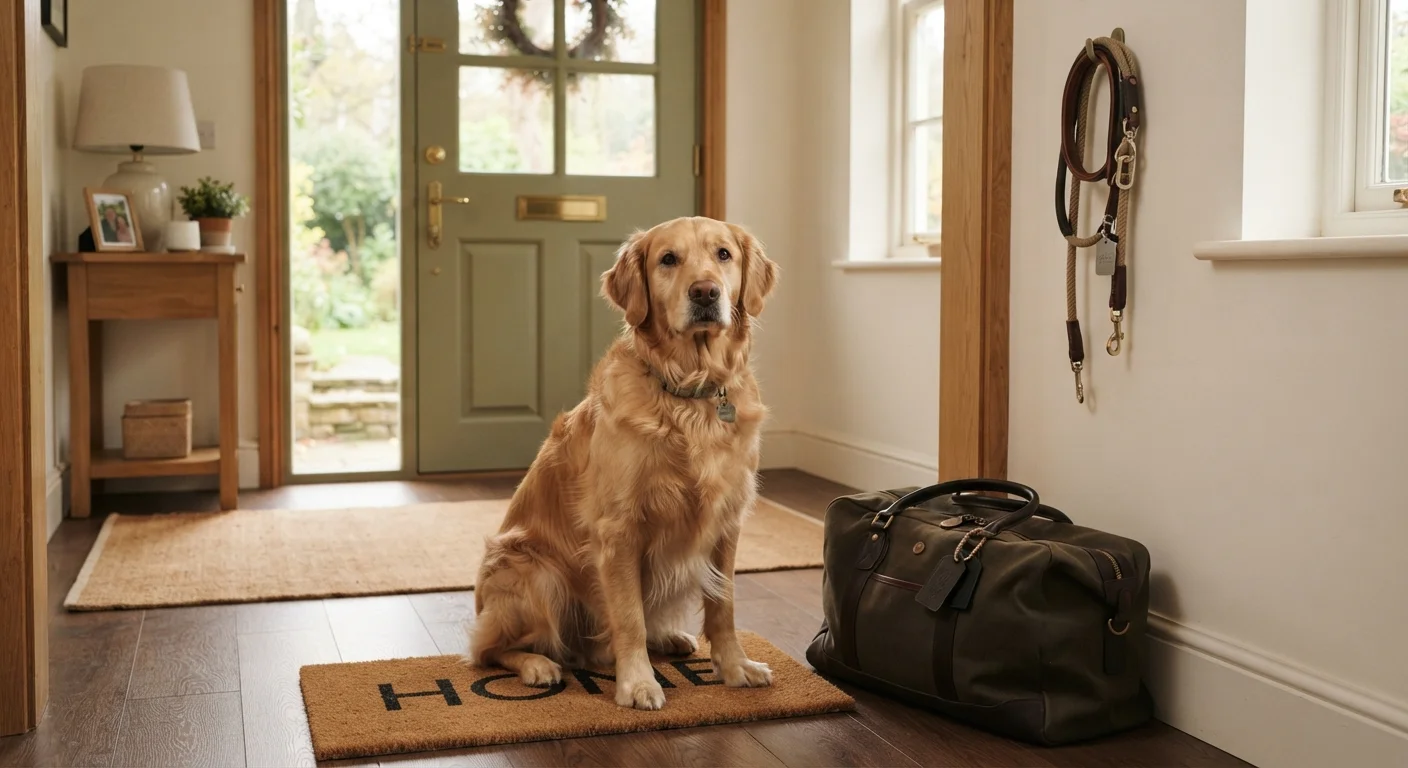
The very first thing you should do when you arrive home with your puppy is take them to their designated outdoor potty area—before going inside. This starts the association early and can prevent an accident in the house from the very first moments. Keep it calm and low-key, and reward them warmly if they go.
Show your puppy where the designated potty spot is right away—the very first time you arrive home is a good moment. The sooner they associate a specific outdoor location with elimination, the faster housetraining takes hold.
Feeding, Sleep, and Potty Training Basics
Young puppies thrive on predictable routines. Feed at the same times each day, remove the bowl after 15 to 20 minutes whether food remains or not, and take your puppy outside immediately after every meal, nap, and play session. This timing-based approach is the foundation of effective potty training.
Puppies sleep a lot—up to 16 to 18 hours a day. A crate makes naptime safer and supports housetraining by teaching bladder control. Never use the crate as punishment; instead, make it a comfortable retreat by feeding meals inside and dropping treats in throughout the day.
Choose the Right Food for Your Puppy's Size
Puppy nutrition isn't one-size-fits-all. Large-breed puppies have different calcium and calorie needs than small breeds, and feeding the wrong formula can contribute to developmental issues. Look for foods that specify the breed size on the label, and confirm the choice with your veterinarian at your first visit.
Choose a puppy food labeled for growth or all life stages, appropriate for your dog's expected adult size. Feeding large-breed puppies food formulated for small dogs (or vice versa) can affect bone and joint development. Your vet is the best resource for food recommendations.
Socialization and Early Training
The socialization window—roughly 3 to 14 weeks of age—is when puppies are most receptive to new experiences. Positive exposure to different people, sounds, surfaces, and environments during this period shapes how your dog reacts to the world as an adult. Aim for brief, upbeat introductions rather than overwhelming encounters.
Basic obedience starts now. Positive reinforcement—rewarding the behavior you want with treats, praise, or play—is the approach most widely endorsed by veterinary and animal behavior professionals. Short training sessions (two to five minutes) several times a day are more effective than long ones. Teach simple cues first: their name, sit, come, and leave it.
Enroll in a puppy kindergarten class once your vet clears it based on your puppy's vaccine status. These classes combine structured socialization with foundational training in a controlled setting.
Veterinary Care in the First Months
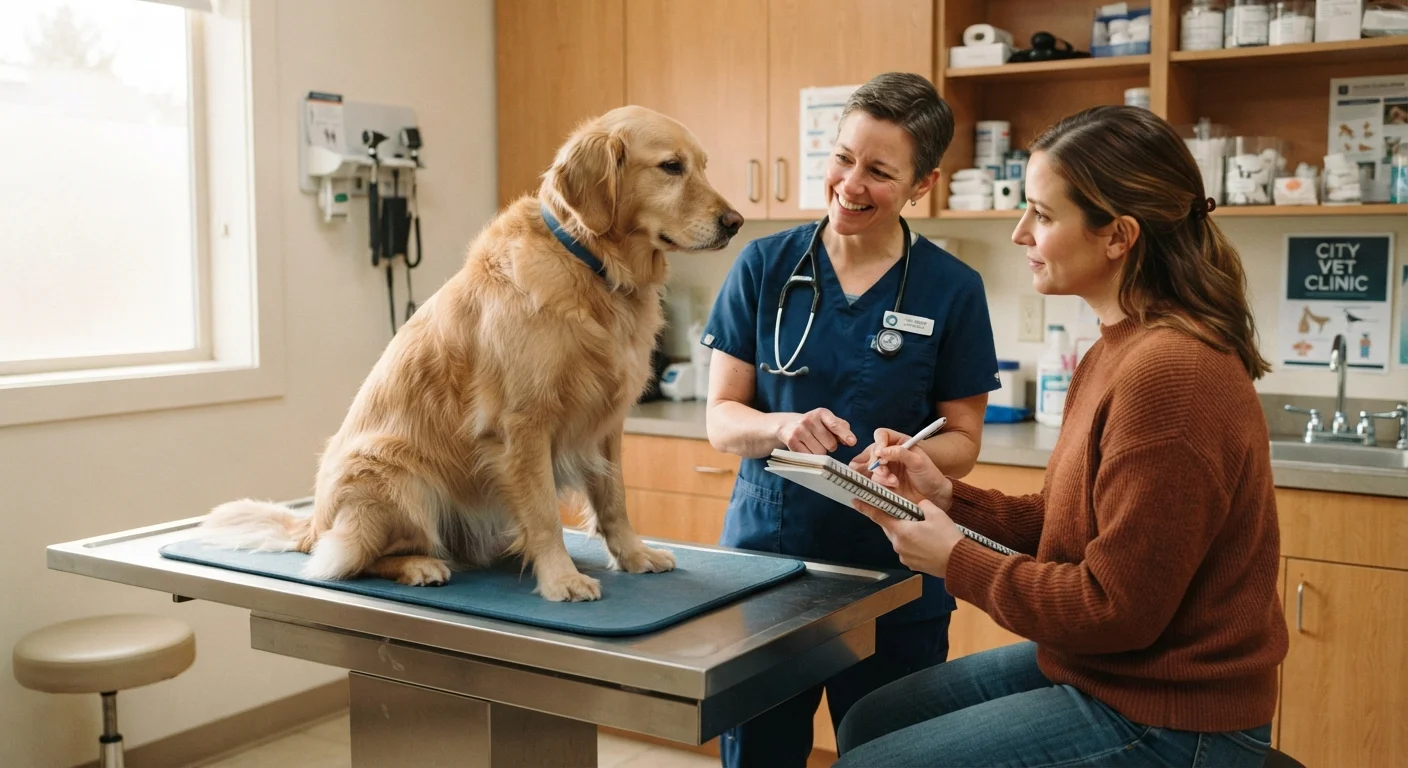
Schedule your puppy's first vet appointment within a week of bringing them home—even if they received an initial health check from the breeder or shelter. Your veterinarian will assess overall health, confirm vaccine history, and set a schedule for the remaining core vaccines (typically given in a series between 8 and 16 weeks), deworming, flea and tick prevention, and a discussion of spay or neuter timing.
Core vaccines for puppies generally include protection against distemper, parvovirus, and adenovirus (often combined in a single shot), plus rabies. Your vet may also recommend additional vaccines based on your location and your puppy's lifestyle. Keep a record of every vaccine and treatment date—you'll need it for grooming appointments, boarding, and dog parks.
Don't skip the follow-up visits, even if your puppy seems perfectly healthy. Puppies can carry parasites without showing symptoms, and completing the full vaccine series is critical for protection.
This article provides general information about puppy care and is not a substitute for professional veterinary advice. Always consult a licensed veterinarian for guidance specific to your pet's health and needs.