Getting Your Home Ready
Preparing your living space before your dog arrives is one of the most important steps a new owner can take. Dogs — especially puppies — explore the world with their mouths and noses, which makes unsecured hazards a real concern.
Walk through each room at roughly a dog's nose height and look for anything chewable, toxic, or swallowable: electrical cords, houseplants, medications, loose coins, and cleaning products are common culprits. Move these out of reach or behind closed doors. Secure cabinet latches if you have a curious or larger breed.
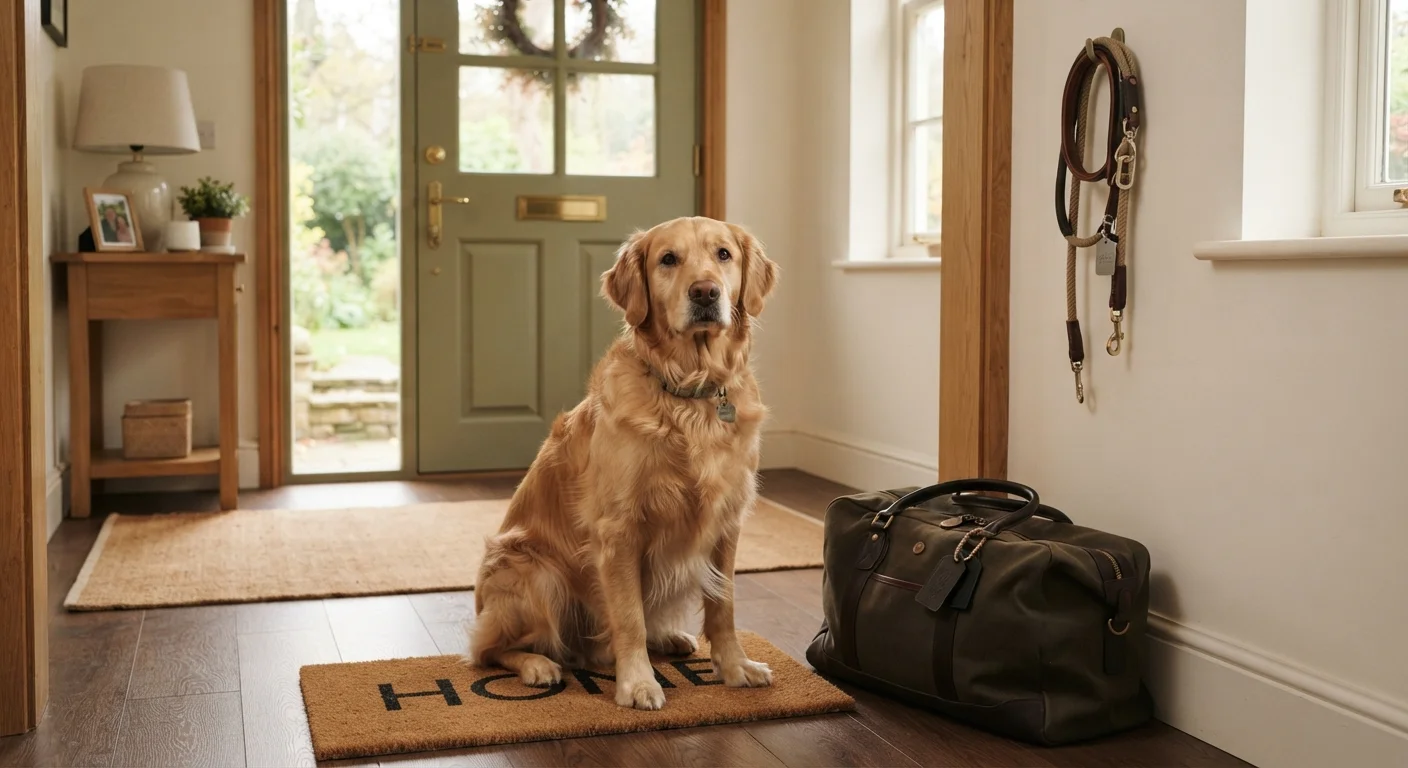
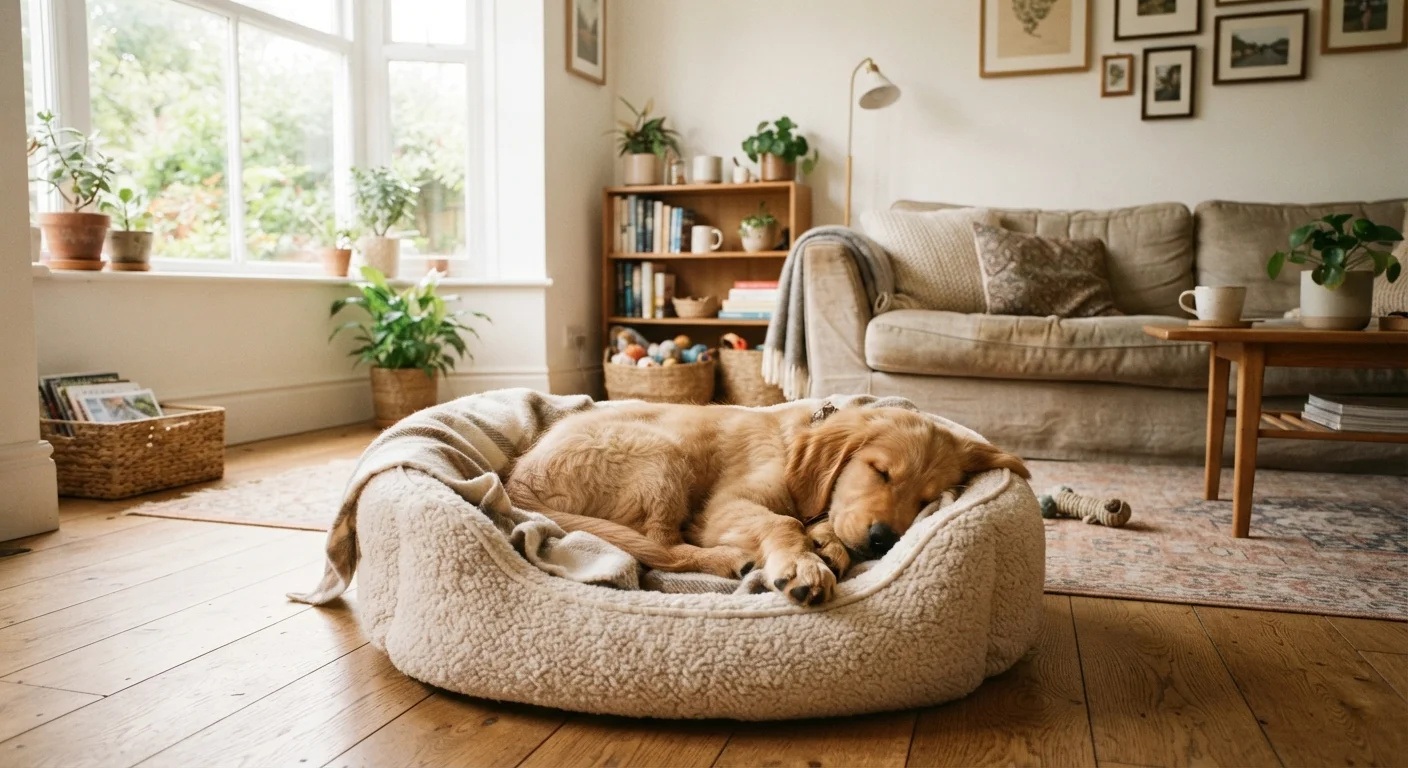
Designate a specific area of your home as your dog's base — ideally a quiet space with their crate, bed, and water bowl. This defined zone helps a new dog feel safe and establishes boundaries from the start. If you're also considering other pets, our guide on bringing a cat home for the first time shows how setup strategies differ by species.
The '3-3-3' Adjustment Window
Many animal rescue organizations describe a general adjustment pattern for newly adopted dogs: roughly three days to decompress from the stress of transition, three weeks to begin learning household routines, and three months to feel truly comfortable and secure. This isn't a strict rule — every dog is different — but it's a useful reminder that patience in the early weeks pays off in the long run.
Essential Supplies to Have on Day One
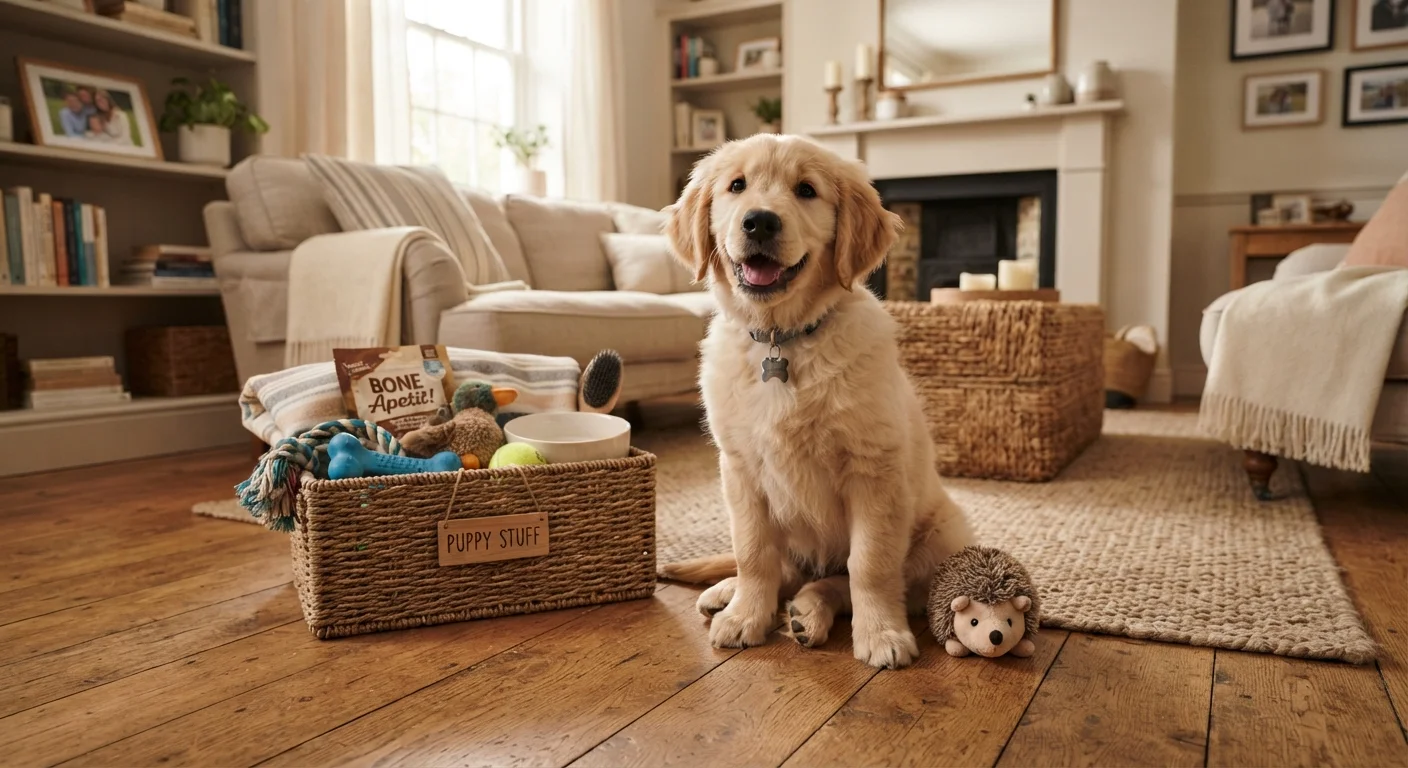
You don't need everything the pet store sells — but a few items are non-negotiable before your dog walks through the door.
Socialization
The process of gradually exposing a young dog to a variety of people, animals, sounds, and environments so they grow into a confident, well-adjusted adult.
Crate training
Teaching a dog to view a crate as a safe, comfortable space — useful for house training, travel, and giving a dog a predictable retreat.
Positive reinforcement
A training approach where desired behaviors are rewarded with treats, praise, or play, making the dog more likely to repeat those behaviors.
Enzymatic cleaner
A cleaning product that uses enzymes to break down the biological compounds in pet urine or feces, eliminating odor rather than just masking it.
Heartworm prevention
A monthly medication prescribed by a vet that protects dogs from heartworm disease, a serious and potentially fatal condition spread by mosquitoes.
- Crate: Sized so your dog can stand, turn around, and lie down. Too large undermines house training.
- Collar and ID tag: Include your phone number from the very first walk outside.
- Leash: A standard 4–6 foot leash works for most situations.
- Food and water bowls: Stainless steel or ceramic are easy to clean and more durable than plastic.
- Age-appropriate food: Ask the shelter, breeder, or your vet what the dog has been eating and transition gradually to avoid digestive upset.
- Waste bags and enzymatic cleaner: Accidents happen — enzymatic formulas break down odor at the molecular level rather than just masking it.
For grooming basics, our home grooming guide covers what you can safely tackle yourself and what's best left to professionals.
The First Vet Visit
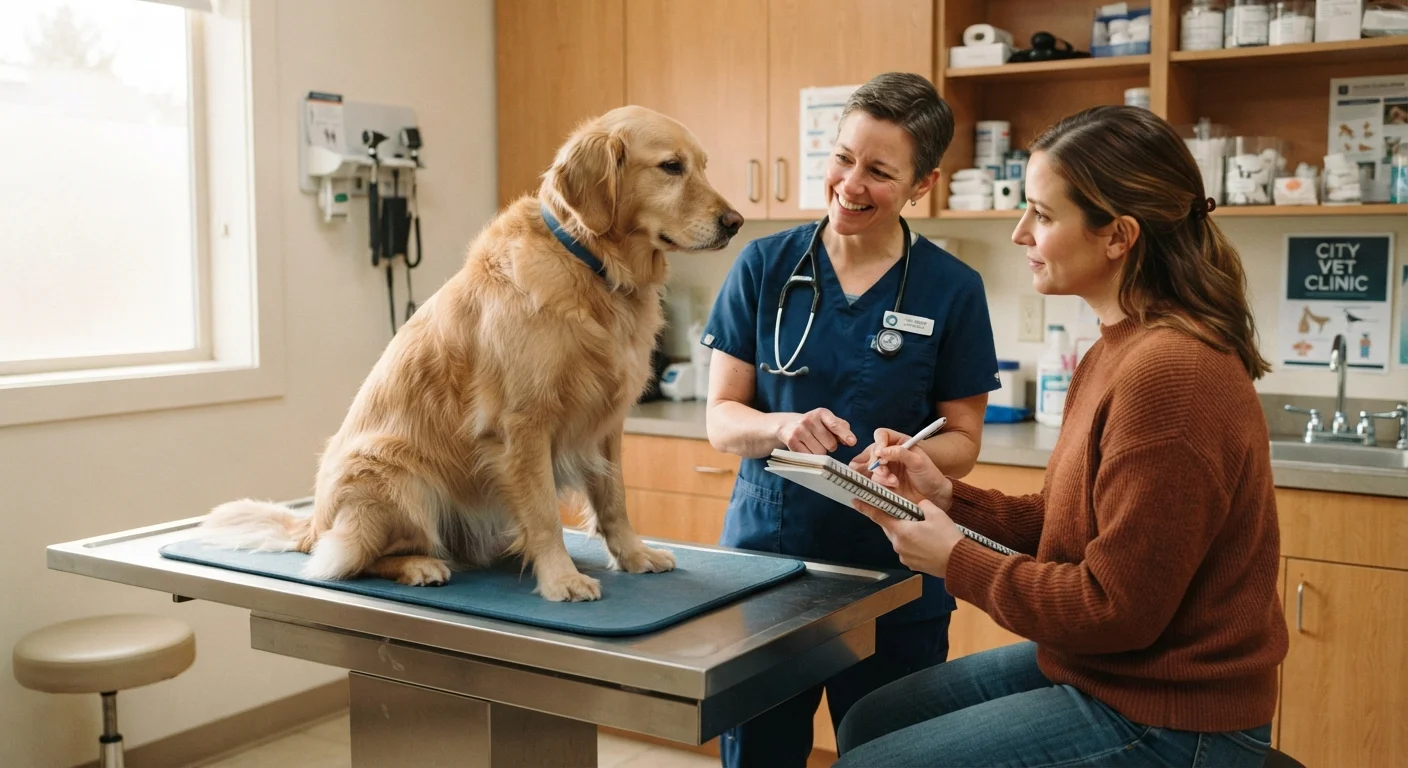
Schedule a veterinary exam within the first week of bringing your dog home — ideally within the first few days. This isn't just a formality. A veterinarian will check for parasites, confirm vaccination records, screen for common conditions, and give you a weight-appropriate care plan.
Bring any paperwork provided by the shelter or breeder: vaccination records, deworming history, and any known medical history. Write down your questions in advance so you don't forget them in the moment. Our vet visit preparation checklist is a practical resource to bookmark for every appointment going forward.
Topics to cover at your first visit include: spay/neuter timing if not already done, flea, tick, and heartworm prevention appropriate to your region, dental care, and a vaccination schedule going forward.
Bring a Familiar Scent to the Vet
Place a worn t-shirt or small blanket from home in your dog's crate before the vet visit. Familiar scents can help reduce stress in an unfamiliar environment. Letting your dog explore the carrier or crate beforehand — without any pressure — also makes the experience feel less threatening.
Feeding, Schedules, and Training Basics
Routine is one of the most powerful tools in a new dog owner's kit. Dogs thrive on predictability — consistent feeding times, walk times, and bedtime help them settle faster and reduce anxiety-driven behaviors like excessive barking or destructive chewing.
Most adult dogs do well with two meals per day; puppies generally need three to four smaller meals. Follow feeding guidelines on your dog's food as a starting point and adjust based on your vet's guidance and your dog's body condition.
Begin basic training — sit, stay, come, leave it — as soon as your dog is home. Short sessions of five to ten minutes are more effective than long ones. Use positive reinforcement (praise, treats, play) rather than punishment-based methods, which can erode trust. Socialization is equally important: gradual, positive exposure to different people, environments, and other animals during the first few months shapes a dog's temperament for life.
Avoid Punishment-Based Training Methods
Techniques that rely on fear, pain, or intimidation — such as shock collars or physical corrections — can cause lasting anxiety and damage the trust between you and your dog. Many certified animal behaviorists and veterinary organizations advise against these methods. If you're struggling with behavior issues, consult a certified professional dog trainer or your veterinarian before trying corrective tools.
Building a Bond That Lasts
The relationship between a dog and their owner develops over months, not days. Consistency in your responses — calm when they're anxious, enthusiastic when they succeed — teaches your dog that you're a reliable source of safety and guidance.
Exercise is not optional: most dogs need at least 30 minutes of physical activity daily, though high-energy breeds may need considerably more. Mental stimulation — puzzle feeders, training sessions, interactive play — is just as important and often overlooked.
If you're curious how dog ownership compares to other pets, see our guide on rabbit care from day one for a helpful contrast in commitment and daily care requirements.
Dogs are long-term companions — many live 10 to 15 years or more. The habits and routines you build in the first weeks and months lay the foundation for everything that follows. Approach those early days with patience, curiosity, and a willingness to learn alongside your dog.
This article is for general informational purposes only and is not a substitute for professional veterinary advice. Always consult a licensed veterinarian for guidance specific to your dog's health and care needs.