
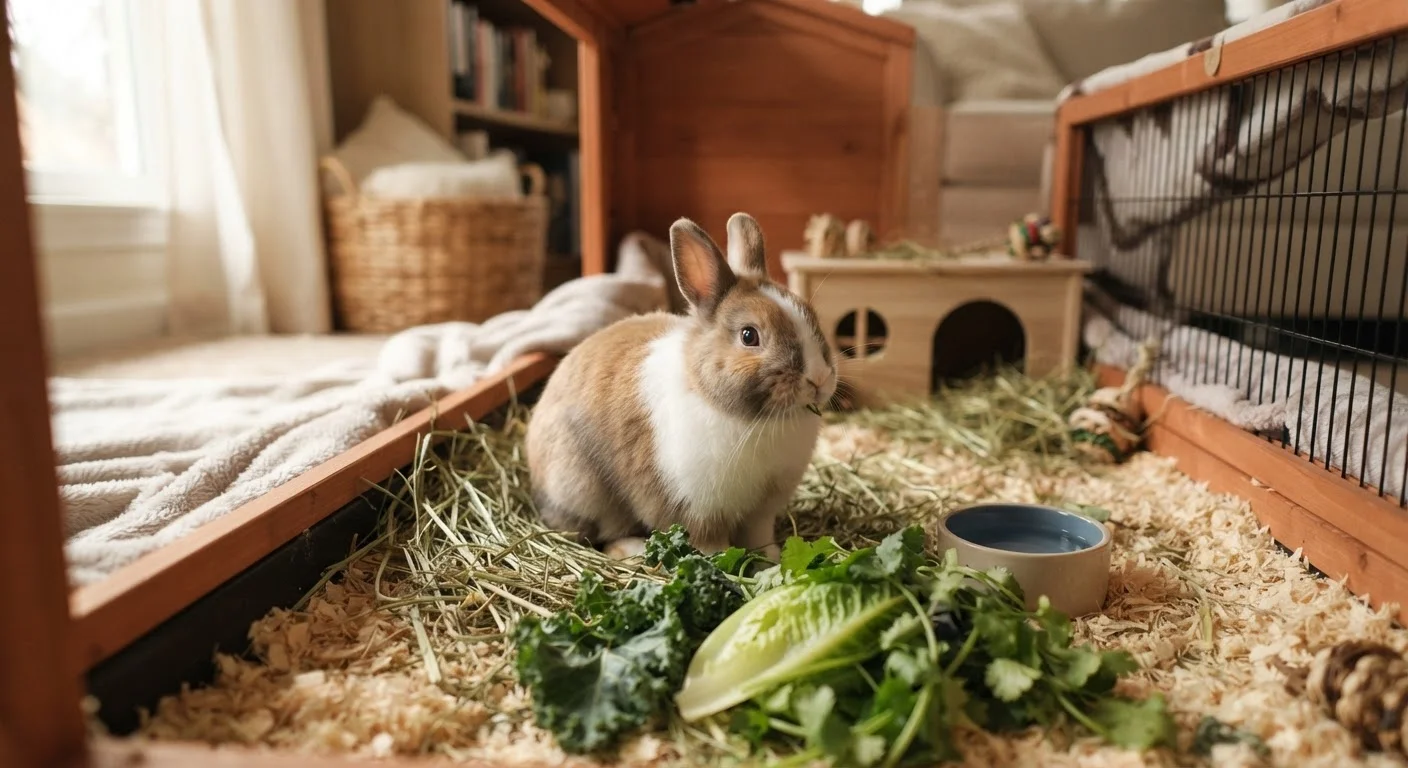
Setting Up the Right Home
One of the most common misconceptions about rabbits is that a small hutch is sufficient housing. In reality, rabbits need considerably more space to move, stretch, and binky — the joyful, spontaneous jump-and-twist that signals a content rabbit.
A minimum enclosure for a single rabbit should allow at least four to six hops in any direction, with separate areas for sleeping, eating, and using a litter box. Collapsible exercise pens or large indoor enclosures are popular options. Avoid wire-bottomed cages, which can injure a rabbit's sensitive feet. Use solid flooring lined with appropriate bedding such as paper-based litter or fleece.
Binky
A spontaneous jump combined with a mid-air twist that rabbits perform when they are happy or excited. It's one of the clearest signs of a content rabbit.
GI Stasis
A dangerous condition in which a rabbit's digestive system slows down or stops completely. It requires immediate veterinary attention and can be fatal if untreated.
Rabbit-proofing
The process of making a home or room safe for a free-roaming rabbit by covering cords, blocking hazards, and removing toxic plants or items the rabbit could chew.
Timothy hay
A type of grass hay that is the dietary staple for adult pet rabbits. It supports healthy digestion and keeps teeth worn down through constant chewing.
Exotic vet
A veterinarian with specialized training or experience treating non-traditional pets such as rabbits, birds, and reptiles — distinct from vets who focus primarily on dogs and cats.
Rabbit-proof any space where your rabbit roams freely. This means covering electrical cords, blocking access to baseboards, and removing toxic houseplants. Rabbits chew constantly — it's a biological necessity, not misbehavior — so provide plenty of safe chew toys and untreated wooden blocks. Keep the enclosure in a draft-free area away from direct sunlight and extreme temperatures; rabbits are sensitive to heat above 85°F (29°C).
What Rabbits Actually Eat
Diet is where many new rabbit owners go wrong. Pellets and carrots are often the mental image, but neither should dominate a rabbit's meals.
Hay — specifically timothy hay for adult rabbits — should make up roughly 80% of their daily intake. Hay keeps the digestive system moving and wears down constantly growing teeth. Unlimited fresh hay must be available at all times.
Fresh leafy greens make up most of the rest. Good choices include romaine lettuce, cilantro, parsley, and arugula. Introduce new greens gradually to avoid digestive upset. Avoid iceberg lettuce, which has almost no nutritional value, and go easy on high-sugar vegetables like carrots, which are better offered as occasional treats.
Rotate Greens to Prevent Boredom
Offering a variety of safe leafy greens keeps mealtimes interesting and ensures a broader nutritional profile. Aim for two or three different greens per day rather than the same leaf every meal. Introduce any new green slowly over several days to watch for soft stools or digestive upset.
Pellets are appropriate in small quantities — about a quarter cup per five pounds of body weight per day for adults. Choose a plain timothy-based pellet without added seeds, dried fruits, or colored pieces, which add sugar and encourage selective eating.
Fresh water must always be available, either in a heavy ceramic bowl or a clean bottle. Rabbits can drink significant amounts daily, especially in warm weather.
Handling, Socializing, and Bonding
Rabbits are prey animals, which shapes nearly every aspect of how they interact with humans. Being picked up can feel threatening to a rabbit — even one that trusts you. When handling is necessary, support the hindquarters fully to prevent dangerous kicking. Always sit or kneel at floor level when interacting, which feels safer to the rabbit than looming overhead.
Bonding takes time. Most rabbits need days to weeks before they approach new people voluntarily. Sit quietly near the enclosure, offer hay or greens by hand, and let the rabbit set the pace. Over time, many rabbits become affectionate companions who will seek out human company on their own terms.
Never Force Rabbit Introductions
Placing two unfamiliar rabbits directly into the same enclosure almost always results in a fight, sometimes with serious injuries. Introductions should happen in a neutral space neither rabbit has claimed, in short supervised sessions. If either rabbit becomes aggressive, separate them immediately and slow down the process.
If you plan to eventually keep two rabbits together, introductions must be done carefully on neutral ground, with close supervision. Even rabbits that seem compatible can fight suddenly. For a look at how this careful introduction process works in another small-pet context, see our guide on bonding two guinea pigs safely.
Rabbits communicate largely through body language. Thumping signals alarm; flopping onto a side usually means deep relaxation; tooth grinding (distinct from quiet tooth chattering) may indicate pain. Learning to read these cues helps you respond to your rabbit's needs before problems escalate.
Health, Vet Care, and Warning Signs
Finding a rabbit-savvy veterinarian before you bring your rabbit home is one of the most important steps you can take. Not all small-animal vets have extensive rabbit experience — look for one with an exotic animal background or a specific interest in rabbits.
Spaying or neutering is strongly recommended. It reduces the risk of reproductive cancers (particularly in females, who have a very high risk of uterine cancer if left intact), decreases territorial behaviors, and improves litter training success. Discuss the appropriate timing with your vet.
Routine checkups, dental assessments, and nail trims are all part of ongoing care. Rabbit teeth grow continuously, and dental problems are common. Signs of dental issues include dropping food, drooling, or weight loss.
The most urgent health concern to know about is GI stasis — a slowdown or stoppage of the digestive system that can become fatal within hours. Warning signs include not eating, reduced or absent droppings, lethargy, and a hunched posture. This is always a veterinary emergency. Other red flags include labored breathing, head tilt, discharge from eyes or nose, or any sudden change in behavior.
If you're weighing rabbit ownership against other small pets, our articles on keeping pet rats and ferret ownership offer honest comparisons of what each animal demands.
This article is for general informational purposes only and is not a substitute for professional veterinary advice. Always consult a qualified veterinarian for guidance specific to your pet's health and care needs.