
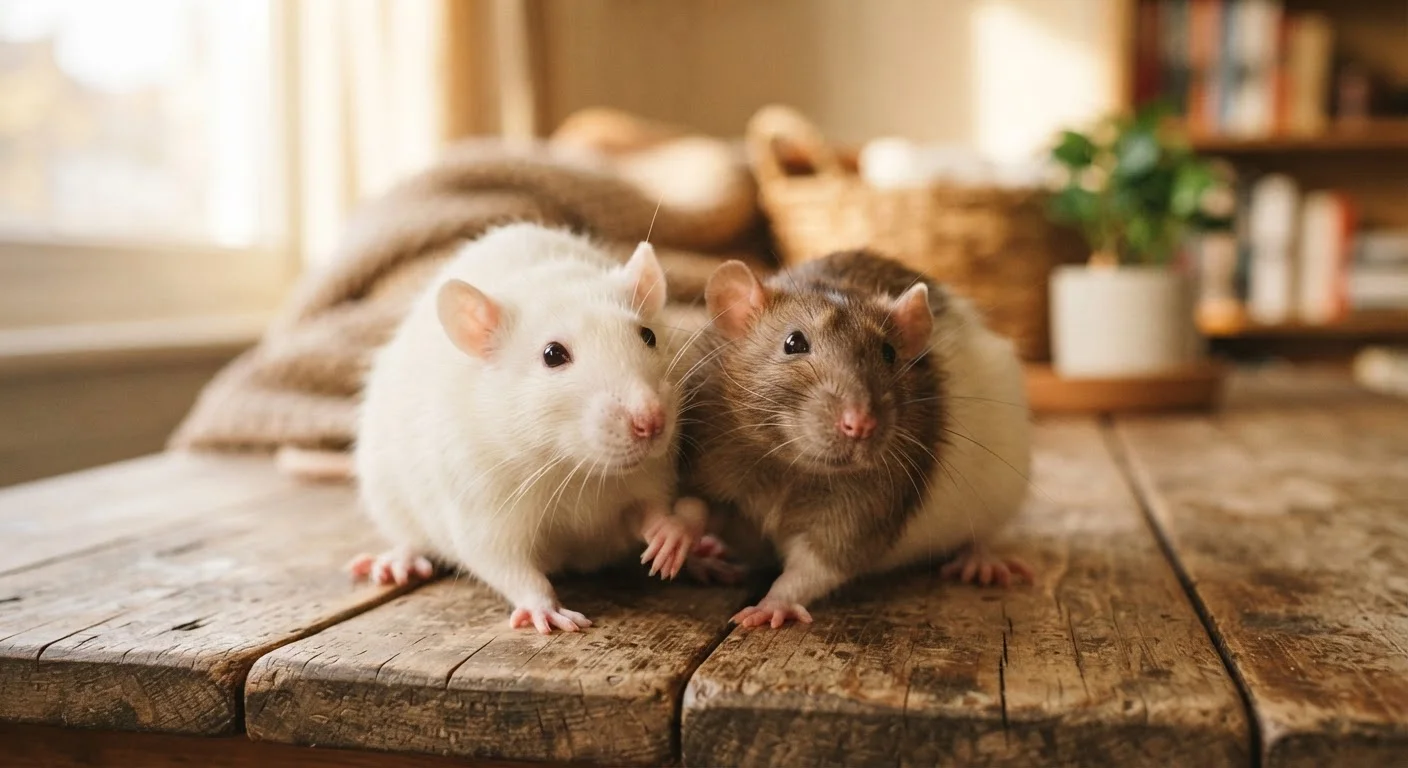
Why Rats Make Excellent Pets
Domestic rats (Rattus norvegicus) are among the most intelligent small animals kept as pets. They can learn their names, respond to training cues, and form genuine bonds with their owners. Unlike many small rodents, rats are naturally active during dawn and dusk hours, which often aligns well with a typical household schedule.
Rats are also clean animals — they groom themselves frequently, much like cats do. Their reputation for being unsanitary stems from their wild relatives, not the domesticated variety raised in responsible breeding environments.
If you're weighing small-pet options, it's worth comparing rats to other species. Hamsters and gerbils have very different social and care needs than rats do — rats tend to be far more interactive and people-oriented. Likewise, ferrets offer a similar level of engagement but require considerably more space and specialized diet.
2–3 years
Average pet rat lifespan
Domesticated rats generally live 2–3 years, with some reaching age 4 under optimal care conditions.
30–60 min
Recommended daily out-of-cage time
Exotic animal welfare guidelines consistently recommend at least 30 minutes of supervised free-roaming time per day.
2+
Minimum number of rats to keep together
Rat welfare organizations and exotic vets widely recommend keeping at least two rats to meet their social needs.
Setting Up the Right Habitat
A proper cage is the foundation of rat care. Opt for a multi-level wire cage with horizontal bars — rats love to climb, and vertical space is just as important as floor space. As a general guideline, a pair of rats needs a minimum of 2 cubic feet of usable space, though larger is always better.
- Bar spacing: No more than ½ inch apart to prevent escapes or injuries.
- Bedding: Paper-based or aspen shaving bedding absorbs odors well. Avoid cedar or pine, which can irritate the respiratory tract.
- Enrichment: Hammocks, ropes, tunnels, and solid-surface wheels (not wire rungs) keep rats mentally stimulated.
- Temperature: Keep the cage in a draft-free area between 65–80°F. Rats are sensitive to both heat and cold extremes.
Clean the cage at least once a week, spot-cleaning soiled bedding more frequently. A smelly cage is one of the fastest ways to cause respiratory stress in rats.
Make Cage Cleaning Easier
Place a litter box in the corner your rats naturally prefer as a bathroom — most rats gravitate to one spot. Filling it with a different texture of bedding helps them recognize it as a designated area. This won't eliminate all messes, but it significantly reduces how often you need a full clean.
Feeding Your Pet Rats
A good rat diet anchors around a high-quality commercial rat block, which is formulated to provide complete nutrition. Loose seed mixes look appealing but allow rats to pick out favorites, leading to nutritional gaps.
Supplement the base diet with fresh foods several times a week:
- Vegetables: Broccoli, peas, cucumber, and leafy greens are well tolerated.
- Fruits: Small amounts of apple, banana, or berries work as occasional treats.
- Protein: Cooked egg or small amounts of plain cooked chicken can be offered periodically.
Foods to avoid include citrus fruits for male rats (linked to kidney concerns), raw beans, green banana, and anything high in sugar or salt. Fresh water should always be available via a sipper bottle or heavy ceramic bowl.
Introduce new foods one at a time and watch for loose stools or avoidance — individual rats can have sensitivities just as people do.
Digestive upsets in small animals can escalate quickly, so identifying problem foods early prevents unnecessary stress and health complications.
Weigh your rats weekly on a small kitchen scale. A subtle drop in weight is often the earliest sign of illness, before other symptoms appear.
Rats can mask discomfort instinctively; consistent weight tracking gives owners an objective, early indicator that something may be wrong.
Socialization and Handling
Rats are colony animals by nature — keeping a single rat is widely considered inhumane by exotic animal veterinarians and rat welfare organizations. Same-sex pairs or trios work well for most households. If you plan to mix sexes, neutering is strongly recommended to prevent uncontrolled breeding.
For new rats, spend the first few days letting them adjust to their environment before handling. Start with short sessions close to the ground, using a calm voice and gentle movements. Most rats become comfortable with regular handling within one to two weeks.
Aim for at least 30–60 minutes of out-of-cage playtime daily in a rat-proofed space. This exercise time also strengthens the human-animal bond and reduces stress-related behaviors. Rats that are understimulated can develop repetitive behaviors or become withdrawn.
Never Keep a Single Rat Alone
Rats are highly social animals that rely on companionship for emotional wellbeing. A lone rat can develop depression, anxiety, and stress-related health problems regardless of how much human interaction it receives. Always adopt at least two rats, ideally from the same litter or a carefully supervised introduction.
Health, Lifespan, and Vet Care
Pet rats typically live 2–3 years. While that's a shorter lifespan than dogs or cats, it doesn't reduce the depth of the bond owners form — or the responsibility to provide good veterinary care.
Common health concerns include:
- Respiratory infections: Wheezing, labored breathing, or clicking sounds warrant prompt veterinary attention. Mycoplasma — a bacterial organism — is endemic in most rat populations and can flare under stress or in drafty conditions.
- Tumors: Mammary tumors are particularly common in unspayed females. Many are benign but can grow large; surgical removal is an option a vet can discuss with you.
- Hind leg degeneration: A neurological condition that often appears in older rats, causing progressive weakness in the hind limbs.
Find an exotic or small animal veterinarian before you bring rats home — not all general practice vets have experience treating rodents. Annual wellness visits are a good baseline, with prompt care any time you notice changes in eating, movement, or breathing.
For a broader view of small-pet health and housing needs, our rabbit care guide covers similar themes about preparing for a small animal's full lifecycle.
Finding a Rat-Savvy Vet
Not every veterinary practice sees small rodents. Look for a vet listed with the Association of Exotic Mammal Veterinarians (AEMV) or one who specifically advertises small animal and exotic experience. Establishing care before an emergency means you won't be searching for a provider when time matters most.
Is a Rat the Right Pet for You?
Rats fit well into households that can offer daily interaction and aren't deterred by a shorter lifespan. They're generally a manageable commitment in terms of cost and space, but they do need consistent attention to thrive. If you travel frequently or want a hands-off pet, a rat may not be the right match.
They're an especially good choice for older children and adults who want an interactive, trainable companion without the demands of a dog or cat. For more on pet ownership across species, explore our guidance on dog care and cat care to see how commitment levels compare.
This article is for general informational purposes only and does not constitute veterinary advice. Always consult a qualified exotic or small animal veterinarian for guidance specific to your pet's health and care needs.