Social Needs and Compatibility
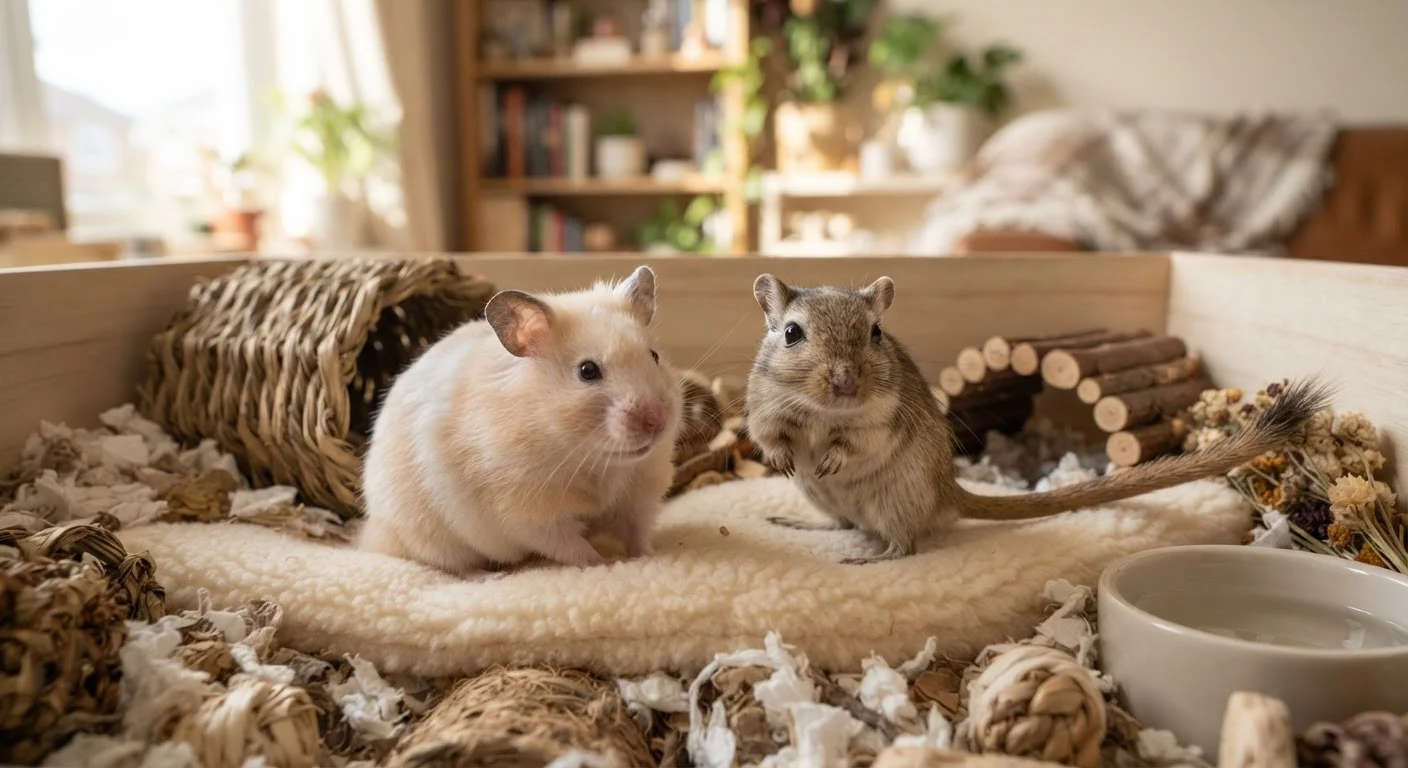
One of the most important distinctions between hamsters and gerbils is how they relate to others of their own kind. Most hamster species — especially Syrian hamsters — are solitary by nature. Housing two together typically leads to serious fighting and injury. Even dwarf hamster species that are sometimes kept in pairs can develop aggression over time. For a deeper look at how species within the hamster family compare, see our guide on Syrian vs. dwarf hamsters.
Gerbils, by contrast, are highly social. In the wild, they live in family groups, and in captivity they generally do better with at least one companion of the same species and sex. A lone gerbil may show signs of boredom or stress, particularly in a low-stimulation environment. Same-sex pairs introduced as juveniles tend to bond well and maintain stable relationships.
This difference matters for your household budget and space too — keeping gerbils means planning for at least two animals, while a hamster setup accommodates just one.
A Note on Gerbil Introductions
Introducing adult gerbils that did not grow up together can result in fighting — a process called a 'split and reintroduce' method is sometimes used, but it requires patience and carries risk. If you plan to keep gerbils, sourcing bonded juveniles from the same litter is the most reliable approach. Consult an experienced exotic animal vet or reputable rescue if you're unsure about the process.
Activity Patterns and Daily Interaction
Hamsters are predominantly nocturnal. They sleep through most of the day and become active after dusk. This means that if you want to interact with your hamster during daylight hours, you may need to wake them — which can cause stress. Understanding this cycle is key to setting up a low-stress environment, as explored in our article on why hamsters are nocturnal.
Gerbils follow a more fragmented, crepuscular-to-diurnal pattern — they're active in short bursts throughout the day and night. This makes spontaneous daytime observation and interaction more feasible for families or working adults.
Neither pet is well-suited to being held for long stretches, but patient, consistent taming improves tolerance in both species. Our guide on handling small animals without stressing them out covers the right techniques for building trust gradually.
6+ inches
Minimum recommended bedding depth for hamsters
Animal welfare organizations generally recommend at least 6 inches of substrate to allow natural burrowing behavior in captive hamsters.
3–5 years
Average gerbil lifespan in captivity
With proper diet, housing, and veterinary care, gerbils commonly live between 3 and 5 years, somewhat longer than most hamster species.
Housing and Habitat Requirements
Both animals need more space than many starter cages provide. Hamsters require a large enclosure with deep bedding — many welfare organizations recommend at least 6 inches of substrate for burrowing, and a solid-surface wheel that is appropriately sized (10 inches or larger for Syrians). For a thorough breakdown, our hamster habitat setup guide covers what the science says.
Gerbils are prolific diggers and tunnelers. They thrive in tanks or enclosures with deep substrate, tunnels, and enrichment objects. Since they're kept in pairs, the enclosure needs to accommodate two animals comfortably. Ventilation matters — gerbils produce less urine than hamsters, so odor tends to be lower, but airflow still prevents moisture buildup.
| Criterion | Hamster | Gerbil |
|---|---|---|
| Social needs | Solitary (most species) | Social; needs a companion |
| Activity pattern | Primarily nocturnal | Active throughout day and night |
| Typical lifespan | 2–3 years | 3–5 years |
| Handling tolerance | Moderate with consistent taming | Can be quick and skittish |
| Odor level | Moderate (frequent spot cleaning needed) | Lower (less urine produced) |
| Minimum housing | Single large enclosure | Larger enclosure for two animals |
| Enrichment focus | Wheel, deep bedding, tunnels | Deep substrate for digging, companions |
Both species should be kept away from drafts, direct sunlight, and extreme temperatures. Neither is well-suited to very cold or very humid environments.
Health, Lifespan, and Vet Considerations
Hamsters typically live 2–3 years, with some dwarf varieties reaching closer to 4 years under good conditions. Gerbils have a similar range, generally 3–5 years. Both are susceptible to conditions that can progress quickly in small animals, so knowing the warning signs matters. Our reference guide on signs your small pet may be sick is a practical starting point.
Hamsters are prone to wet tail (a severe intestinal condition), dental problems, and diabetes in some dwarf species. Gerbils can develop epileptic-like seizures (often mild and manageable) and are susceptible to tumors as they age. Both animals need a veterinarian experienced with exotic or small mammals — standard dog-and-cat practices may not have the expertise needed.
This article is for general informational purposes only. Always consult a qualified veterinarian for guidance specific to your pet's health.