Where Nocturnal Behavior Comes From
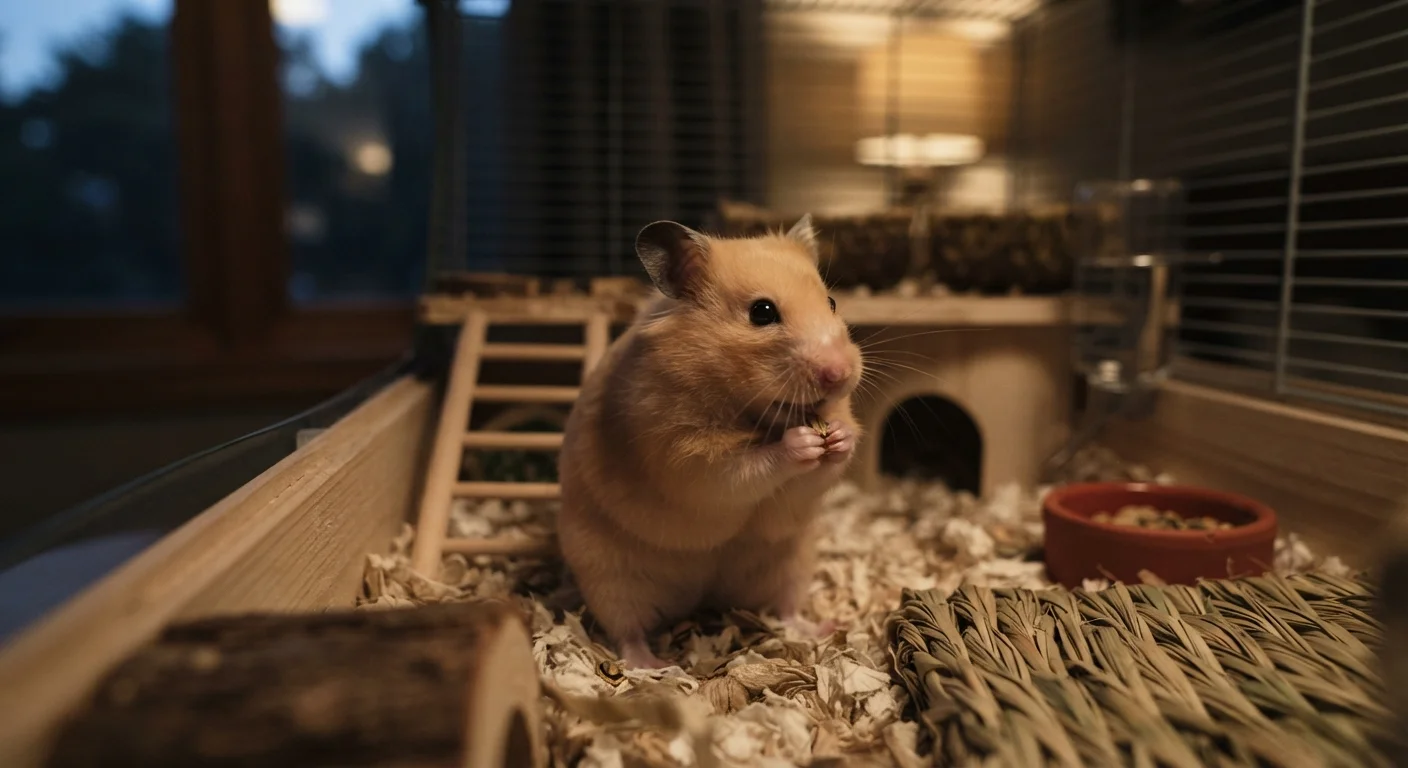
Hamsters didn't develop their nighttime habits by accident. In their native habitats — spanning deserts and grasslands across parts of Asia and the Middle East — daytime temperatures soar and predators are plentiful. Moving under darkness offered hamsters a survival edge: cooler air for foraging and far fewer threats from birds of prey and other animals.
This behavior became hardwired into their biology over generations. Even after decades of selective breeding as pets, hamsters retain that same internal clock. Their bodies produce activity-triggering hormones in response to falling light levels, which is why you'll often notice your hamster starting to stir right around dusk.
This is worth understanding before you bring a hamster home. Their schedule isn't a quirk to be corrected — it's a core part of who they are. If you're comparing species before deciding, our guide on hamster vs. gerbil care differences covers how activity patterns differ between small pet rodents.
Crepuscular vs. Nocturnal: A Subtle Difference
While hamsters are broadly described as nocturnal, some species — particularly dwarf varieties — show crepuscular patterns, meaning they're most active around dawn and dusk rather than strictly through the night. Either way, daytime is their primary sleep period and should be protected regardless of the specific species you keep.
What Disrupting Their Sleep Cycle Does to a Hamster
Repeatedly waking a hamster during its rest period is one of the most common — and least visible — sources of stress in pet hamsters. A stressed hamster may bite more frequently, pace or bar-chew their enclosure, lose appetite, or become withdrawn. Chronic sleep disruption has also been linked to immune suppression in small mammals, making them more vulnerable to illness.
Noise is a major factor too. Hamsters have sensitive hearing, and daytime household activity — television, loud music, children playing nearby — can prevent deep, restorative sleep even when the owner isn't directly interacting with the animal. Placement of the cage matters more than most owners realize. For a thorough look at how cage placement and setup choices affect hamster wellbeing, see our guide on setting up a proper hamster habitat.
Best Time to Interact With Your Hamster
Aim to handle your hamster between 7 and 9 p.m., when they're naturally alert and active. Approach gently and let them sniff your hand before picking them up. Consistent evening interaction builds trust far more effectively than daytime handling that interrupts sleep.
Adjusting Your Daily Routine to Work With Their Schedule
The good news is that aligning your routine with your hamster's natural cycle doesn't require a major lifestyle overhaul. A few targeted adjustments make a meaningful difference.
- Feed in the evening. Offer fresh food when your hamster is naturally waking up — usually between 6 and 9 p.m. This aligns feeding with their active foraging window and reduces food sitting uneaten during the day.
- Schedule handling after dusk. Early evening is the ideal window for interaction. Your hamster will be alert, responsive, and far less likely to bite from being startled out of sleep.
- Keep daytime disturbances minimal. Place the cage in a room that stays relatively quiet during daylight hours. Avoid areas directly next to TVs, speakers, or high-traffic hallways.
- Limit light exposure during sleep hours. Bright or direct light during the day disrupts their circadian rhythm. A naturally dim or shaded area is preferable to a sunny windowsill.
Species can also play a role in exactly when peak activity occurs. If you're still deciding which hamster type suits your household, our comparison of Syrian vs. dwarf hamster activity patterns can help you set the right expectations from the start.
12–14 hrs
Average daily sleep for a pet hamster
Hamsters require extended rest periods, the majority of which occur during daylight hours due to their nocturnal nature.
~5 miles
Distance wild hamsters may travel nightly
Research on wild hamster behavior shows they cover significant ground each night while foraging, underscoring their need for exercise outlets like wheels during active hours.
Signs Your Hamster Is Getting the Rest They Need
A well-rested hamster is notably more curious and engaged during their active hours. They'll explore their enclosure, use their wheel, forage through bedding, and interact willingly when approached. In contrast, a chronically sleep-deprived or overstimulated hamster tends to appear sluggish, irritable, or disinterested in enrichment.
Check in with your hamster during the early evening rather than midday. If they're slow to emerge, hesitant to eat, or uncharacteristically aggressive, those are signals worth paying attention to — and a reason to reassess their environment and your interaction schedule. If behavioral changes persist or are accompanied by physical symptoms, consult a veterinarian with small animal experience.
This article is for general informational purposes only and does not constitute veterinary advice. Always consult a licensed veterinarian for concerns about your pet's health or behavior.