Size, Lifespan, and Basic Biology
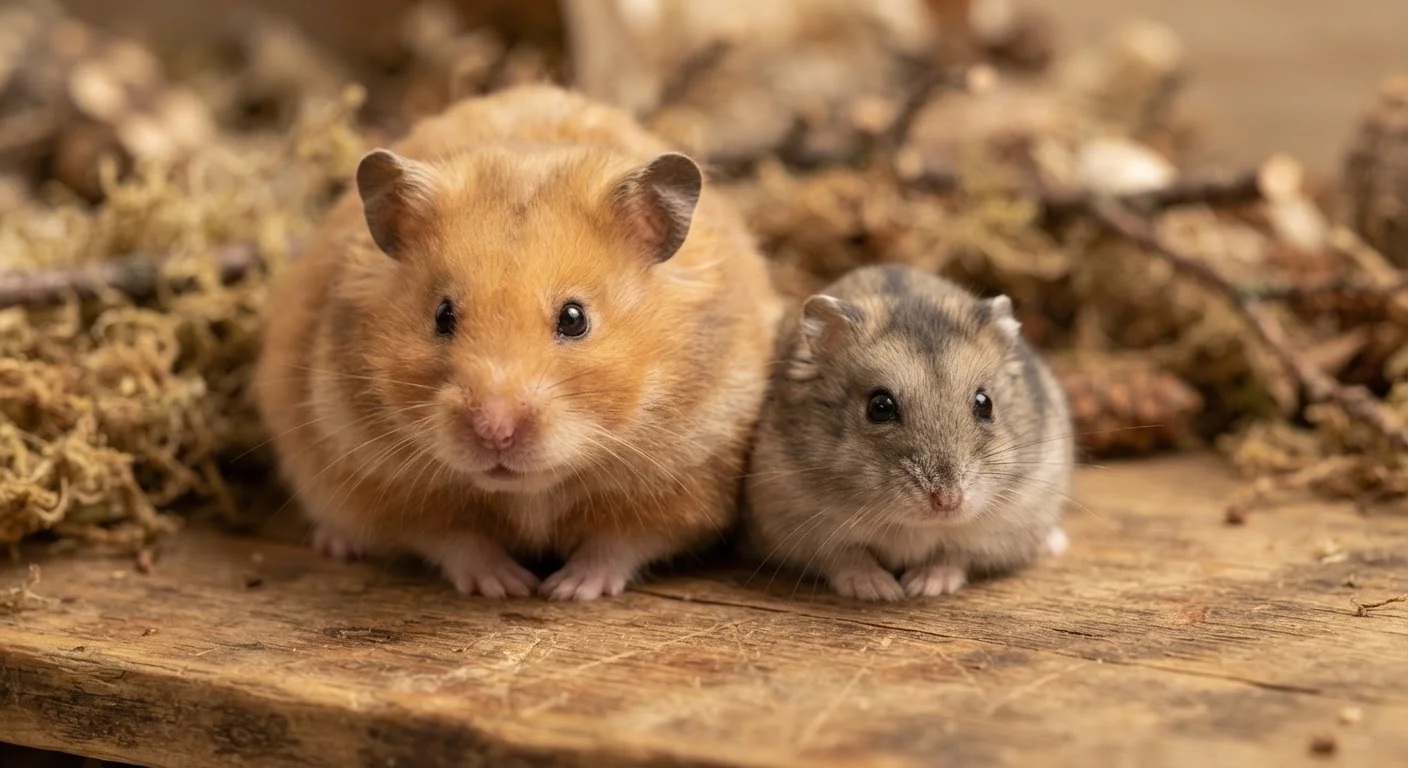
Syrian hamsters (also called golden hamsters) are the larger of the two, typically reaching 5–7 inches in length and weighing between 4 and 8 ounces as adults. Dwarf hamsters — which include Roborovski, Campbell's, Winter White, and Chinese hamsters — generally measure 2–4 inches and weigh under 2 ounces. That size difference matters when selecting an enclosure, a wheel, and even how you approach handling.
Both species have similar lifespans: roughly 2–3 years on average, though individual animals vary. Syrians tend toward the higher end; Roborovski dwarfs can occasionally reach 3 years or more. Neither hamster type should be considered long-lived, so new owners should be emotionally prepared for that reality.
Because both are naturally nocturnal, expect most activity after sunset. Understanding hamster sleep cycles helps you schedule feeding and interaction times that align with the animal's natural rhythm rather than fighting against it.
| Criterion | Syrian Hamster | Dwarf Hamster |
|---|---|---|
| Adult Size | 5–7 inches, 4–8 oz | 2–4 inches, under 2 oz |
| Average Lifespan | 2–3 years | 1.5–3 years (species varies) |
| Can Be Housed Together | No — strictly solitary | Sometimes, with precautions |
| Ease of Handling | Generally calmer, easier | Faster, often more skittish |
| Minimum Enclosure Size | Larger (40+ gallon equivalent) | Somewhat smaller per animal |
| Activity Pattern | Nocturnal | Nocturnal |
| Suitability for Children | More suitable (slower pace) | Less suitable (harder to hold) |
Temperament and Handling Differences
Temperament is one of the most practically important differences between these two types. Syrian hamsters, when socialized from a young age, are widely considered the easier species to tame. They move more deliberately, are less prone to sudden dashes, and tend to sit calmly in a cupped hand once comfortable with their owner. This makes them a more forgiving choice for first-time small-pet owners or households with children.
Dwarf hamsters are quicker and more skittish by nature. Roborovskis in particular are known for being extremely fast and rarely become comfortable with regular handling. Campbell's and Winter White dwarfs fall somewhere in the middle — potentially tameable with patience, but generally less inclined toward prolonged human contact than a well-socialized Syrian.
For guidance on building trust without overwhelming either species, see handling small animals without stressing them out.
5–7"
Typical adult Syrian hamster body length
Syrians are roughly twice the length of most dwarf hamster species, which typically measure 2–4 inches.
~2–3 yrs
Average hamster lifespan (both types)
Lifespan varies by species and individual health; Roborovski dwarfs may occasionally exceed 3 years with good care.
Social Needs and Housing Compatibility
This is a critical distinction: Syrian hamsters are obligate solitary animals. In the wild, adult Syrians are highly territorial and will fight — sometimes fatally — if housed together. No matter how large the enclosure, two adult Syrians should never share a space. This isn't a matter of preference; it's a core welfare requirement.
Some dwarf species are more socially flexible. Same-sex pairs of Campbell's or Winter White dwarfs can coexist if introduced when young and given adequate space, multiple resources (food bowls, hides, wheels), and close monitoring. Even then, not all pairings are stable — animals must be separated at the first sign of aggression. Roborovskis are sometimes kept in groups with similar precautions. Chinese hamsters are generally better kept alone.
For both species, enclosure setup is critical to wellbeing. Setting up a hamster habitat that truly meets their needs covers minimum space requirements, appropriate bedding depth for burrowing, and wheel sizing for each body type.
"Dwarf Hamster" Covers Several Species
The term "dwarf hamster" refers to multiple distinct species, including Roborovski, Campbell's Russian, Winter White Russian, and Chinese hamsters. Each has somewhat different temperament tendencies and social compatibility. When researching care or considering cohabitation, it's worth looking into the specific species rather than treating all dwarfs as identical.
Which Type Is Right for Your Household?
If your priority is a pet you can interact with regularly — picking up, letting explore your hands, building a calm daily routine — a Syrian hamster is generally the more accessible choice. Their size and temperament lend themselves to consistent, low-stress handling with patience and routine.
If you're drawn to watching animals engage in natural behaviors, or you'd like to potentially keep more than one hamster, certain dwarf species offer that possibility — provided you're realistic about the limits of hands-on interaction with many of them.
Regardless of species, both hamsters deserve a thoughtfully designed habitat, a consistent nocturnal-friendly schedule, and attentive observation for signs of illness. See signs your small pet may be sick for a practical reference on what to watch for. If you're still deciding whether a hamster is right for your household at all, comparing hamsters and gerbils side by side can help clarify the broader picture.
This article is for general informational purposes only and does not constitute veterinary advice. For concerns about a specific animal's health or behavior, consult a licensed veterinarian.