
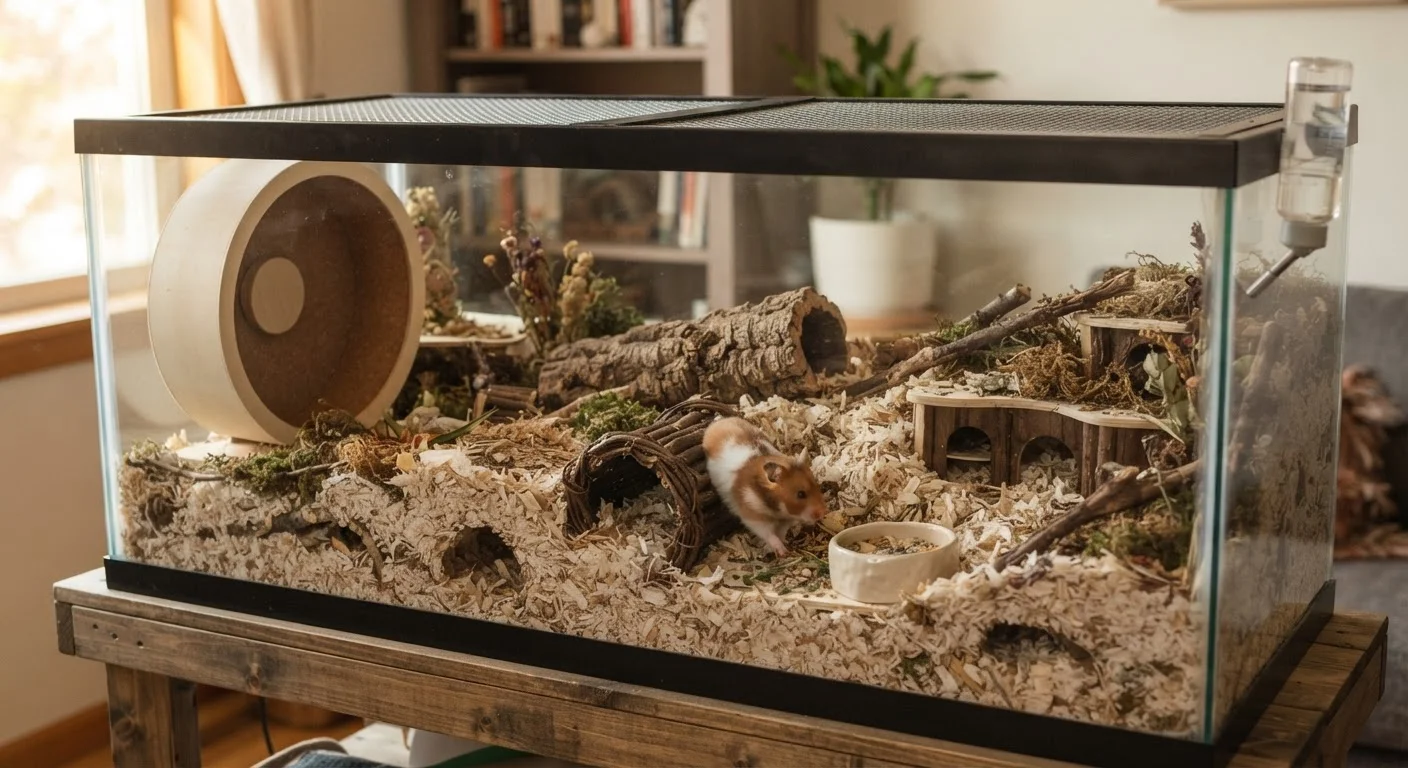
Why Enclosure Quality Matters More Than Most Owners Realize
Hamsters are often marketed as low-maintenance starter pets, but their behavioral and physical needs are more complex than their small size suggests. In the wild, hamsters can travel several miles nightly foraging for food and dig extensive burrow systems for sleeping and nesting. A habitat that doesn't accommodate those drives leads to chronic stress, stereotypic behaviors (repetitive, purposeless movements like bar-chewing or pacing), and shortened lifespans.
Research from animal welfare organizations and zoo science has increasingly informed what a humane hamster enclosure looks like. Before you bring a hamster home, it's worth understanding what you're actually committing to — and how a proper setup differs from what many pet stores display. If you're still weighing your options, our comparison of hamsters and gerbils covers key differences to help you decide.
What you will need
What You'll Need Before You Begin
Gather all materials before bringing your hamster home. Setting up the habitat in advance — ideally 24–48 hours before introduction — allows bedding to settle and eliminates any sharp chemical smells from new materials.
Glass aquarium or large wire cage (solid floor)
Provides the physical space and containment hamsters need while preventing injury from wire mesh flooring.
Paper-based or aspen shaving bedding
Allows deep burrowing (minimum 6 inches) and absorbs moisture without exposing hamsters to harmful aromatic oils.
Solid-surface running wheel (10"+ for Syrians, 8"+ for dwarfs)
Provides the nightly exercise hamsters require without causing spinal stress from an arched back posture.
Multiple hides or shelters
Gives hamsters secure retreat spaces, reducing chronic stress and supporting natural shelter-seeking behavior.
Water bottle or heavy ceramic dish
Delivers fresh water in a way that stays clean and accessible without tipping or contaminating bedding.
Chew items (untreated wood blocks, natural fiber)
Supports dental health by giving hamsters an appropriate outlet for their constant need to gnaw.
Digging box or extra deep bedding section
Allows extensive burrowing for hamsters that need more depth than the main enclosure provides.
Step-by-Step: Building the Habitat
Follow these steps in order. Skipping the bedding depth or wheel sizing stage is one of the most common — and most consequential — setup mistakes new owners make. For context on why activity timing matters too, see our guide on hamster sleep cycles and daily routines.
Choose and position the enclosure
Select an enclosure with a minimum of 40 inches × 20 inches of usable floor space. Glass tanks (often called "aquariums") work well because they retain humidity from bedding and prevent drafts. Large wire cages with solid plastic bases are also suitable. Place the enclosure in a room with a stable temperature (65–75°F / 18–24°C), away from direct sunlight, drafts, loud speakers, and high-traffic areas that could cause repeated startle responses.
Add and depth-test the bedding
Pour in paper-based or aspen shaving bedding to a minimum depth of 6 inches across the entire floor. Avoid cedar or pine shavings, which contain aromatic oils that can irritate hamster respiratory tracts. Once poured, press your hand into the bedding in several spots — it should hold a tunnel shape briefly rather than collapse immediately. This indicates sufficient density for burrowing. Mound extra bedding in one corner to give your hamster a deeper nesting area.
Install the running wheel
Position the wheel in an open area of the enclosure so it can spin without hitting walls or accessories. Check that the running surface is solid (not wire rungs) to prevent foot and leg injuries. To verify proper sizing, place your hamster on the wheel briefly during setup — the spine should be level or very slightly curved downward, never arched upward. Secure the wheel so it won't tip during active use at night.
Place hides, food, and water
Set two or more hides at opposite ends of the enclosure — hamsters naturally separate their sleeping area from their food cache. Position the water bottle or ceramic dish in an easily accessible spot that won't become buried in bedding. Place a small food dish for pellets or lab block diet, and scatter a portion of any seed mix or fresh food items directly into the bedding to encourage natural foraging behavior rather than bowl-feeding exclusively.
Add chew items and enrichment
Place at least two chew-safe items in the habitat before introducing your hamster: untreated wooden blocks, hay-based chew sticks, or cardboard tubes all work well. These serve both dental health and behavioral needs. You can also add a shallow sand bath dish — many hamsters use sand for grooming. Avoid water baths, which strip natural oils from their coat and can cause chilling.
Introduce your hamster and observe
Lower your hamster gently into the enclosure and allow at least 48–72 hours of minimal handling for acclimation. Watch for immediate signs of distress — prolonged hiding beyond the first 24 hours is normal, but continuous bar-chewing or repetitive circling suggests the habitat may not be meeting a core need. Check that your hamster is eating, drinking, and using the wheel within the first few nights.
Spot-clean weekly, deep-clean monthly
Remove soiled bedding and uneaten fresh food every 2–3 days to control odor and bacteria. Do a full bedding replacement and enclosure wash no more than once a month — over-cleaning destroys scent markers that hamsters rely on for comfort and orientation. Retain a small handful of clean used bedding to re-introduce familiar scent after a full clean.
Common Setup Mistakes and How to Avoid Them
Even well-intentioned owners often make a few predictable errors when setting up for the first time:
- Too-small enclosures: Many enclosures sold in pet stores fall below recommended welfare minimums. Measure actual floor space — not external cage dimensions — before purchasing.
- Insufficient bedding depth: A thin layer of substrate prevents burrowing entirely, which is a significant source of stress. Aim for 6 inches as a floor, with deeper sections if possible.
- Wrong wheel size: A wheel that's too small forces the spine into an arch with each stride, risking musculoskeletal problems over time. Syrian hamsters need at least a 10-inch wheel; dwarf breeds need at least 8 inches. See our Syrian vs. dwarf hamster comparison for more on size-specific needs.
- Wire mesh floors: These can trap feet and cause injuries. Always use a cage with a solid floor base.
- Single hide placement: Hamsters feel safest when they can retreat to multiple covered spaces. One hide is rarely enough.
Avoid Habitat Placements That Create Chronic Stress
Hamsters have sensitive hearing that extends into ultrasonic frequencies. Televisions, computer speakers, and even some appliances can emit sounds that are inaudible to humans but stressful to hamsters. Keep the enclosure in a relatively quiet room and away from vibrating surfaces. Chronic stress in hamsters is linked to immune suppression and shortened lifespan, so placement is a genuine welfare consideration — not just a comfort preference.
Once your habitat is running well, enrichment becomes the next frontier. Our article on enrichment for small pets goes deeper on keeping hamsters mentally stimulated long-term.
This article provides general pet care information for educational purposes. For concerns about your hamster's health or behavior, consult a veterinarian with experience in small animals.