
Why a Weekly Mental Check-In Works
Most of us treat mental health reactively - we address stress, low mood, or burnout after it's already affecting our daily lives. A structured weekly reflection shifts that dynamic. By setting aside 15 to 30 minutes at the end of each week, you create a reliable window to notice patterns in your emotional state before they compound.
Research consistently supports the value of self-monitoring in mental wellness. Expressive writing and structured reflection have been associated with reduced psychological distress and improved emotional regulation, according to studies published in peer-reviewed psychology journals. The practice doesn't need to be clinical or elaborate - it just needs to be honest and regular. For a deeper look at building this kind of consistency, see our guide to building a daily mental health routine.
Think of this check-in the way you might think of a monthly financial review - a chance to reconcile what happened, spot gaps, and adjust your approach before small issues grow. If you find journaling for mental health helps you process emotions between check-ins, that practice pairs well with this weekly structure.
This Is Not a Clinical Assessment
A weekly self-check-in is a personal awareness practice, not a diagnostic tool. It cannot identify clinical depression, anxiety disorders, or other mental health conditions. If your reflections consistently surface significant distress, hopelessness, or thoughts of self-harm, please reach out to a licensed mental health professional rather than relying on self-monitoring alone.
How to Use This Checklist
Choose a consistent time - Friday evening, Saturday morning, or Sunday afternoon - and treat it as a standing appointment with yourself. You'll move through four categories: emotional state, physical signals, relationships and connection, and energy and restoration. There are no right or wrong answers. The goal is honest observation, not self-judgment.
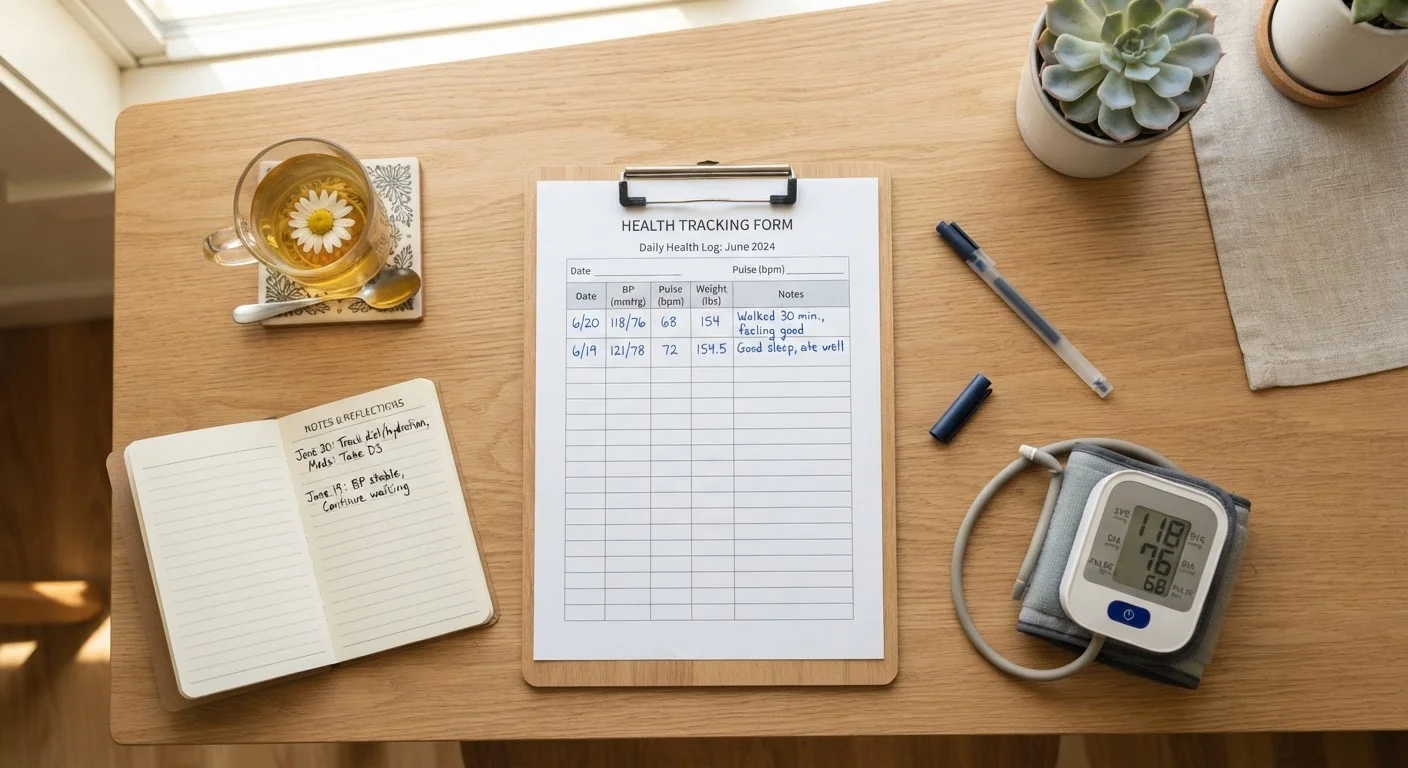
Keep a simple notebook or use a notes app to record brief responses. Over several weeks, patterns will emerge - which situations drain you, which days tend to be harder, which habits seem to correlate with better or worse mood. That longitudinal view is where the real value builds. If you're interested in structured journaling methods that complement this process, explore journaling approaches that go beyond a diary.
Emotional State
Physical Signals
Relationships and Connection
Energy and Restoration
What to Do With Your Answers
After completing the check-in, pause for a moment before closing your journal or notes. Ask yourself one closing question: What is the one thing I want to do differently or protect next week? This single intention - whether it's going to bed earlier, declining an obligation, or scheduling a walk - makes the reflection actionable rather than just observational.
If your check-in surfaces significant distress, persistent low mood, or feelings you find difficult to manage, that's important information. This checklist is a self-awareness tool, not a clinical screen. A personal wellness check-in you can do anytime can help in moments between your weekly practice, and if concerns persist, speaking with a licensed mental health professional is the appropriate next step. For tools to use when stress peaks suddenly, grounding techniques for moments of overwhelm can provide immediate support.
Seek Professional Support When Needed
If your weekly check-ins reveal persistent low mood, severe anxiety, or emotional experiences that feel unmanageable, that's a signal worth taking seriously. No self-guided practice replaces professional mental health care. A licensed therapist, psychologist, or counselor can provide personalized assessment and evidence-based treatment that a checklist cannot.
This article is for general informational purposes only and is not a substitute for professional mental health advice, diagnosis, or treatment. If you are experiencing a mental health crisis or persistent symptoms, please contact a qualified mental health professional or call a crisis helpline.