
Why a Personal Check-In Matters
Mental wellness rarely shifts all at once. More often, it drifts - a few nights of poor sleep, a creeping sense of irritability, a gradual withdrawal from people you care about. The challenge is that these changes can be easy to dismiss in the moment and hard to see in retrospect.
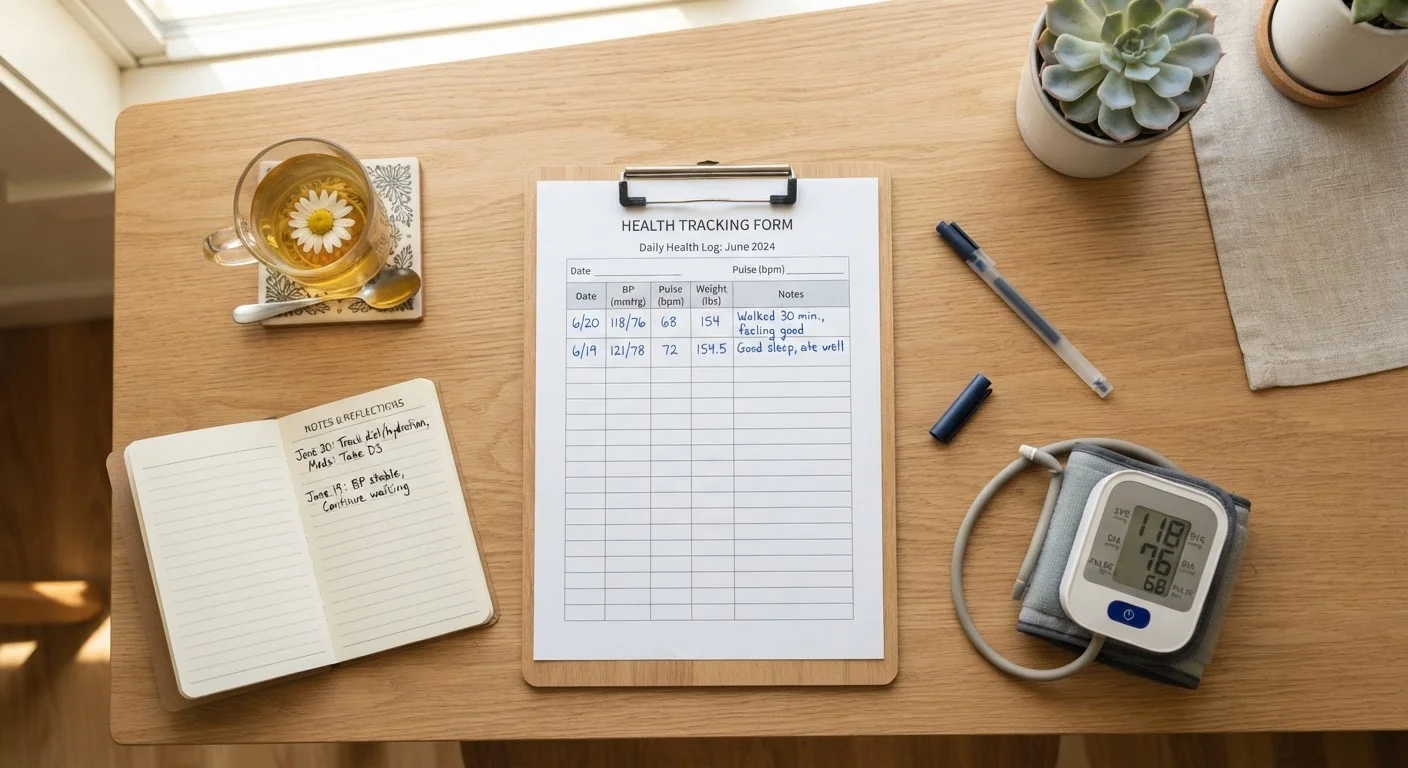
A structured self-check-in gives you a brief pause to observe honestly. Research in preventive mental health consistently points to self-awareness as a foundational skill: recognizing early warning signs is associated with better coping and more timely support-seeking. Think of this as a routine wellness scan - the mental equivalent of checking your blood pressure periodically.
This checklist is designed for any adult who wants to check in with themselves, whether things feel fine or something feels slightly off. It is general health information for self-reflection purposes only and is not a clinical diagnostic tool. For personal mental health decisions or persistent concerns, consult a qualified healthcare provider. If you're new to thinking about mental health more broadly, the foundational guide to mental wellness is a helpful starting point.
Mood & Emotional State
Stress & Mental Load
Sleep Quality
Physical Signals
Social Connection & Support
Self-Care & Daily Structure
How to Use This Checklist
Work through each item honestly. There are no right or wrong answers - the goal is observation, not judgment. You can run through this checklist mentally, jot responses in a notebook, or use a note on your phone. Most people complete it in 10 to 20 minutes.
A few practical tips:
- Choose a low-distraction moment. A quiet space - morning coffee, a lunch break, before bed - makes honest reflection easier.
- Be specific. Instead of a vague "I feel okay," try to identify what's actually happening: "I've been irritable around 4 p.m. most days this week."
- Notice patterns over time. A single check-in is useful; repeated check-ins are more powerful. Consider pairing this with the weekly mental wellness check-in for deeper trend tracking.
- Act on what you find. If multiple areas flag concern, that's information - not failure. Explore grounding techniques for moments of overwhelm or consider speaking with a professional.
Patterns Matter More Than Single Snapshots
One difficult day doesn't define your mental wellness - but several difficult weeks in a row might signal that extra support is warranted. Use this checklist periodically (daily, weekly, or whenever something feels off) to build a clearer picture over time. Avoid drawing firm conclusions from any single session.
Building this habit into a broader daily routine amplifies its benefit. The guide to building a daily mental health routine offers practical scaffolding for doing exactly that. Mental wellness check-ins also fit naturally within a larger preventive care routine.
When to Seek Professional Support
If your check-in repeatedly surfaces significant concerns - persistent low mood, inability to function day to day, thoughts of self-harm, or severe anxiety - please reach out to a qualified mental health professional. This checklist is a reflection tool, not a substitute for clinical evaluation. You can contact the 988 Suicide and Crisis Lifeline by calling or texting 988 if you or someone you know needs immediate support.
This checklist is for general informational and self-reflection purposes only. It is not a substitute for professional mental health evaluation, diagnosis, or treatment. If you are experiencing a mental health crisis or emergency, contact a qualified healthcare provider or call 988 (Suicide and Crisis Lifeline) immediately.