
Why a Mental Health Routine Matters
Mental well-being isn't a fixed state - it fluctuates with sleep, stress, relationships, and dozens of other daily factors. A consistent routine creates a stable scaffolding that helps your mind and body regulate more effectively, even on difficult days. According to the National Institute of Mental Health (NIMH), proactive mental wellness habits can support emotional resilience and reduce the cumulative toll of everyday stress.
A routine works not by eliminating hard feelings, but by giving your nervous system predictable anchors - signals that certain times of day mean rest, movement, connection, or reflection. Over time, these anchors make it easier to recover from stress rather than stay stuck in it. For a broader look at how daily habits connect to long-term health, see our guide on daily habits that support long-term health.
Habit stacking
Linking a new behavior to an existing one so that the old habit automatically cues the new one, making it easier to stick to.
Parasympathetic nervous system
The part of your nervous system responsible for the body's rest-and-digest response - it counteracts the stress response and promotes calm.
Emotional resilience
The ability to adapt to stress, adversity, or difficult emotions and recover without lasting harm to well-being.
Keystone habit
A single core habit whose adoption tends to naturally trigger positive changes in other areas of daily life.
Self-compassion
Treating yourself with the same kindness and understanding you would offer a friend when you make a mistake or face difficulty.
The Core Building Blocks
Evidence-informed mental wellness routines tend to draw from the same handful of pillars. You don't need all of them at once - but understanding what they are helps you build intentionally.
- Sleep consistency: Going to bed and waking at roughly the same time stabilizes mood and cognitive function. The CDC recommends most adults aim for seven or more hours per night.
- Physical movement: Regular moderate exercise is associated with reduced symptoms of anxiety and depression in multiple large-scale studies. Even short daily walks count. See our guide on building a weekly exercise routine from scratch if you're new to movement.
- Mindful moments: Brief practices - slow breathing, a body scan, or a few minutes of meditation - activate the parasympathetic nervous system and reduce physiological stress responses.
- Social connection: Meaningful interaction with others, even brief, is consistently linked to better mental health outcomes. Isolation is a recognized risk factor for depression and anxiety.
- Expressive writing or reflection: Journaling has been studied as a tool for emotional processing. Our article on journaling for mental health explains what the research supports.
Start with the smallest possible version
If a habit feels too big to start, shrink it. A two-minute breathing exercise is infinitely more valuable than a 20-minute meditation you never begin. Building the behavior pattern matters first - duration and depth can grow naturally over time.
Designing Your Routine Step by Step
The most common mistake beginners make is trying to change everything at once. A more sustainable approach is to anchor one or two new habits to things you already do - a practice behavioral scientists call habit stacking.
- Audit your current day. Notice where you naturally have two to five minutes of slack - after waking, during a lunch break, or before bed. These are your insertion points.
- Choose one keystone habit. Pick a single habit from the core pillars - perhaps a consistent bedtime or a short walk - and commit to it for two weeks before adding anything else.
- Attach it to an anchor. For example: "After I pour my morning coffee, I will spend three minutes writing in a journal." The existing behavior cues the new one.
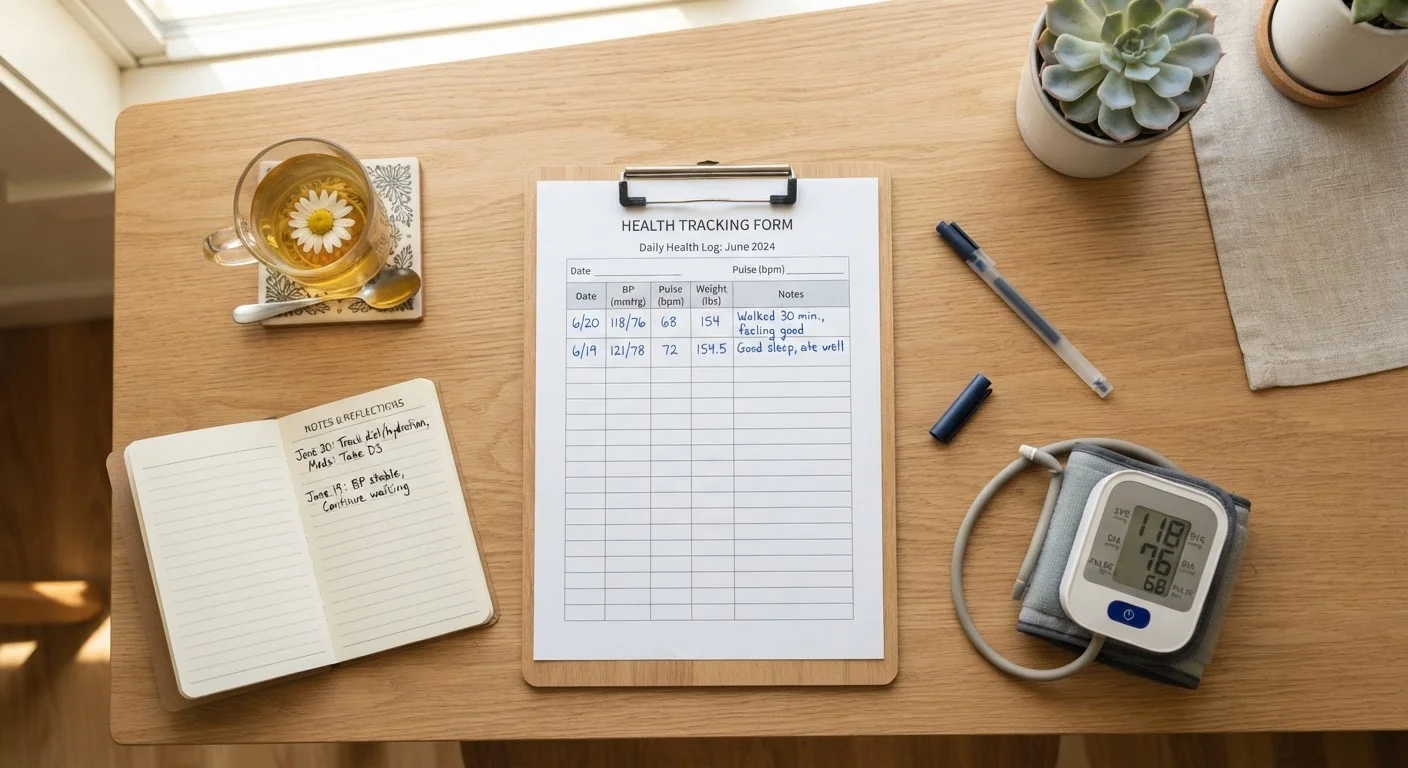
- Track it simply. A checkmark on a paper calendar or a note in your phone is enough. Tracking builds awareness without requiring a complex system.
For a complementary framework on building personal care habits, our article on building a morning routine that actually sticks offers practical structure you can adapt.
Routines Look Different for Everyone
There is no single template that works universally. A useful mental health routine is one that fits your actual schedule, responsibilities, and preferences - not one copied from a productivity influencer. Experiment, adjust, and prioritize sustainability over comprehensiveness.
Staying on Track When Life Gets Messy
Real life - illness, travel, work crunches, family demands - will disrupt any routine. Planning for this in advance is more effective than relying on willpower in the moment.
Have a minimum viable version of your routine. If your usual practice includes a 20-minute walk, a journaling session, and a wind-down ritual, identify the single non-negotiable you'll protect on your hardest days. Even one maintained habit signals continuity to your brain.
Coping strategies for hard days can bridge the gap when your routine breaks down temporarily. Self-compassion is also a documented protective factor - research shows that treating yourself kindly after a setback predicts faster return to healthy behaviors than self-criticism does.
Periodic self-check-ins help you notice when stress is accumulating before it becomes a crisis. Our personal mental wellness check-in gives you a structured way to assess your mood, sleep, and stress level at any time. You can also pair this with a weekly end-of-week reflection to spot patterns over time.
Routine Disruption Is Not Failure
Expecting your routine to hold perfectly through major life stress sets an unrealistic standard. Disruption is a normal part of any long-term habit - the goal is to return to your habits with as little friction as possible, not to maintain a perfect streak. Harsh self-judgment after a setback often makes it harder, not easier, to get back on track.
When to Seek Professional Support
A daily mental health routine is a genuinely useful tool - but it has clear limits. If you are experiencing persistent low mood lasting more than two weeks, significant anxiety that disrupts daily functioning, thoughts of self-harm, or symptoms that feel beyond your ability to manage, please reach out to a qualified mental health professional. A primary care provider, licensed therapist, or psychiatrist can offer assessment and care that no routine can replace.
Routine-building complements professional treatment - it does not substitute for it. The goal of this guide is to help you build a supportive daily structure, not to suggest that mental health conditions can or should be self-managed in isolation.
If you're new to thinking about mental wellness more broadly, our foundational guide Mental Wellness From the Ground Up covers the key concepts, habits, and resources to help you orient yourself.
This article provides general health information for educational purposes only. It is not a substitute for professional medical advice, diagnosis, or treatment. Always consult a qualified healthcare provider with questions about your mental health or before making changes to any treatment plan.