Two Visit Types, Two Very Different Purposes
Many Americans assume that seeing their doctor is seeing their doctor — but the healthcare system draws a meaningful distinction between a routine check-up (also called an annual physical or preventive visit) and a diagnostic visit. These two appointment types differ in purpose, what happens during the visit, and critically, how they are billed to your insurance.
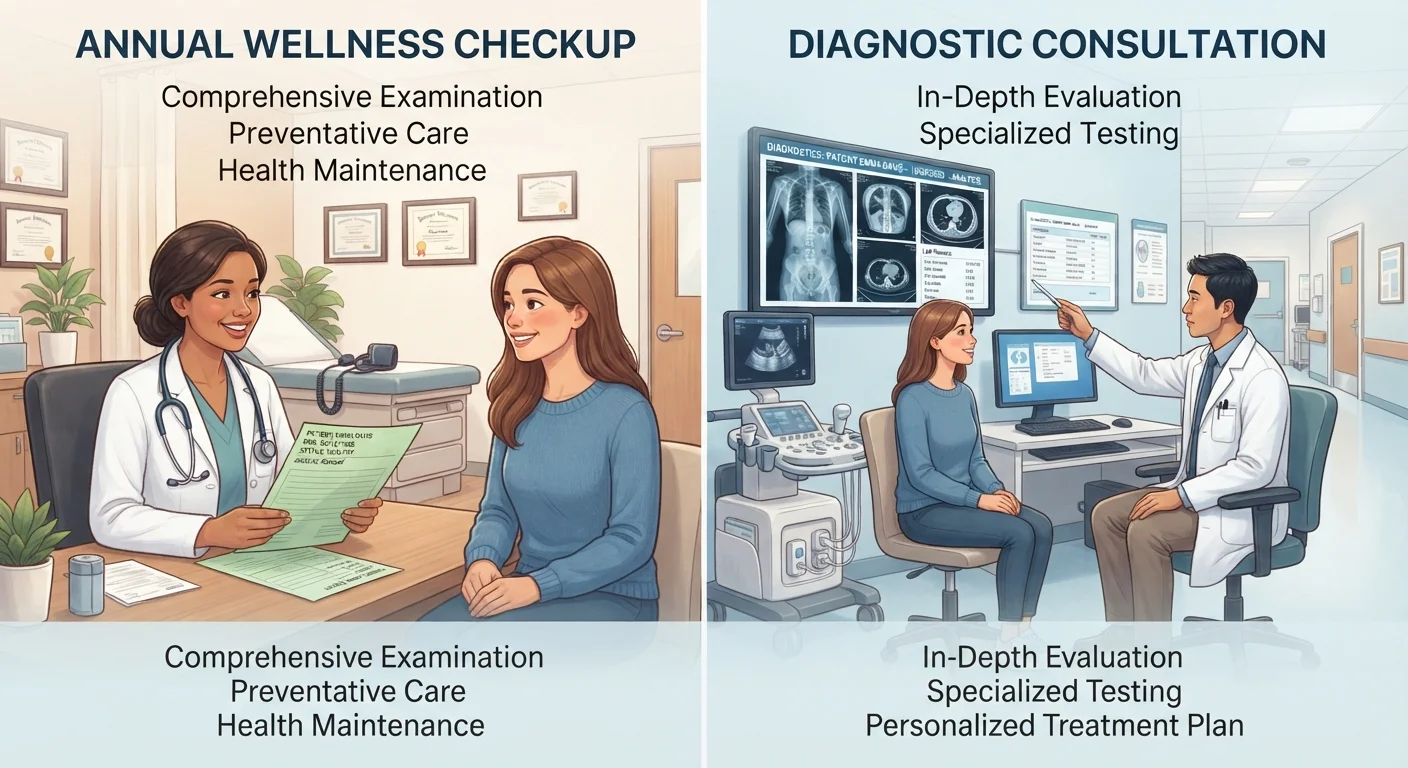
A routine check-up is proactive by design. Its goal is to assess your overall health when you have no specific complaint — reviewing vital signs, updating vaccinations, ordering age-appropriate screenings, and establishing a health baseline. Think of it as a scheduled wellness audit. A diagnostic visit, by contrast, is reactive. It is prompted by a symptom, concern, abnormal finding, or ongoing condition that requires investigation or management. The provider's attention during a diagnostic visit is focused on identifying, evaluating, or treating a particular problem.
Understanding this distinction isn't just academic. It directly shapes the questions you ask at your appointment — and the bill you receive afterward. See how annual physicals compare to other wellness visits for a related breakdown of visit categories.
| Criterion | Routine Check-Up | Diagnostic Visit |
|---|---|---|
| Primary purpose | Prevention and wellness monitoring | Evaluate or treat a specific problem |
| Triggered by | Scheduled interval (typically annual) | Symptom, abnormal result, or ongoing condition |
| Typical insurance coverage | Often covered at 100% (ACA preventive mandate) | Usually subject to copay or deductible |
| Billing code type | Preventive care code (e.g., Z-codes in ICD-10) | Evaluation & management or disease-specific code |
| Lab work ordered | Age- and risk-appropriate screening panels | Targeted tests related to presenting concern |
| Follow-up typically needed | Next annual visit (unless screening flags concern) | Often yes — to review results or adjust treatment |
How Insurance Treats Each Visit Differently
This is where the distinction becomes financially significant. Under the Affordable Care Act (ACA), most insurance plans are required to cover a set of preventive services — including annual wellness visits — at no cost to the patient when provided by an in-network provider. That means no copay, no deductible applied, and no coinsurance for a qualifying preventive visit.
Diagnostic visits operate under a different billing framework. Because the provider is evaluating or treating a problem rather than performing routine prevention, cost-sharing rules typically apply. Depending on your plan, that could mean a copay, a deductible contribution, or coinsurance charges — sometimes amounting to hundreds of dollars.
The 'Incidental Mention' Billing Trap
When a patient raises a new health concern during an annual physical, providers are clinically obligated to address it — but doing so may change how part of the visit is billed. Many insurers permit "split billing," where the preventive portion is covered at 100% and the diagnostic portion is billed separately with cost-sharing. This practice is legal and common, but it surprises patients who expected a fully covered visit. Asking your provider upfront whether a concern should be addressed today or at a separate appointment gives you more control over your costs.
The catch many patients encounter: if you arrive for your annual physical and mention a new symptom — say, persistent fatigue or a mole you've noticed — your provider may appropriately address it during the same visit. However, that portion of the visit can be coded as diagnostic, potentially triggering cost-sharing for part of the appointment. This is not a billing error; it reflects the clinical reality of what occurred. To avoid surprise charges, let your provider know upfront if you want to separate concerns into a follow-up diagnostic visit.
What Each Visit Actually Includes
During a routine check-up, a provider typically reviews your medical and family history, checks blood pressure, heart rate, weight, and BMI, updates or recommends vaccinations, discusses lifestyle factors such as diet and physical activity, and may order preventive labs like cholesterol or blood glucose screening based on your age and risk profile. The focus is on your health status as it currently stands — not on resolving a complaint.
A diagnostic visit centers on a specific issue. The provider may order targeted lab work, imaging, or referrals; interpret previous test results; adjust medications; or assess symptoms in clinical detail. The documentation in your chart reflects a problem-oriented encounter, which drives the diagnostic billing code.
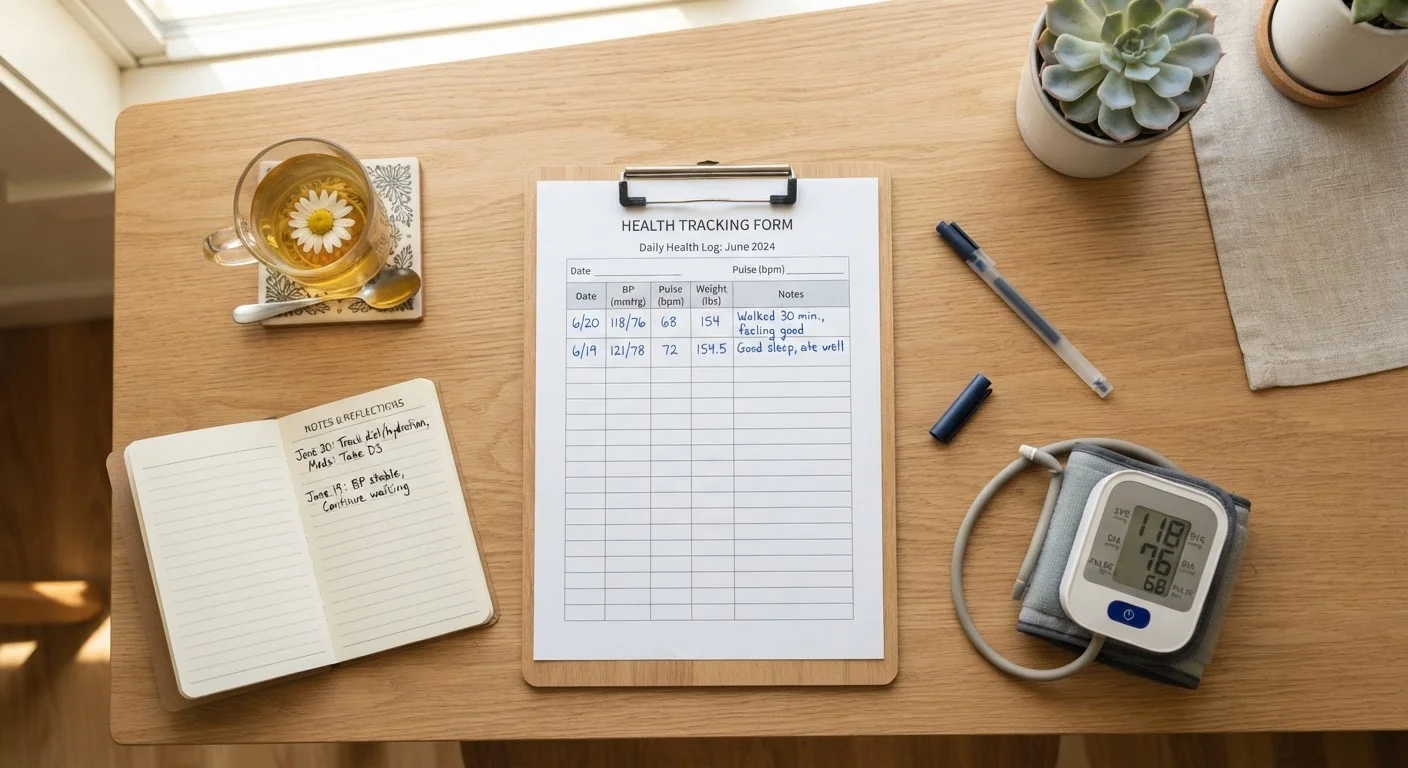
Preparing thoroughly for your annual physical helps you distinguish what belongs in that visit versus what warrants its own appointment. The guide on what to track before your annual physical can help you organize symptoms and questions in advance. You can also review a comprehensive adult preventive care checklist to understand what screenings typically belong in the preventive category.
~50%
Adults skipping annual preventive visits
CDC data has consistently shown that roughly half of U.S. adults do not complete recommended annual preventive care visits, leaving baseline health changes undetected.
1 in 3
Patients surprised by unexpected medical bills
A Kaiser Family Foundation survey found approximately one-third of insured Americans reported receiving an unexpected medical bill, with visit-type coding confusion cited as a common contributor.
Making the Most of Both Visit Types
Rather than viewing these visits as interchangeable or redundant, think of them as serving complementary roles in your overall health strategy. Your annual physical keeps a steady eye on your long-term health trajectory. Diagnostic visits address the specific, time-sensitive questions that arise in between.
A few practical steps help you navigate both effectively. Before any appointment, call your insurance company or provider's billing office to confirm how the visit will be coded. If you have multiple concerns — some routine, some symptom-based — ask whether separating them across two appointments makes clinical and financial sense. And when you see a provider, be clear about what prompted the visit: "I'm here for my annual physical" communicates something different than "I've had chest tightness for two weeks."
For guidance on when to see your primary care doctor versus a specialist for either visit type, see primary care vs. specialist for preventive visits. And to understand what a standard annual physical typically covers, learn what typically happens at your annual physical.
This article is for general informational purposes only and does not constitute medical, financial, or insurance advice. Coverage rules vary by plan, insurer, and state. Always consult your healthcare provider, a licensed insurance professional, or your plan documents for guidance specific to your situation.