Why a Pre-Shopping Audit Pays Off
Most households don't have a shortage of stuff — they have a shortage of organization. Before a shopping trip, it's easy to assume you're out of something, grab it at the store, and come home to find two more sitting in the back of a cabinet. That cycle quietly drains budgets over time.
A pre-shopping audit is simply a structured walkthrough of your home before you head out (or open a browser tab). It takes 15 to 30 minutes and consistently surfaces what you actually need, what's already on hand, and what you were about to buy out of habit rather than necessity. This checklist guides that process room by room and category by category.
If you're also thinking through how to build a structured list from your findings, see how to build a shopping list that keeps you on budget for a complementary approach.
Kitchen & Pantry
Cleaning & Household Supplies
Bathroom & Personal Care
Storage & Space Check
List Building & Prioritization
Tools to Have on Hand
You don't need anything elaborate to run a home audit effectively. A few simple tools make the process faster and more reliable.
Notepad or phone notes app
Record findings room by room as you walk through the audit.
Measuring tape
Confirm available storage dimensions before purchasing bulk or large-format items.
Permanent marker
Date open pantry and cleaning products so you can track how quickly you use them in future audits.
Small flashlight
Illuminate the backs of deep cabinets and under-sink storage where items are easily missed.
Using Your Audit Results
Once you've completed the walkthrough, you should have a clear picture: items that are genuinely depleted, items that need attention soon, and items you were on the verge of buying unnecessarily. Divide your results into three buckets: buy now, monitor, and remove from consideration.
The "monitor" category is important — it captures things that are low but not urgent, so you can plan for them on a future trip rather than making a special run. This is where a lot of unnecessary spending hides.
Bulk Buying Without Space Is a Cost, Not a Saving
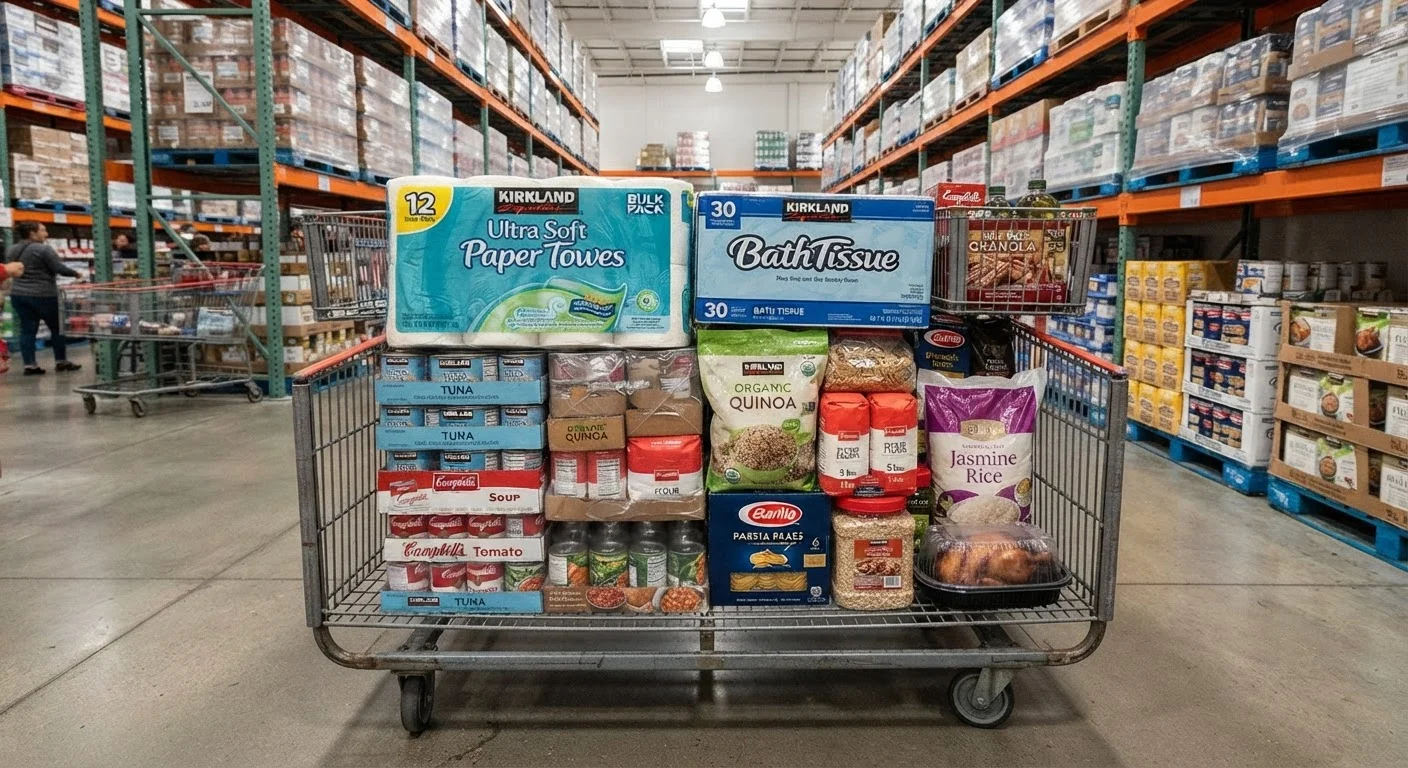
Buying in larger quantities can reduce per-unit cost, but only if you have adequate storage and a realistic timeline for use. Overstocking perishables, cleaning products with limited shelf life, or items that take up scarce cabinet space trades a minor price advantage for a real organizational and waste problem. Always confirm storage capacity during your audit before committing to bulk quantities.
If your audit surfaces larger gaps — like missing household essentials you never stocked — the room-by-room essentials inventory is a useful reference for identifying functional gaps across your home. And when you find you do need to replace something, knowing where spending more actually pays off helps you decide how much to invest. For a final check before any individual purchase lands in your cart, a pre-purchase checklist for everyday shoppers walks through necessity, value, and return policy in a few quick steps.