Why Grocery Budgets Stretch Further With Strategy, Not Sacrifice
Most households that overspend at the grocery store aren't buying luxury items — they're buying without a plan. Random shopping trips, repeated purchases of forgotten pantry staples, and defaulting to convenience packaging all quietly inflate the weekly total. The good news is that reducing food costs doesn't require eating less or settling for poor nutrition. It requires a clearer system.
This guide walks through a practical, repeatable approach for getting more from every dollar at the checkout. Whether you're trying to build savings, pay down debt, or simply stop the slow drain of food-budget drift, these steps apply regardless of household size or cooking confidence. For a broader look at household spending, see strategies for stretching your household budget without feeling deprived.
What you will need
How to Cut Grocery Costs Without Cutting Corners
Follow these steps in sequence the first time through. After a few weeks, most of them become habits that take under ten minutes each.
Audit your pantry before making any list
Before writing a single item on your shopping list, open every cabinet, the fridge, and the freezer. Note what you already have — especially proteins, grains, and canned goods. Meals planned around existing inventory cost nothing in ingredients and prevent the double-buying that silently inflates weekly totals.
Plan meals around proteins, then build outward
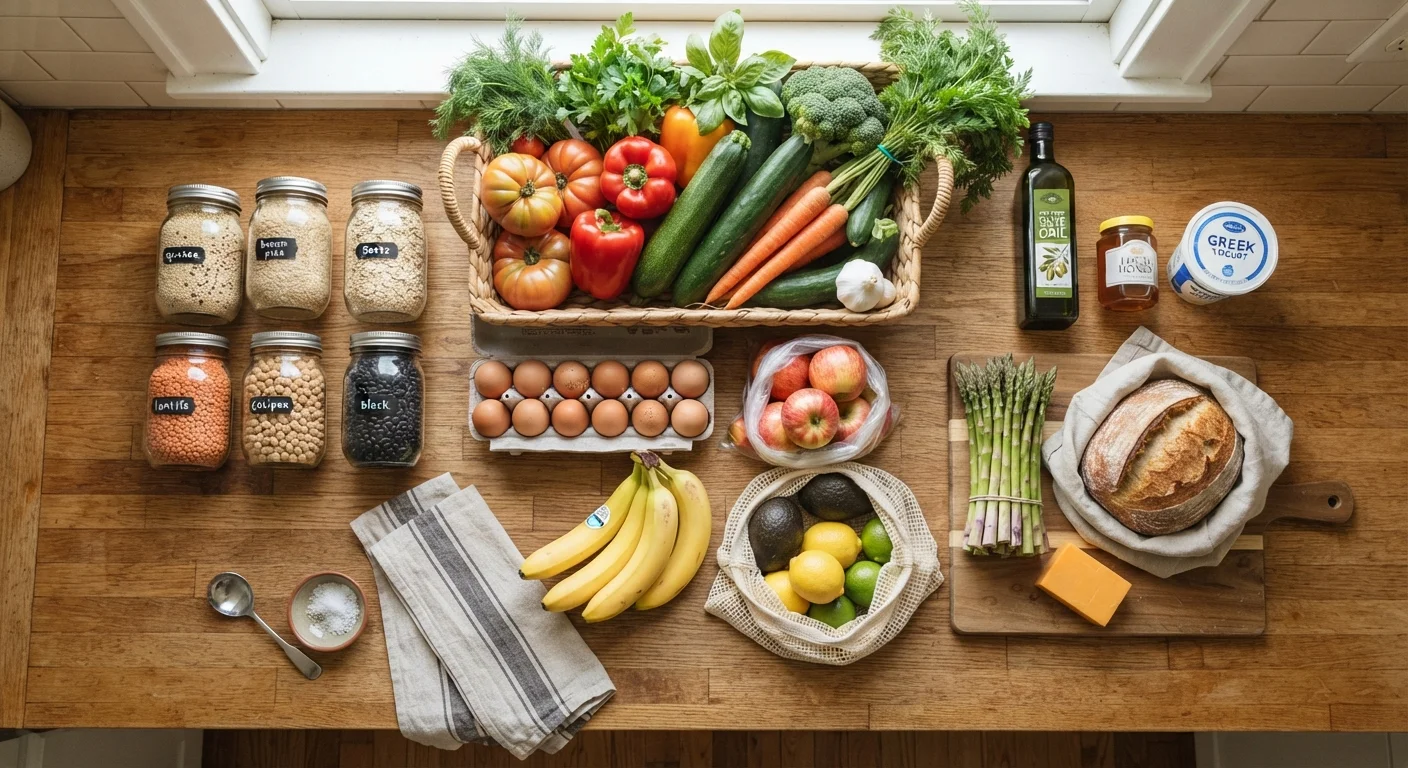
Protein is typically the most expensive line in a grocery budget. Plan your weekly meals starting with protein choices — and deliberately include at least two to three plant-based protein meals (lentils, beans, eggs, tofu) per week. These ingredients cost a fraction of most meat cuts per gram of protein and store well. Once proteins are decided, build side dishes and produce around them.
Use unit price — not package price — to compare products
The shelf tag in most U.S. grocery stores includes a unit price (cost per ounce, per count, or per pound). This is the only accurate way to compare two differently sized packages. A larger package is not always cheaper per unit, and store-brand products often undercut name-brand unit prices by 20–40% for identical or comparable quality.
Shop seasonally for produce
Out-of-season produce travels farther, costs more, and is often nutritionally inferior to in-season alternatives. A simple rule: if it's piled high and priced low, it's likely in season locally. Frozen vegetables are a reliable year-round alternative — they're typically frozen at peak ripeness and carry comparable nutritional value to fresh at a lower price point.
Cook in batches and repurpose components
Cooking a large pot of grains, a tray of roasted vegetables, or a batch of protein at the start of the week creates components that assemble into different meals without repeated cooking time or cost. A roasted chicken, for example, can become dinner one night, a grain bowl the next, and soup by day three — at the cost of one purchase. This approach reduces the temptation to buy convenience foods mid-week when time runs short.
Set a firm list and a buffer amount before entering the store
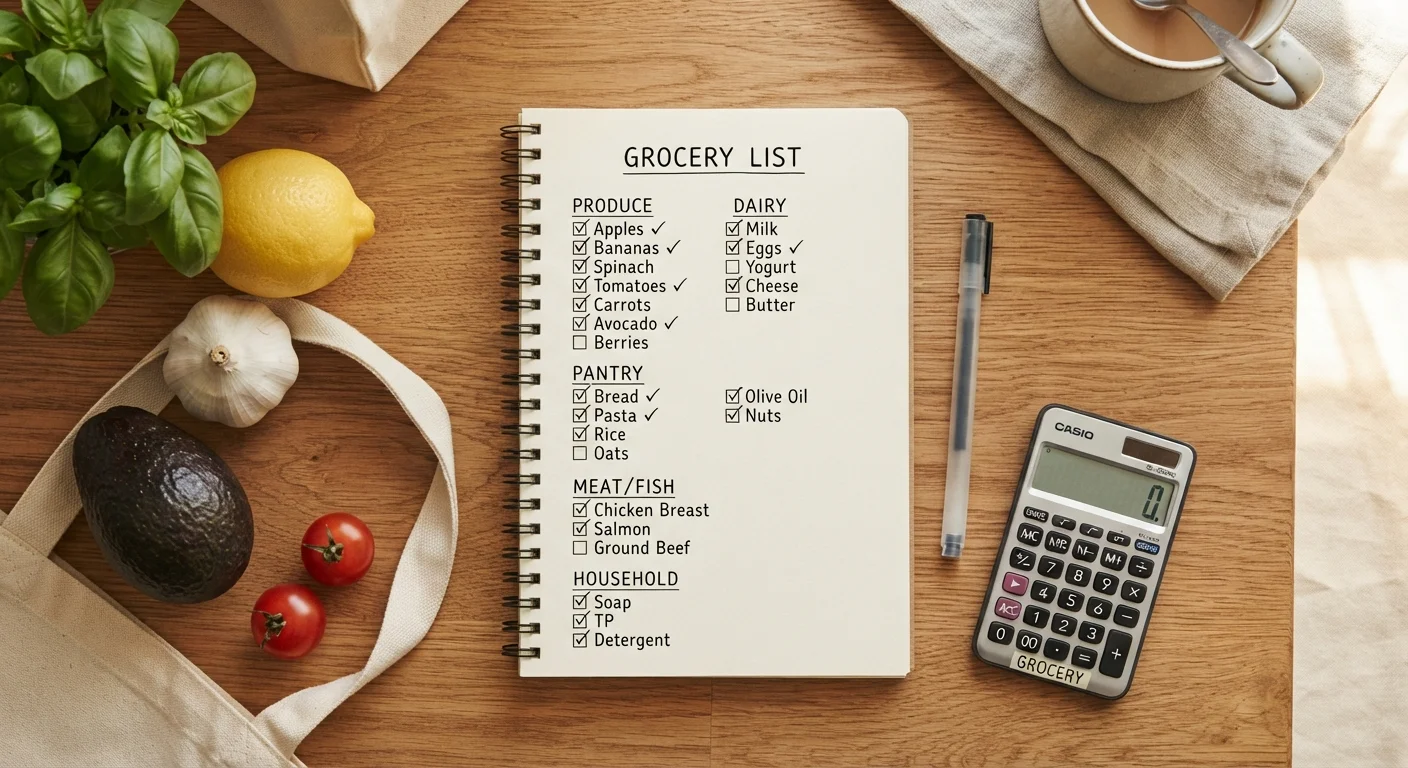
Bring a complete list derived from your meal plan and pantry audit. Decide in advance on a small, fixed buffer — say, five to ten dollars — for genuine opportunistic buys (a marked-down staple, an unexpected seasonal find). When the buffer is gone, the list is final. This structure keeps spending predictable without eliminating all flexibility. For more on list discipline, see how a well-structured list keeps you on budget.
Store Brands Are Worth a Real Trial
Many shoppers default to name brands out of habit rather than preference. Store-brand pantry staples — canned tomatoes, pasta, flour, oats, frozen vegetables — are produced by the same manufacturers in many cases and meet the same food safety standards. Try substituting three to five items per trip and evaluate based on actual taste and quality, not packaging.
Common Pitfalls and How to Avoid Them
Even a solid grocery plan breaks down under a few predictable pressures. Shopping hungry is the most cited culprit — it skews purchasing toward higher-cost, ready-to-eat items. Shopping without a list produces a similar result: the cart fills with visible items rather than planned ones. For a deeper look at list-building technique, the guide to building a shopping list that actually keeps you on budget covers practical methods for resisting impulse additions.
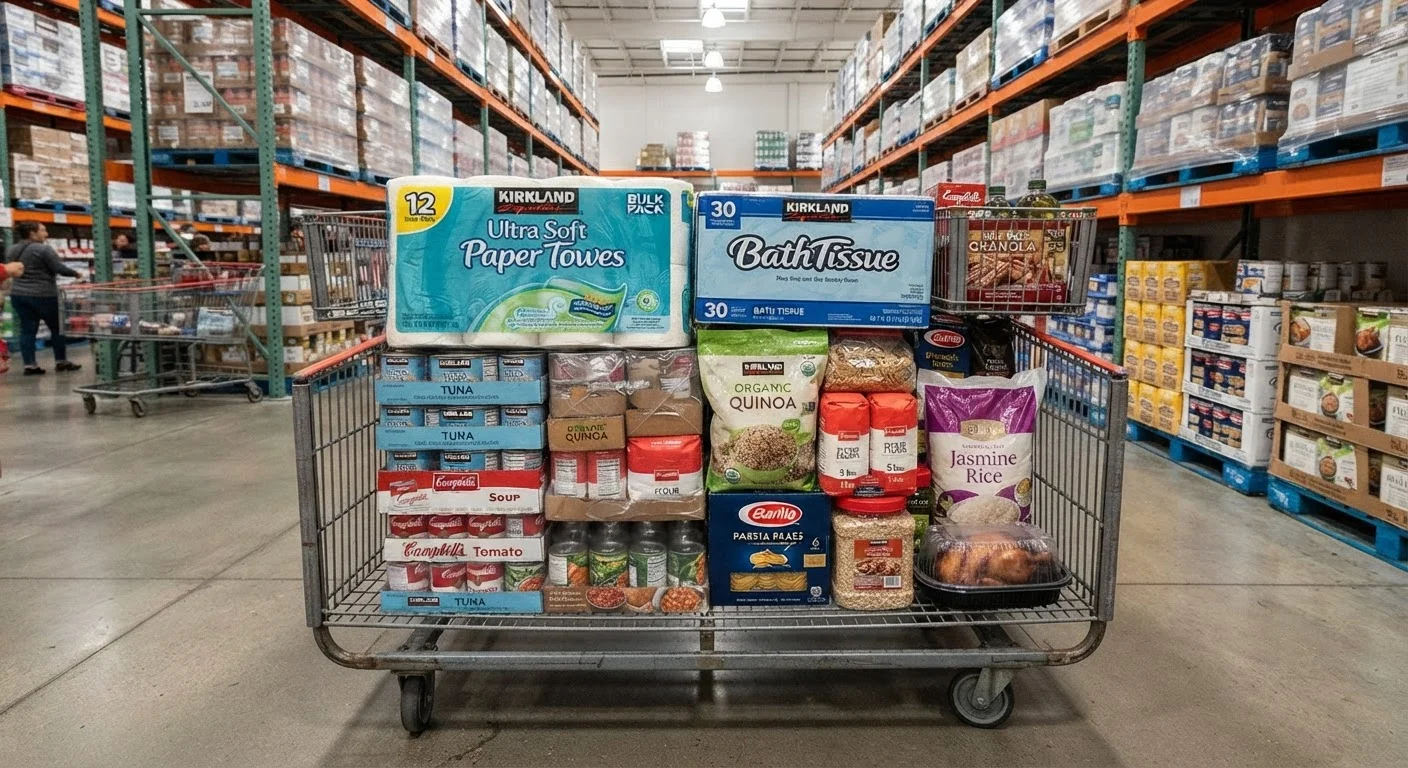
Another common trap is bulk-buying perishables that go to waste before they're used. Bulk buying only pays off when the item has a long shelf life or a clear plan for use within days. Grains, legumes, frozen vegetables, and canned goods are reliable bulk candidates. Fresh berries or pre-made salads are not.
Bulk Buying Saves Money Only If You Use It
Buying a large quantity of a perishable item because it's on sale only saves money if all of it gets used. Food waste effectively cancels out the discount. Before buying in bulk, have a specific plan for how and when the item will be used — especially for produce, dairy, and bread.
It's also worth remembering that grocery strategy is just one part of a household's financial picture. For foundational money management, the budgeting basics hub offers straightforward guidance on tracking spending and building a personal budget that holds up month to month.