What Bundling Actually Means
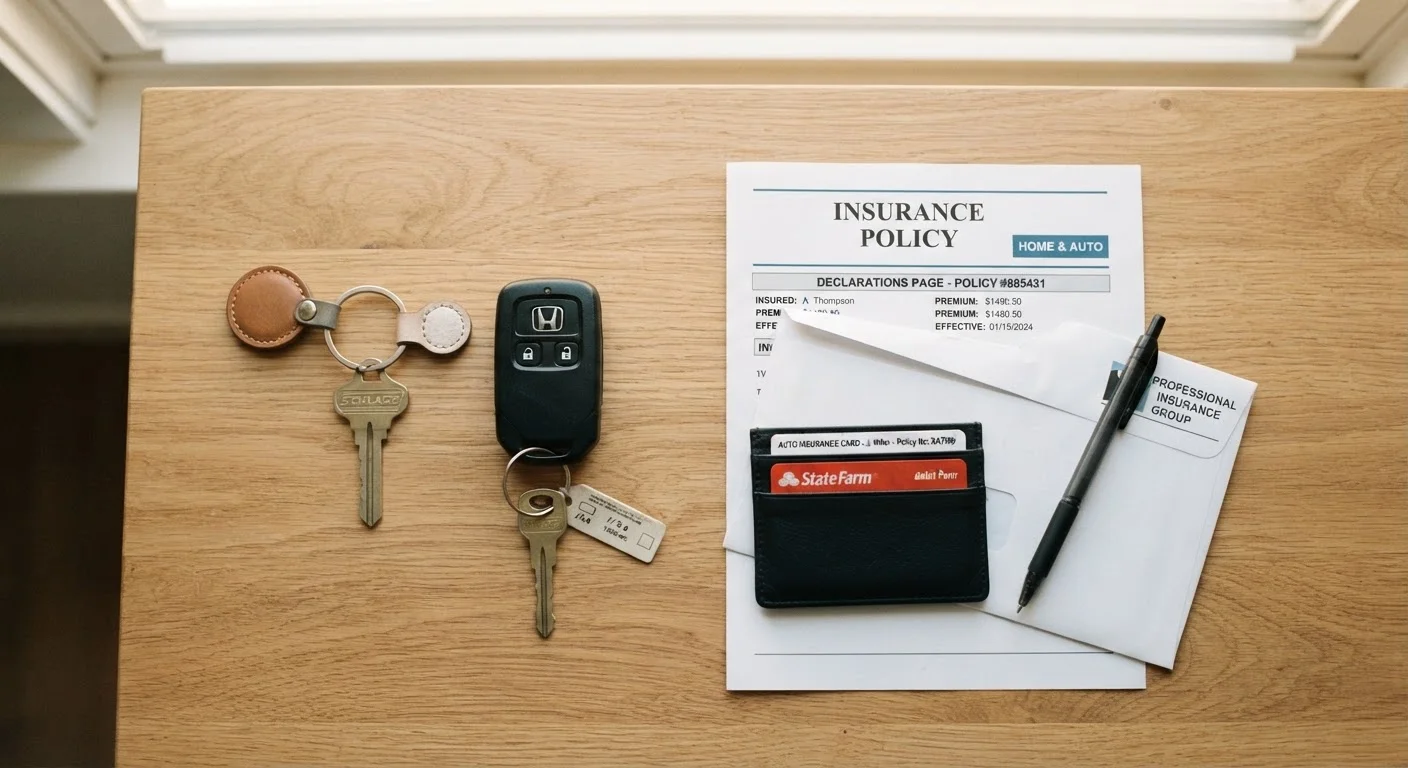
Bundling, in insurance terms, means purchasing two or more policies — most commonly homeowners and auto — from the same insurer. Insurers often call this a multi-policy discount or a package discount. The policies remain legally separate contracts; bundling doesn't merge them into one document or create a combined deductible.
Understanding what changes — and what doesn't — starts with the basics of how each policy is structured. Before reviewing any bundle offer, it's worth being familiar with key terms like premium, deductible, and exclusion. See our guide to common insurance policy terms for a plain-language reference.
What does change: your billing (often consolidated), your primary point of contact for both policies, and sometimes your premium. What doesn't change: the coverage limits, exclusions, and claims processes for each individual policy, unless you specifically negotiate them.
Bundling vs. Combining Coverage: A Key Distinction
Bundling keeps your home and auto policies as separate contracts with separate terms — it does not create a single unified policy. Each policy still has its own coverage limits, deductibles, and exclusions. This distinction matters when filing a claim: you'll go through the relevant policy's claims process, not a combined one. Always read both policy documents individually, even after bundling.
Pros of Bundling Home and Auto
There are genuine advantages to having both policies under one roof — but they vary depending on the insurer and your specific situation.
Simplified billing with one insurer contact
Managing renewals, payments, and questions through a single insurer reduces administrative friction. One login, one phone number, and one renewal cycle to track.
Potential multi-policy premium discount
Many insurers offer a percentage discount on one or both policies when bundled. The actual savings vary widely by insurer, state, and coverage level — never assume the discount is automatic or substantial without verifying.
Coordinated claims handling in some scenarios
If an incident — such as a car crashing into your home — triggers both policies simultaneously, having a single insurer can streamline the claims coordination process.
Possible loyalty benefits over time
Some insurers extend additional perks to long-term multi-policy customers, such as accident forgiveness or deductible reductions, though these vary significantly by provider.
For a broader look at how bundling decisions fit into your annual coverage review, see our yearly insurance coverage checklist.
Cons of Bundling Home and Auto
Bundling is not without its downsides, and for some households the trade-offs outweigh the convenience.
Discount may not outweigh separate policy savings
Two separate insurers — each offering a competitive rate on their specialty product — can sometimes be cheaper in total than the bundled price, even after the multi-policy discount is applied. Always compare total out-of-pocket costs.
Coverage quality can be uneven across policies
An insurer that excels at auto coverage may offer a weaker homeowners product, or vice versa. Accepting a weaker policy to maintain a bundle means trading coverage quality for convenience.
Rate increases can affect both policies at once
If the insurer raises rates — due to regional losses, inflation, or a claim on your record — the increase can apply to both your home and auto premiums simultaneously, leaving you with fewer options than if they were separate.
Cancelling one policy can disrupt both
If you sell your home, change vehicles, or find a better rate elsewhere, cancelling one policy mid-term may remove the bundle discount from the other, raising that premium unexpectedly.
Switching later involves more complexity
Untangling two bundled policies — coordinating cancellation dates, securing replacement coverage, and managing potential coverage gaps — is more complicated than switching a single policy.
5–25%
Typical multi-policy discount range
Industry sources generally cite multi-policy discounts in this range, though actual savings depend heavily on the insurer, state, and individual risk profile.
~70%
U.S. homeowners who bundle with auto
According to the Insurance Information Institute, a large majority of homeowners who carry both policy types purchase them from the same insurer.
One frequently overlooked concern: if you bundle and then need to file a claim on one policy, your relationship with the insurer now covers both. A difficult claims experience — or a rate increase after a claim — affects your entire insurance arrangement. For guidance on how to protect your interests during the claims process, review our article on filing a home insurance claim effectively.
What to Check Before You Bundle
Before consolidating policies, treat each one as a standalone evaluation. Ask the following questions for both the home and auto policy being offered:
- Are the coverage limits adequate? A discount means little if the dwelling limit on your homeowners policy falls short of rebuilding costs.
- What are the exclusions? Bundled packages sometimes use standard forms that exclude certain perils. Confirm what is and isn't covered.
- What is the deductible structure? Some insurers apply a single deductible for certain bundled claims; others keep them fully separate. Understand which applies.
- What happens if you need to cancel one policy? Cancelling the auto policy mid-term may void the bundle discount on your home policy, increasing that premium retroactively.
It's also worth running a full annual check on your home policy before any renewal or bundling decision. Our home insurance annual review checklist walks through the specific items to verify.
This article is for general informational purposes only and does not constitute personalised insurance, financial, or legal advice. Coverage terms, discounts, and eligibility vary by insurer and state. Always read your actual policy documents and consult a licensed insurance agent or adviser for guidance specific to your situation.