The Core Difference: Who Owns the Building
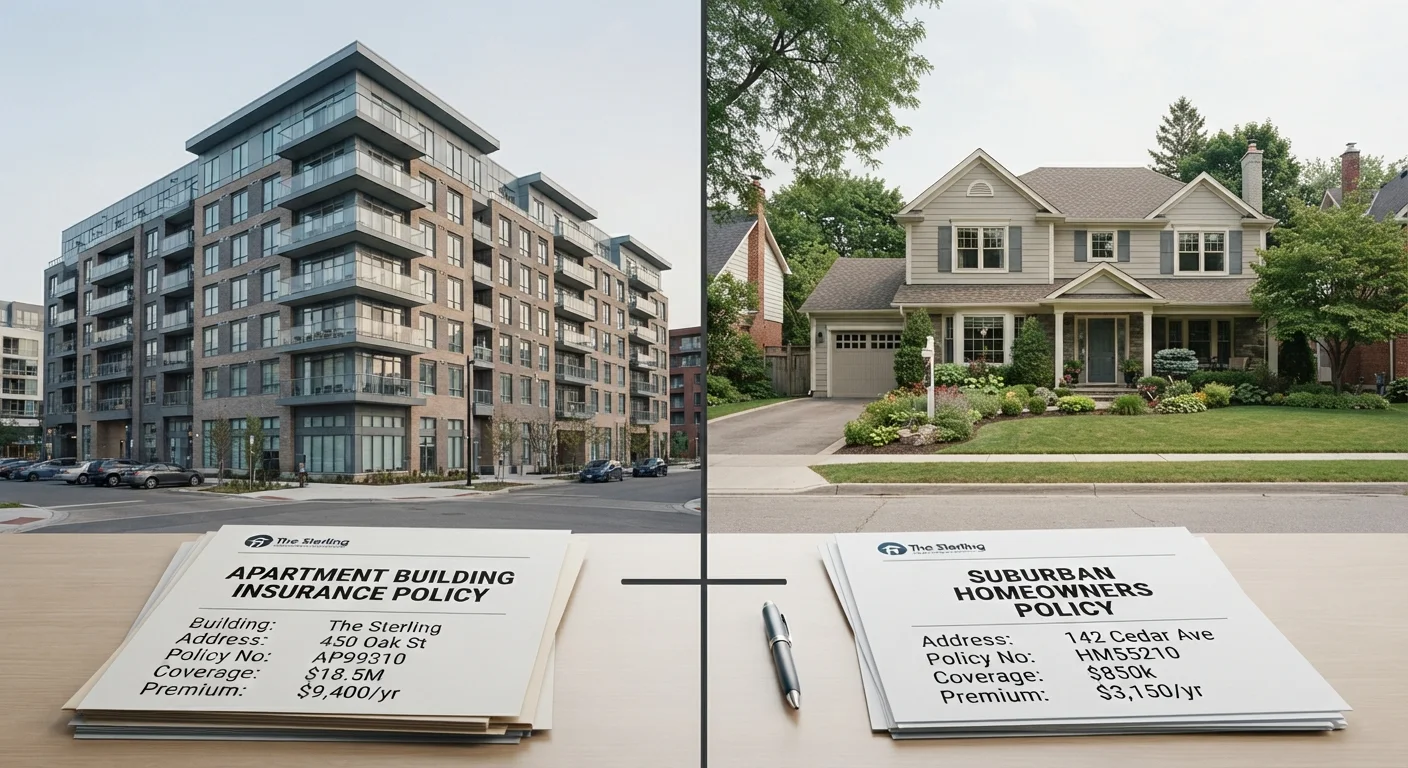
The single biggest structural difference between renters insurance and homeowners insurance comes down to one question: do you own the walls around you?
A homeowners policy is built to protect an asset you own — the physical structure of the house, attached structures like a garage, and everything inside. Because you're financially responsible for the building itself, the policy reflects that exposure.
A renters policy, on the other hand, assumes someone else owns the building. Your landlord carries a separate policy that covers the structure. What renters insurance protects is everything you bring through the door — your furniture, electronics, clothing, and other personal belongings — plus your personal liability if someone is injured inside your unit.
This distinction drives nearly every other difference in how these two policies are structured, priced, and scoped. For a deeper look at the homeowners side, our first-timer's walkthrough of homeowners insurance breaks down each coverage section in plain language.
What Each Policy Actually Covers
Despite their structural differences, renters and homeowners insurance share several overlapping coverage categories:
- Personal property: Both cover your belongings against named perils — typically fire, theft, vandalism, and certain water damage. If your laptop is stolen from your car or a fire destroys your wardrobe, both policies can respond.
- Personal liability: Both protect you if someone is injured on your property and you're found legally responsible, or if you accidentally damage someone else's property.
- Additional living expenses (ALE): If a covered event makes your home temporarily uninhabitable, both policies can help pay for a hotel or short-term rental while repairs are made.
Where they diverge is on dwelling coverage — the part of a homeowners policy that pays to repair or rebuild the structure itself. Renters policies simply don't include this, because renters have no financial stake in the building.
Homeowners policies also typically include other structures coverage (fences, detached garages) and may bundle in medical payments to others for minor injuries on your property.
| Feature | Renters Insurance | Homeowners Insurance | |
|---|---|---|---|
| Dwelling/structure coverage | Not included | Core coverage component | |
| Personal property coverage | Included | Included | |
| Personal liability coverage | Included | Included | |
| Additional living expenses | Included | Included | |
| Other structures (garage, fence) | Not included | Typically included | |
| Flood/earthquake coverage | Not standard; needs separate policy | Not standard; needs separate policy | |
| Typical cost range | Lower — no structure to cover | Higher — reflects building risk | |
| Who needs it | Tenants renting a home or apartment | People who own their home |
This article provides general insurance education and is not a substitute for advice from a licensed insurance professional. Coverage terms vary by policy and provider — always read your policy documents carefully.
Cost and Why the Gap Exists
Renters insurance is generally one of the least expensive insurance products available, with many policies available for well under $30 a month. Homeowners insurance costs significantly more — often several times higher — because the policy is covering a much larger and more complex set of risks, primarily the cost to rebuild a structure.
The premium for a homeowners policy reflects factors like the home's location, age, construction type, and rebuild value. A renters policy, with no building exposure to price, can be rated primarily on the value of the tenant's personal property and liability limits selected.
~$180/yr
Approximate average renters insurance annual cost
The National Association of Insurance Commissioners has estimated average renters insurance premiums in the range of roughly $15 per month, though costs vary widely by state and coverage level.
~$1,400/yr
Approximate average homeowners insurance annual cost
The Insurance Information Institute has reported average homeowners insurance premiums significantly higher than renters policies, reflecting the added cost of covering the physical structure.
This cost gap is logical, not arbitrary. You're simply insuring different amounts of financial exposure. That said, both policies are adjustable. Higher deductibles lower premiums; higher personal property limits or liability limits raise them. Neither policy covers everything — flood damage and earthquake damage are standard exclusions in both types and require separate policies.
For more context on how these two coverage types sit within the broader insurance landscape, the Life & Other Insurance hub covers renters and specialty policies in more detail.
Common Misconceptions Worth Clearing Up
Several persistent myths cause real financial harm when people rely on them:
Check What Your Landlord's Policy Actually Covers
Before assuming any coverage exists for your belongings, ask your landlord what their policy protects. In nearly all cases, their policy covers the building only — not tenant property. This is the clearest reason to consider getting your own renters insurance policy. A licensed insurance agent can help you determine the right coverage amount for your situation.
- "My landlord's insurance covers my stuff." It doesn't. A landlord's policy covers the building — not your television, not your clothes, not your furniture. Without renters insurance, your belongings are unprotected.
- "I don't own enough to bother insuring." People routinely underestimate what it would cost to replace everything they own after a total loss. Walk through any room and mentally price replacing each item at today's retail prices — the total adds up quickly.
- "Homeowners insurance covers everything in and around my home." Not automatically. Jewelry, fine art, and home-based business equipment often require additional riders or separate policies. And as noted, floods and earthquakes aren't covered under a standard policy.
Understanding what your policy is built to do — and what it isn't — is the foundation of making good coverage decisions. For a side-by-side look at how the financial risk profiles of renters and homeowners differ, see how renters and homeowners face different insurance needs. And for a plain-language breakdown of what renters insurance specifically includes and excludes, renters insurance coverage explained is a useful companion read.