
How Each Plan Model Works
At their core, HMOs and PPOs are network structures — rules about which doctors and facilities your insurance will pay for, and how you access them.
An HMO assigns you to a primary care physician (PCP) who manages your care. Want to see a cardiologist or dermatologist? Your PCP writes the referral. All care must be delivered by in-network providers, with rare exceptions for true emergencies. This tight coordination is what keeps HMO premiums lower.
A PPO removes the gatekeeper. You can book a specialist appointment directly, and you have two tiers of coverage: a higher benefit level for in-network providers, and a reduced (but real) benefit for out-of-network ones. That flexibility costs more in monthly premiums and often in deductibles.
Understanding these mechanics matters before you compare prices. Two plans with the same premium can look identical on paper but deliver very different experiences once you need care.
| Criterion | HMO | PPO |
|---|---|---|
| Monthly Premium | Generally lower | Generally higher |
| Requires Primary Care Physician | Yes | No |
| Specialist Referral Required | Yes | No |
| Out-of-Network Coverage | Emergency only | Yes, at higher cost |
| Cost Predictability | High | Moderate |
| Provider Choice | In-network only | In- and out-of-network |
| Typical Deductible | Lower | Higher |
Cost Differences Beyond the Premium
Most people compare health plans by monthly premium alone, but that's only one piece of the actual cost picture.
HMO costs tend to be predictable. Copays are usually fixed — you pay a set dollar amount per visit rather than a percentage of the bill. Out-of-pocket maximums are often lower, and because care stays in-network, there are fewer surprise bills.
PPO costs are more variable. If you stay in-network, cost-sharing is reasonable. But using out-of-network providers means higher coinsurance rates and a separate (or no) out-of-pocket maximum for those charges. The flexibility is real, but so is the financial exposure.
~47%
U.S. workers enrolled in PPO plans
According to KFF's 2023 Employer Health Benefits Survey, PPOs remained the most common plan type offered by employers.
~13%
U.S. workers enrolled in HMO plans
The same KFF 2023 survey found HMO enrollment at roughly 13% of covered workers, down from earlier decades.
If you're navigating a complex condition that requires multiple specialists, the right plan structure for chronic care involves more than premiums — formulary tiers and specialist cost-sharing matter just as much.
When the Network Boundary Actually Bites
The biggest practical difference between an HMO and a PPO isn't referrals — it's what happens when you go outside the network.
With an HMO, going out of network typically means paying the full bill yourself, except in a documented emergency. That matters if you live near a state border, travel for work, or have a specialist you trust who isn't in your plan's directory.
PPOs don't eliminate out-of-network costs, but they do share them. You'll still pay more than for in-network care, but your insurer picks up part of the tab. That safety net is a core reason many people with complex care needs prefer the PPO structure.
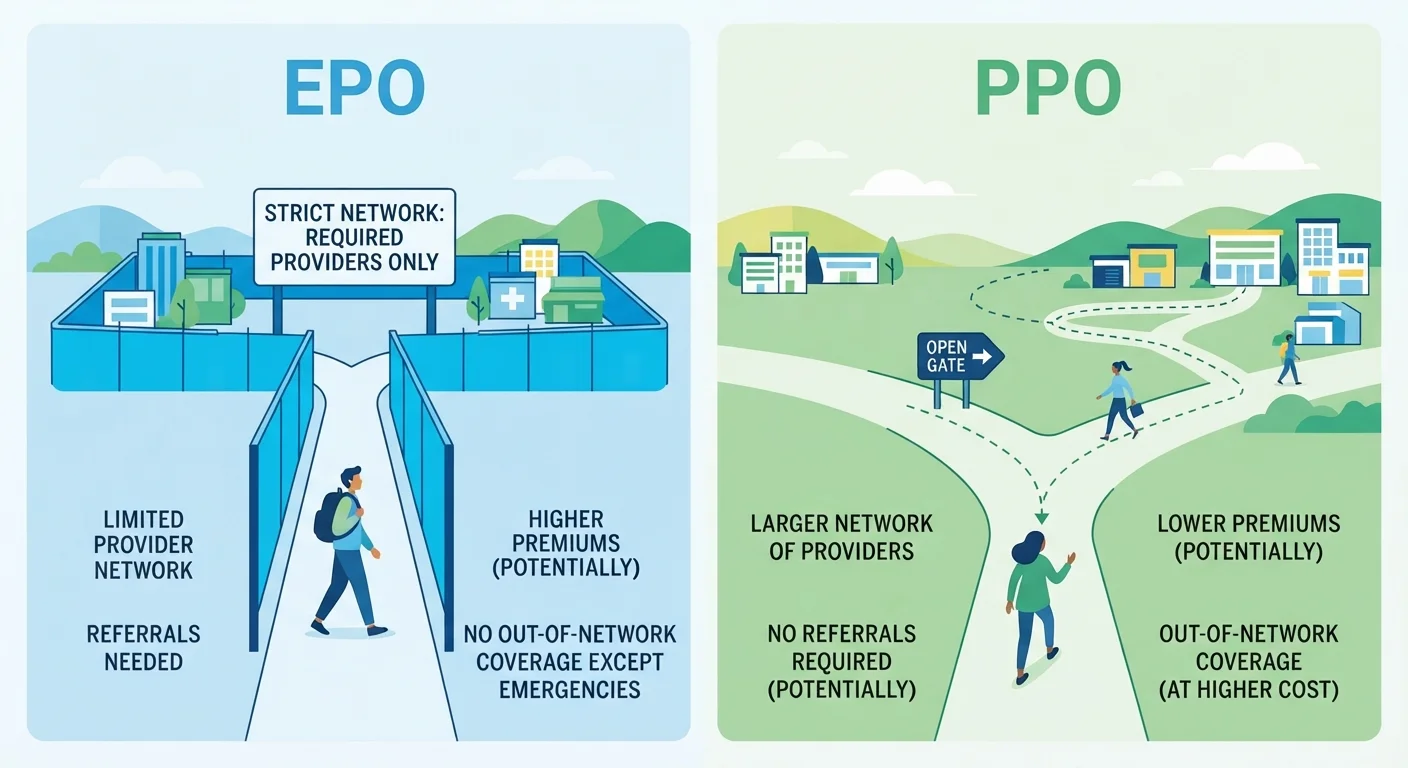
It's also worth knowing that PPOs aren't the only alternative if you want to skip referrals. EPOs (Exclusive Provider Organizations) also allow direct specialist access — but with no out-of-network coverage at all. See how that trade-off plays out in our look at EPO vs. PPO network access.
Out-of-Network Emergency Coverage
Federal law generally requires that HMOs cover emergency care received out-of-network at in-network cost-sharing levels, though what qualifies as an emergency and how claims are processed can vary. The No Surprises Act, effective 2022, added further protections against unexpected bills in many situations. Review your specific plan documents and your state's rules to understand exactly what applies to you.
When you're ready to apply what you've learned, the open enrollment walkthrough covers how to evaluate all these factors before you lock in a plan.
This article provides general health insurance information for educational purposes only and does not constitute personalized insurance, financial, or legal advice. Coverage terms, costs, and rules vary by insurer, plan, and state. Always review your actual plan documents and consult a licensed insurance agent or adviser before making coverage decisions.