Why an Annual Review Matters
Health insurance plans are not static. Insurers adjust premiums, networks, drug formularies, and cost-sharing every year — and those changes take effect whether or not you review them. If you do nothing during open enrollment, you may be auto-renewed into a plan that no longer fits your situation.
This checklist walks you through every layer of your health coverage so you can make a deliberate, informed decision rather than a default one. It pairs well with our broader personal insurance review checklist if you want to audit other coverage types at the same time.
This article provides general health insurance information for educational purposes only. It is not personalized insurance, financial, or legal advice. Coverage terms, costs, and eligibility vary by insurer and state. Always read your actual plan documents and consult a licensed insurance agent or broker for guidance specific to your situation.
Open Enrollment Has a Hard Deadline
For marketplace plans, open enrollment typically runs from November 1 through mid-January, with enrollment by December 15 generally required for January 1 coverage. Employer plans set their own windows, often in the fall. Miss your window and you generally cannot change plans until the next year unless you experience a qualifying life event such as marriage, the birth of a child, or job loss.
What You'll Need Before You Start
Gather the following documents so you can work through the checklist efficiently without stopping to search:
Current plan Summary of Benefits and Coverage (SBC)
The SBC is a standardized 4-page document that outlines your plan's costs, coverage, and key exclusions — your starting point for any review.
Your insurer's online provider directory
Use this to verify that your doctors and hospitals are in-network for the upcoming plan year.
Plan formulary (drug list)
This document lists all covered medications and their cost tiers so you can confirm your prescriptions are covered.
Explanation of Benefits (EOB) statements from the past year
EOBs show what you actually paid for care, helping you estimate realistic annual spending under your current plan.
Healthcare.gov or your employer's benefits portal
Use this to compare available plans side-by-side during open enrollment before making a final decision.
The Review Checklist
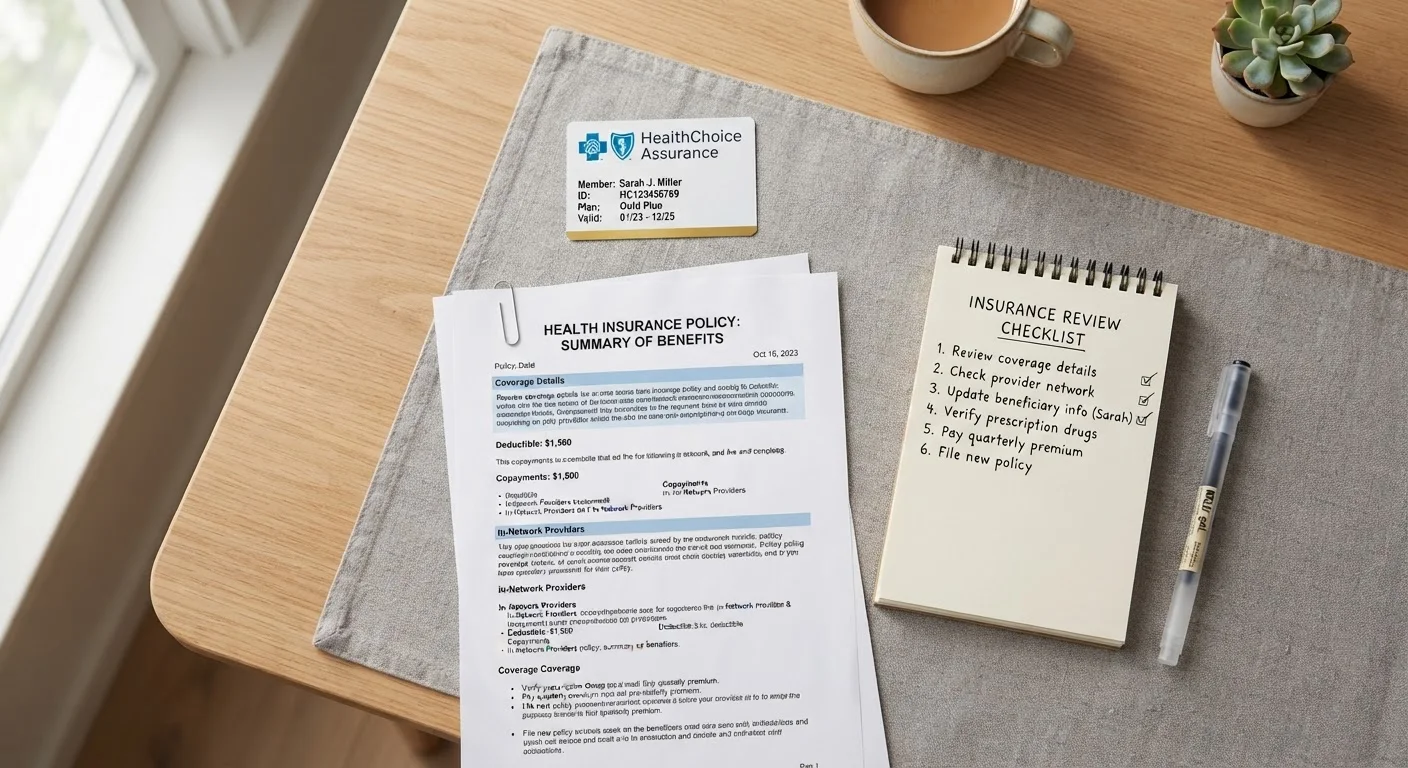
Work through each group below. Items marked must are non-negotiable before you make any renewal decision. Should items are strongly recommended. Nice-to-have items add useful context if time allows.
Know Your Current Plan's Cost Structure
Verify Your Network Coverage
Review Prescription Drug Coverage
Account for Life Changes
Check Benefits You May Be Underusing
Once you know which preventive services your plan covers at no cost, cross-reference with our annual preventive care checklist for adults to make sure you're scheduling everything you're entitled to.
Network Changes Happen Every January
Even if your doctor was in-network last year, that can change. Providers and insurers renegotiate contracts annually, and a provider can drop out of a network without individual notice to policyholders. Always reconfirm network status directly with both your provider's office and your insurer before assuming coverage will continue.
Putting It All Together
After completing the checklist, you should have a clear picture of three things: what your current plan actually costs you (not just the premium), whether it still covers the providers and medications you rely on, and whether a different plan tier might be a better financial fit given the care you expect to need.
If your health spending is difficult to predict, pay close attention to the out-of-pocket maximum — the most you'll pay in a plan year before insurance covers 100%. A plan with a higher premium but lower out-of-pocket maximum can cost less overall if you use significant care.
For help fitting premiums and cost-sharing into your broader household spending plan, see the Budgeting Basics hub. And if this review reveals changes in your overall insurance picture — a new dependent, a home purchase, or a change in income — use the annual insurance coverage checklist to assess all your policies together.