How Each Method Works
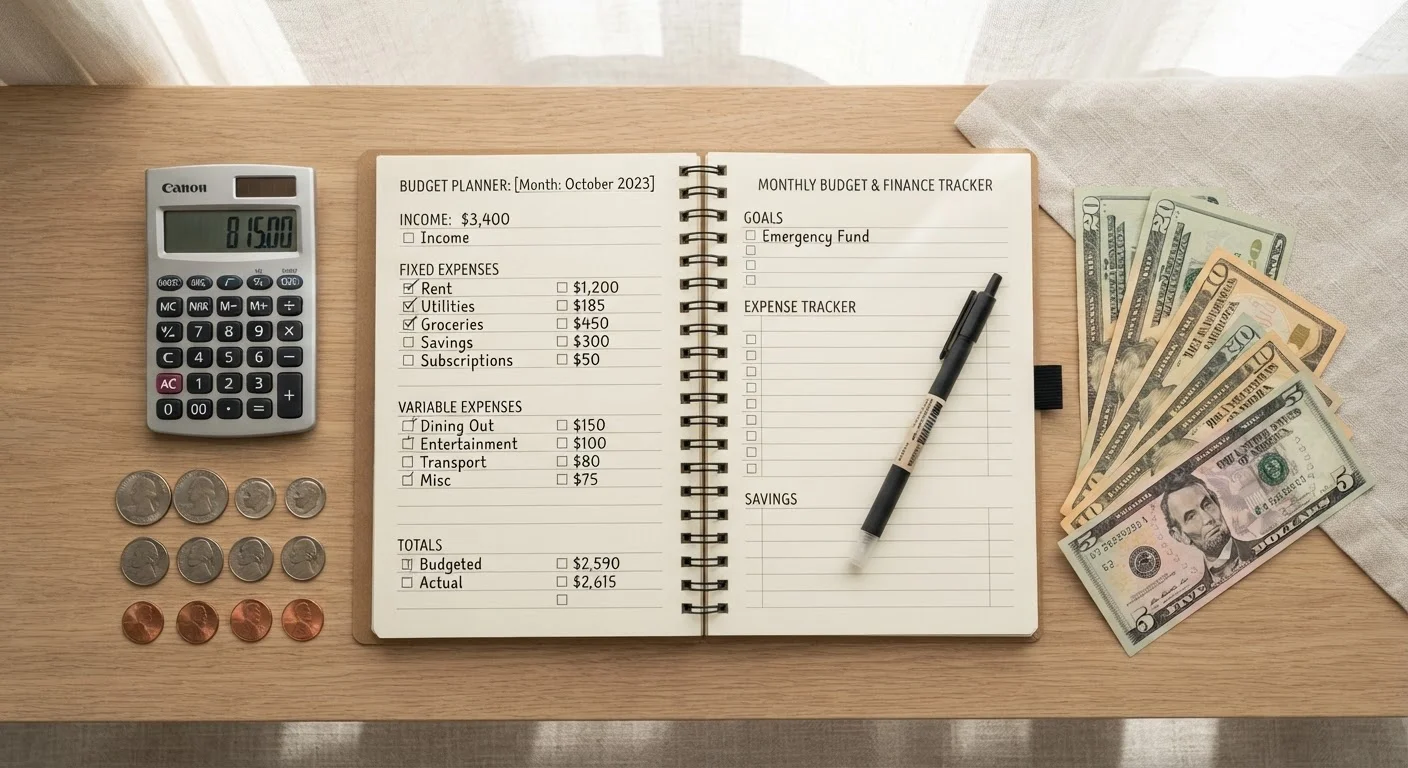
Zero-based budgeting starts from a blank slate each month. You list every anticipated expense — rent, groceries, utilities, subscriptions, savings contributions — and assign dollars until your income minus your expenses equals zero. That "zero" doesn't mean you spend everything; it means every dollar has a declared purpose, including savings and investments.
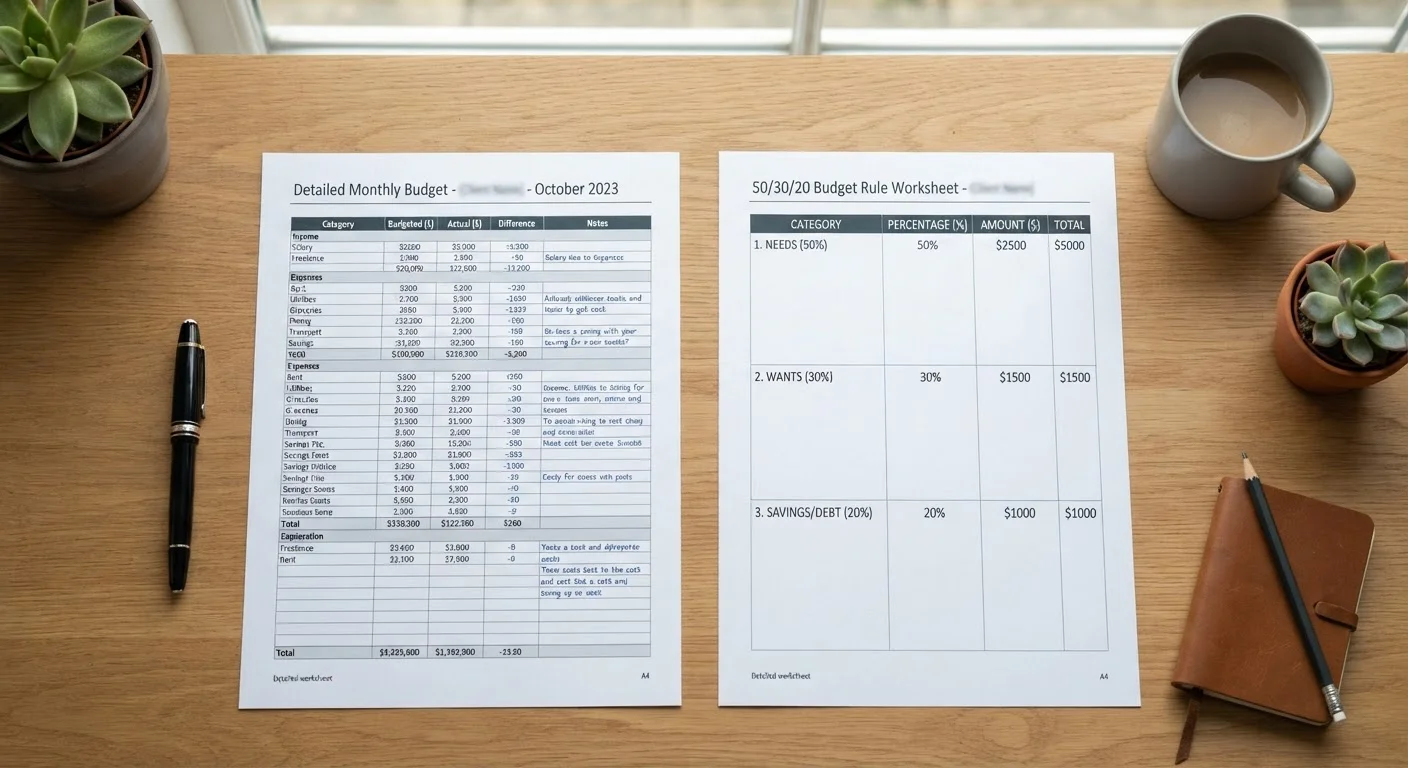
The 50/30/20 rule, by contrast, uses your monthly after-tax income as the starting point and divides it into three buckets: 50% for needs (housing, food, utilities, minimum debt payments), 30% for wants (dining out, entertainment, travel), and 20% for savings and additional debt repayment. Learn how the 50/30/20 framework divides your take-home pay in detail, including where its limitations show up. The framework doesn't require tracking individual line items — it relies on hitting broad percentage targets.
| Criterion | Zero-Based Budgeting | The 50/30/20 Rule |
|---|---|---|
| Core concept | Every dollar assigned a job; balance = zero | Income split into three percentage buckets |
| Setup time | 30–60 minutes per month | Under 15 minutes to set up |
| Ongoing effort | High — requires regular tracking | Low — periodic category checks |
| Flexibility | High — rebuilt each month | Moderate — fixed percentage structure |
| Best income type | Variable or irregular income | Stable, predictable income |
| Precision | Very granular — line-item detail | Broad — category-level only |
| Beginner-friendly | Moderate learning curve | Very easy to start |
| Ideal for | Debt payoff, specific savings goals | General financial balance and habit-building |
Time Investment and Ongoing Effort
Zero-based budgeting is time-intensive by design. Building the budget at the start of each month can take 30–60 minutes, and it requires regular check-ins throughout the month to ensure spending stays on track. Tools like budgeting apps can reduce the manual workload, but the method still demands active engagement. A balanced look at what granular budgeting gives you — and what it costs you in time and discipline is worth reading before committing.
The 50/30/20 rule is far lighter. Once you know your after-tax income, you simply monitor whether you're staying within each category. Many people check in monthly or even quarterly. The trade-off is less precision — overspending in one sub-category within "wants" is easy to miss.
Neither Method Requires Perfection
Financial experts generally agree that the best budget is one you will actually use consistently. Missing a category or going slightly over a target in one month isn't a failure — it's data. Adjust the following month and keep going. Rigid all-or-nothing thinking is one of the most common reasons people abandon budgeting altogether.
Strengths, Weaknesses, and Who Each Suits
Zero-based budgeting excels at revealing hidden spending. If you've ever wondered where your money disappears, this method answers that question comprehensively. It's particularly effective for people aggressively paying down debt, saving for a specific goal, or managing variable income — since each month's budget is rebuilt around what was actually earned. For a head-to-head look at a similar high-control approach, see how zero-based budgeting compares to the envelope method.
Its weakness is sustainability. The detail required can lead to burnout, especially for people with complex financial lives or limited time. The 50/30/20 rule's greatest strength is accessibility — it works whether you earn $35,000 or $135,000 a year. Its weakness is imprecision: the "needs" category in particular can stretch to absorb overspending without triggering an obvious warning. Explore the full 50/30/20 framework including how debt repayment fits in.
~33%
Americans with a detailed household budget
Surveys by Gallup and similar pollsters have consistently found only around one-third of Americans maintain a detailed monthly budget, suggesting most people use informal or no system at all.
20%
Recommended savings and debt allocation (50/30/20)
The 50/30/20 rule directs 20% of after-tax income toward savings, investments, and debt repayment beyond minimum payments — a widely cited general guideline among personal finance educators.
Both methods are starting points, not permanent sentences. Many financially confident individuals begin with the 50/30/20 rule to establish habits, then transition to zero-based budgeting when pursuing a major goal. Once a solid budgeting foundation is in place, understanding investing fundamentals becomes the natural next step.
This article provides general financial education and is not personalised financial advice. Individual circumstances vary. Consult a qualified financial professional before making decisions about your finances.