
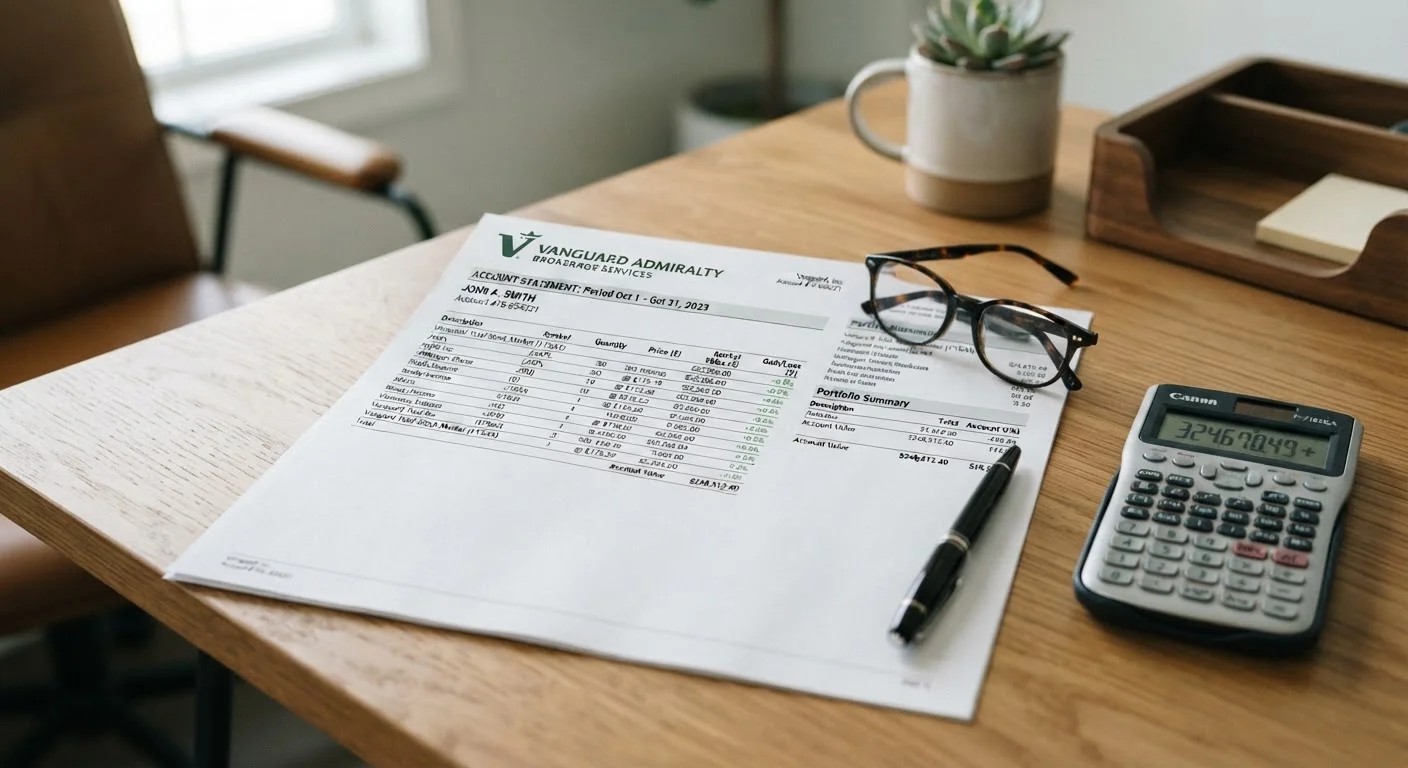
Why Your Brokerage Statement Is Worth Understanding
A brokerage statement arrives monthly or quarterly and, at first glance, can look like a wall of numbers. But every figure there tells you something concrete about your financial picture. Learning to read it fluently takes the mystery out of investing and gives you a factual basis for any conversations you have with a financial adviser.
If you are brand new to investing, our foundational guide for complete beginners explains the underlying concepts — what markets are, how accounts work — before you get into the specifics of statement reading. If you have not yet opened an account, the brokerage account readiness checklist can help you prepare.
This walkthrough focuses on the most common sections you will encounter in a standard brokerage statement. Layouts vary by institution, but the core elements are consistent across most US retail brokerage accounts.
Keep a Simple Checklist as You Read
Before diving into the numbers, confirm the statement period, your account number, and the account type (taxable, IRA, etc.). These three details orient you immediately and help you avoid cross-referencing the wrong document.
This article is for general informational and educational purposes only. It is not personalized financial, investment, or tax advice. Consult a licensed financial adviser or tax professional for guidance specific to your circumstances.
What You Need Before You Start
Before working through your statement step by step, make sure you have what you need:
What you will need
Once you have your statement in hand, the steps below walk through each section in the order most brokerages present them. Use the tools below to stay organized as you go.
Your Brokerage Statement (PDF or paper)
The primary document you will be reading and interpreting throughout this walkthrough.
A Simple Calculator or Spreadsheet
Useful for verifying cost basis calculations and cross-checking totals against what the statement reports.
A Personal Finance Notebook or Digital Notes App
Recording key figures — portfolio value, realized gains — helps you track progress across statement periods.
Step-by-Step: Reading Each Section
Work through your statement in this order. Each step targets one section and explains what the figures mean — and what they do not mean.
Locate the Account Summary Section
This section typically appears on page one and gives you the 30-second version of your account's health. You will see:
- Beginning value — your portfolio's worth at the start of the statement period
- Ending value — your portfolio's worth at the close of the period
- Net change — the difference, reflecting price movement, dividends received, and deposits or withdrawals
Compare the ending value to the beginning value, but resist drawing big conclusions from a single period. Markets fluctuate; one statement is a snapshot, not a verdict.
Review Your Holdings Detail
The holdings section lists every security (stock, bond, fund, or other asset) currently in your account. For each position, you will typically see:
- Security name and ticker symbol — the name of the investment and its market abbreviation
- Shares or units held — how many you own
- Price per share — the closing price on the statement date
- Market value — shares × price per share
- Cost basis — what you originally paid; used to calculate gain or loss
The cost basis figure is especially important at tax time. If it shows "N/A" or is missing, contact your brokerage — incomplete cost basis data can complicate your tax filing.
Understand Unrealized vs. Realized Gains and Losses
Many statements include a gain/loss column. This is where many first-time investors feel confused, so the distinction matters:
- Unrealized gain or loss — the paper profit or loss on positions you still hold. It changes every day with the market and has no immediate tax consequence.
- Realized gain or loss — the actual profit or loss you locked in by selling. This is what gets reported to the IRS.
Seeing a large unrealized loss does not necessarily mean you should sell. Whether a position still fits your goals is a separate question — one worth discussing with a financial adviser.
Read the Transaction History
This section is a chronological log of everything that happened in your account during the statement period, including:
- Buy and sell orders with dates and prices
- Dividend and interest payments received
- Deposits and withdrawals
- Fees, commissions, or account charges
Cross-check this log against your own records or purchase confirmations. If you see a transaction you do not recognize, contact your brokerage immediately rather than assuming it will resolve itself.
Check Fees and Account Charges
Fees can quietly erode long-term returns, so it pays to know what you are being charged. Look for:
- Annual account maintenance fees
- Trading commissions (many brokerages have moved to commission-free trades, but not all)
- Expense ratios embedded in fund holdings (these appear on fund prospectuses, not always on statements — see our guide to reading a prospectus for more)
Understanding what you pay allows you to make more informed decisions about how your account is structured. This is general information; a financial adviser can help you evaluate whether your fee structure is appropriate for your situation.
Note the Statement Period and Save the Document
Every statement covers a specific date range — monthly, quarterly, or annually depending on your brokerage's settings. Record the period end date and file the statement (digitally or physically) somewhere accessible. You may need past statements for:
- Tax preparation and cost basis verification
- Tracking long-term portfolio growth
- Resolving disputes with your brokerage
Many brokerages retain several years of statements online, but having your own copies is a sound backup habit.
Statements Are Not Financial Advice
The figures on your brokerage statement describe what has happened in your account — they do not tell you what to do next. For guidance tailored to your specific situation, consult a licensed financial adviser. Past performance shown on a statement does not guarantee future results.
Review for Errors Every Statement Period
Errors on brokerage statements are uncommon but do occur. Unauthorized transactions, incorrect share quantities, or missing dividends should be reported to your brokerage promptly. Most firms have a defined dispute window, so waiting too long can limit your recourse.
Putting It All Together
Once you have read through all sections, you should have a clear picture of: how your portfolio's total value changed, what you own and at what cost, what income your holdings generated, and what you paid in fees. Cross-referencing these elements regularly — not just after big market moves — builds a habit that supports more grounded, less reactive financial decision-making.
Good budgeting habits and a solid approach to saving and debt management form the foundation that makes investing sustainable. A brokerage statement is a tool for accountability — not a scoreboard. Use it as one data point among several as you work toward your longer-term financial goals.