
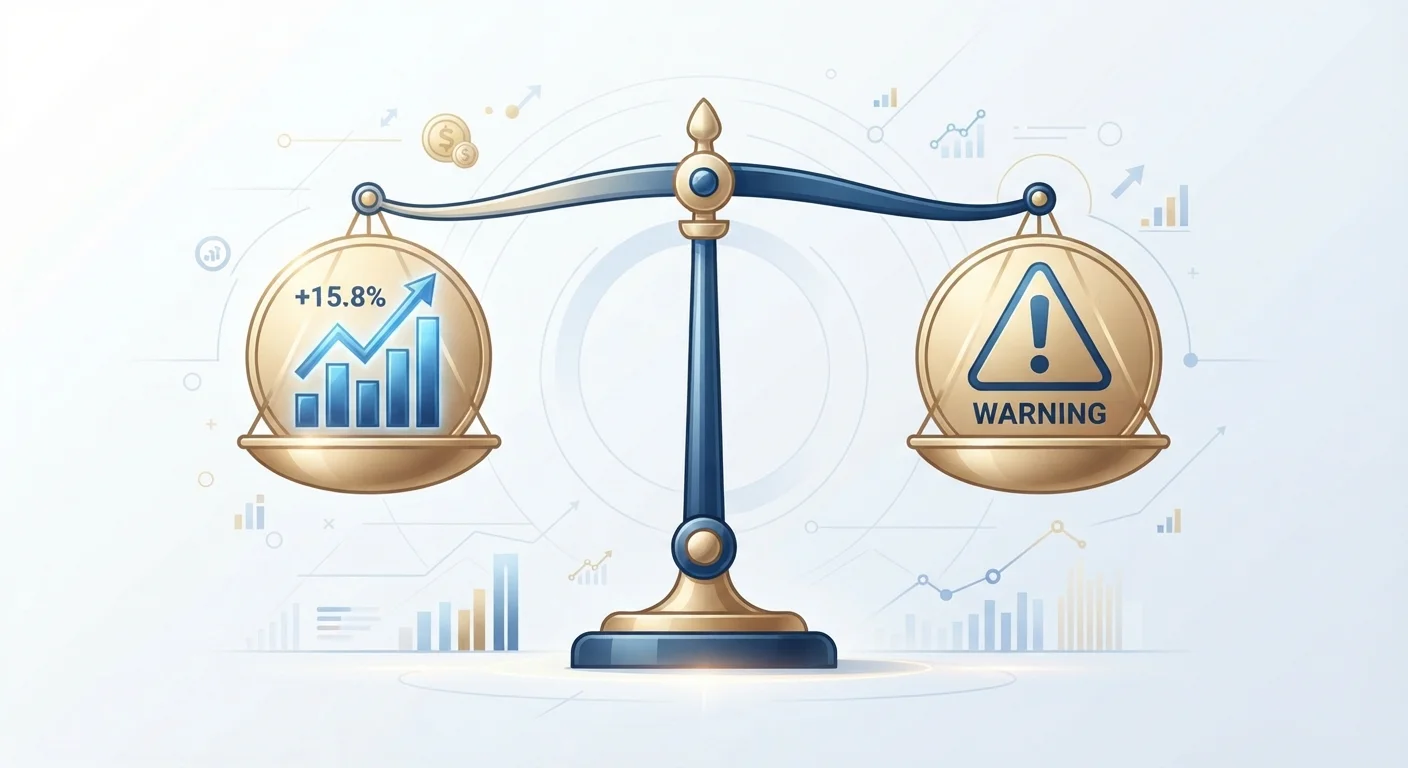
What Risk Actually Means in Investing
When most people hear "risk," they think of danger or loss. In investing, the concept is broader: risk refers to the uncertainty of an outcome. An investment is considered risky when its future value is difficult to predict — it might grow substantially, hold steady, or decline. The wider that range of possible outcomes, the higher the risk.
This distinction matters. A stock that could double in value or fall by half carries significant risk — not because loss is certain, but because the outcome is uncertain. Understanding this helps investors think clearly rather than emotionally about their choices. See what it means to put money to work for broader context on how investing generates returns in the first place.
Risk Is Not the Same as Bad
Taking on investment risk is not inherently irresponsible — in fact, avoiding all risk can be its own financial hazard. Keeping money entirely in cash over long periods can mean losing purchasing power to inflation. Understanding and intentionally managing risk is the goal, not eliminating it.
Why Higher Returns Require Higher Risk
The connection between risk and return isn't arbitrary — it's driven by investor behavior. If two investments offered the same expected return but one was far less certain, nearly every rational investor would choose the safer option. To attract buyers, the riskier investment must offer a higher potential payoff as compensation for that uncertainty.
This is why U.S. Treasury bonds typically yield less than corporate bonds, and why corporate bonds generally return less over time than stocks. Each step up in potential return reflects a step up in the risks being accepted — whether that's default risk, market volatility, or reduced liquidity.
~10%
Average annual U.S. stock market return (historical)
The S&P 500 has historically averaged roughly 10% annual returns before inflation over the long run, according to widely cited market data — but individual years vary dramatically.
4–5%
Typical U.S. Treasury yield range (recent years)
U.S. government bonds offer lower returns than equities in exchange for substantially lower default risk, illustrating the risk-return spectrum in practice.
The Spectrum of Investment Risk
Investments don't fall into just two camps — risky or safe. They exist on a broad spectrum:
- Cash and cash equivalents (savings accounts, money market funds): very low volatility, but vulnerable to inflation eroding purchasing power over time.
- Government bonds: low to moderate risk; price can fluctuate with interest rate changes.
- Corporate bonds: moderate risk; tied to the financial health of the issuing company.
- Stocks: higher volatility; returns depend on business performance and market sentiment.
- Alternative assets (real estate, commodities, private equity): varied and often complex risk profiles.
Matching the risk level of an investment to your personal financial goals and timeline is one of the most important decisions any investor makes. Familiarizing yourself with core investing vocabulary can help you evaluate these differences more clearly.
How Time Horizon Changes the Picture
One of the most practical ways risk plays out is through time. An investor who needs their money in two years faces a very different situation than one saving for retirement 30 years away. Short time horizons shrink your ability to recover from a downturn, making lower-risk assets more appropriate. Longer time horizons give you the capacity to absorb volatility and wait for markets to recover.
This is why financial guidance generally suggests younger investors can take on more equity exposure, while those approaching retirement often shift toward more conservative allocations. That's not a guarantee — it's a framework grounded in how markets have historically behaved over different periods. Past performance does not guarantee future results.
Managing this balance through diversification is a key strategy. Diversification can reduce certain risks — but it cannot remove risk entirely, a critical distinction every investor should understand.
Know Your Risk Tolerance Before You Invest
Before putting money into any investment, honestly assess how you would react to seeing your balance drop 20% or more. Investors who overestimate their comfort with volatility often make impulsive decisions during downturns. Many financial institutions offer risk tolerance questionnaires as a starting point — consider using one before building or adjusting a portfolio.
Applying This to Your Own Decisions
The risk-return relationship isn't just academic — it directly informs how you build a portfolio. Before choosing any investment, it helps to ask: What is the realistic range of outcomes? How long can I leave this money invested? And how would I respond if the value dropped significantly?
These questions point toward your personal risk tolerance — the degree of uncertainty you can accept without abandoning your strategy during a difficult period. Investors who overestimate their tolerance often sell at the worst times, locking in losses that a longer-term approach might have recovered from.
For a deeper look at how this trade-off plays out in real portfolio decisions, see how the risk-return trade-off works in practice. A qualified financial adviser can help you assess your specific situation and build a strategy aligned with your goals.
This article is for general informational and educational purposes only and does not constitute personalized financial, investment, or tax advice. Consult a licensed financial professional before making investment decisions based on your individual circumstances.