
Why Budgeting, Saving, and Debt All Connect
Most personal finance challenges don't exist in isolation. Overspending in one area makes saving harder. Carrying high-interest debt shrinks the money available for everything else. And without a budget, it's nearly impossible to know where your dollars are actually going.
Think of budgeting, saving, and debt repayment as three levers on the same machine. Pulling one affects the others. A budget gives you visibility; savings give you resilience; paying down debt frees up future income. Understanding how they interact is the foundation of getting your finances on track.
This guide covers each concept clearly and shows how to apply all three simultaneously — even if you're starting from zero. For a broader overview of money management concepts, the Budgeting Basics hub is a useful companion resource.
Budget
A written plan that assigns your income to specific spending categories, savings, and debt payments before the month begins.
Emergency fund
A dedicated savings reserve set aside to cover unexpected expenses, such as medical bills or job loss, without taking on new debt.
Interest rate
The percentage a lender charges you to borrow money, expressed annually. Higher rates mean debt grows faster if left unpaid.
Minimum payment
The smallest amount a creditor requires you to pay each billing cycle to keep the account in good standing. Paying only the minimum usually means paying much more in interest over time.
Net income
Your take-home pay after taxes and other deductions — the actual amount deposited in your bank account that you have available to spend.
Avalanche method
A debt repayment strategy where you pay minimums on all debts and direct any extra money toward the balance with the highest interest rate first.
Building a Simple Budget From Scratch
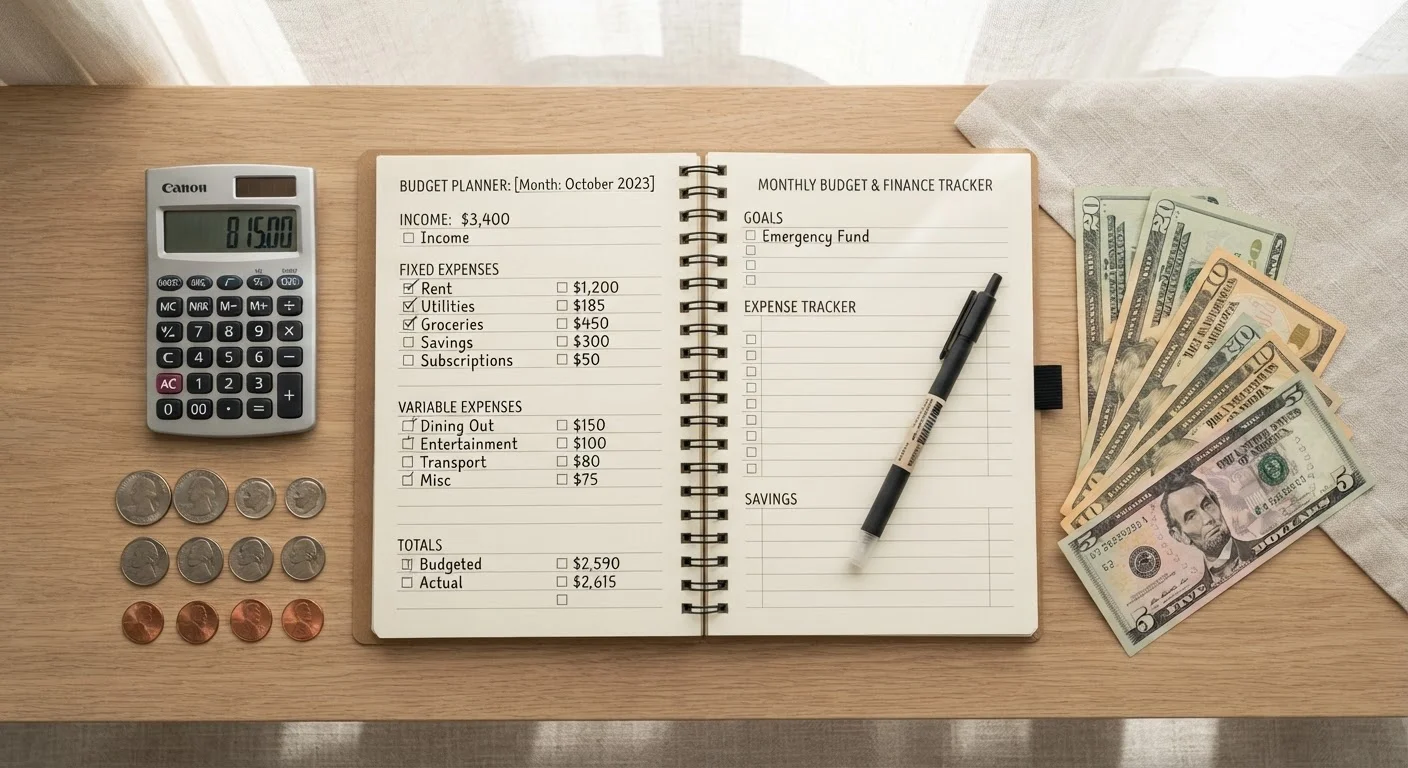
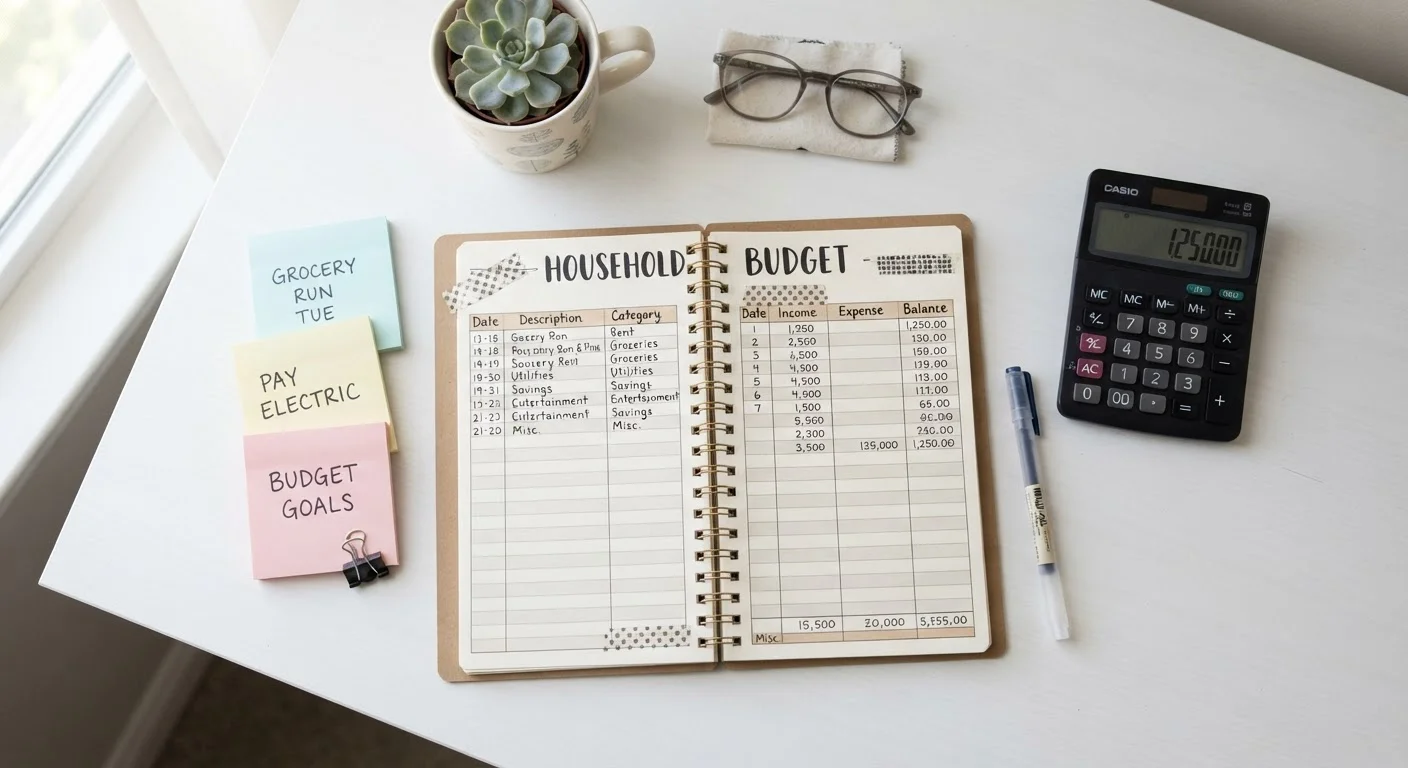
A budget is nothing more than a written plan that maps your income to your expenses. It doesn't require a finance degree or complicated software — just honest numbers and a few categories.
A practical starting framework: the 50/30/20 guideline. Allocate roughly 50% of your after-tax income to needs (rent, groceries, utilities, minimum debt payments), 30% to wants (dining out, entertainment, subscriptions), and 20% to savings and extra debt repayment. Treat these percentages as a starting point, not a rigid rule — your numbers will vary based on where you live and your income level.
- Add up all income sources — paychecks, freelance work, benefits, or other regular inflows.
- List all fixed expenses — rent, insurance premiums, loan minimums, subscriptions with set costs.
- Track variable spending — groceries, gas, dining, clothing. Review two to three months of bank or credit card statements to get realistic averages.
- Subtract expenses from income. A positive number means room to save or pay down debt. A negative number means cuts are needed.
For a step-by-step walkthrough, see Building Your First Monthly Budget in Six Steps.
Automate to Remove the Decision
Setting up an automatic transfer to a separate savings account on payday removes the temptation to spend first and save later. Even a small automatic transfer — say, $25 or $50 — builds the habit without requiring ongoing willpower. Most banks allow you to schedule recurring transfers for free.
How to Start Saving Even on a Tight Income
Saving money when income is limited feels contradictory — but the goal at first isn't to save a lot, it's to save something consistently. Even $25 a week adds up to $1,300 over a year.
Start with an emergency fund. Before directing money toward investment accounts or large savings goals, financial educators broadly recommend building a small cash cushion for unexpected expenses. A common benchmark for beginners is $500 to $1,000 — enough to cover a car repair or medical copay without going into debt.
Once that buffer is in place, you can begin building toward a larger emergency reserve (typically three to six months of essential expenses) while simultaneously addressing debt.
Practical ways to find savings room:
- Audit subscriptions and recurring charges — cancel anything unused.
- Reduce one or two discretionary categories by a modest amount each month.
- Treat savings as a fixed expense and move money to a separate account on payday.
Where You Keep Your Emergency Fund Matters
Emergency savings are generally best kept in a liquid, low-risk account — such as a federally insured savings account — rather than invested in the market. The goal is accessibility and stability, not growth. You want the money available quickly when you need it, without risk of it losing value at an inconvenient moment.
Paying Down Debt Without Derailing Your Progress
Not all debt demands the same urgency. High-interest debt — credit cards, payday loans, and similar products — typically carries interest rates that compound quickly, meaning every month you carry a balance, the total you owe grows. Lower-rate debt, such as federal student loans or a fixed-rate mortgage, is generally less damaging to carry while you build savings.
Two widely recognized repayment approaches:
- Avalanche method
- Pay minimums on all debts, then put every extra dollar toward the balance with the highest interest rate. This approach minimizes total interest paid over time.
- Snowball method
- Pay minimums on all debts, then focus extra payments on the smallest balance first. Paying off individual accounts faster can provide motivation to keep going.
Neither method is objectively superior — the best one is the one you'll stick with. What matters most is paying more than the minimum on at least one debt every month.
Paying Only the Minimum Is Costly
On a credit card with a high interest rate, paying only the minimum each month can stretch repayment out for years and dramatically increase the total amount you pay. If your budget allows any amount above the minimum, applying it consistently reduces both the balance and the total interest charged.
Balancing Saving and Debt Repayment at the Same Time
One of the most common questions beginners face: should I save or pay off debt first? The answer depends on your interest rates and your safety net.
A reasonable general framework many financial educators suggest: build a small emergency fund first, then direct extra dollars toward high-interest debt. Once high-rate debt is cleared, resume building savings more aggressively and consider whether longer-term goals — like contributing to a retirement account — make sense for your situation.
The key insight is that carrying high-interest debt while keeping large cash savings often costs more in interest than the savings earn. Conversely, having no emergency fund at all means any unexpected expense goes straight back onto a credit card — undoing your progress. Balancing both, even in small amounts, addresses this tension.
As your financial picture evolves, you'll likely want to explore next steps like retirement accounts and investment fundamentals. The Investing Essentials hub provides a grounded introduction when you're ready.
This article provides general financial information and education only. It is not personalized financial, investment, tax, or legal advice. Please consult a qualified financial adviser or other licensed professional before making decisions about your specific circumstances.
Building Your First Budget: A Plain-English Starting Point
A beginner-friendly walkthrough of core budgeting concepts, common frameworks, and practical first steps for tracking income and expenses.
The Complete Guide to Personal Budgeting in America
An end-to-end resource covering how to understand your income, choose a budgeting system, and maintain it as your life changes.
Consumer Financial Protection Bureau (CFPB)
The CFPB offers free, unbiased educational resources on budgeting, debt management, and savings tools designed for everyday American consumers.