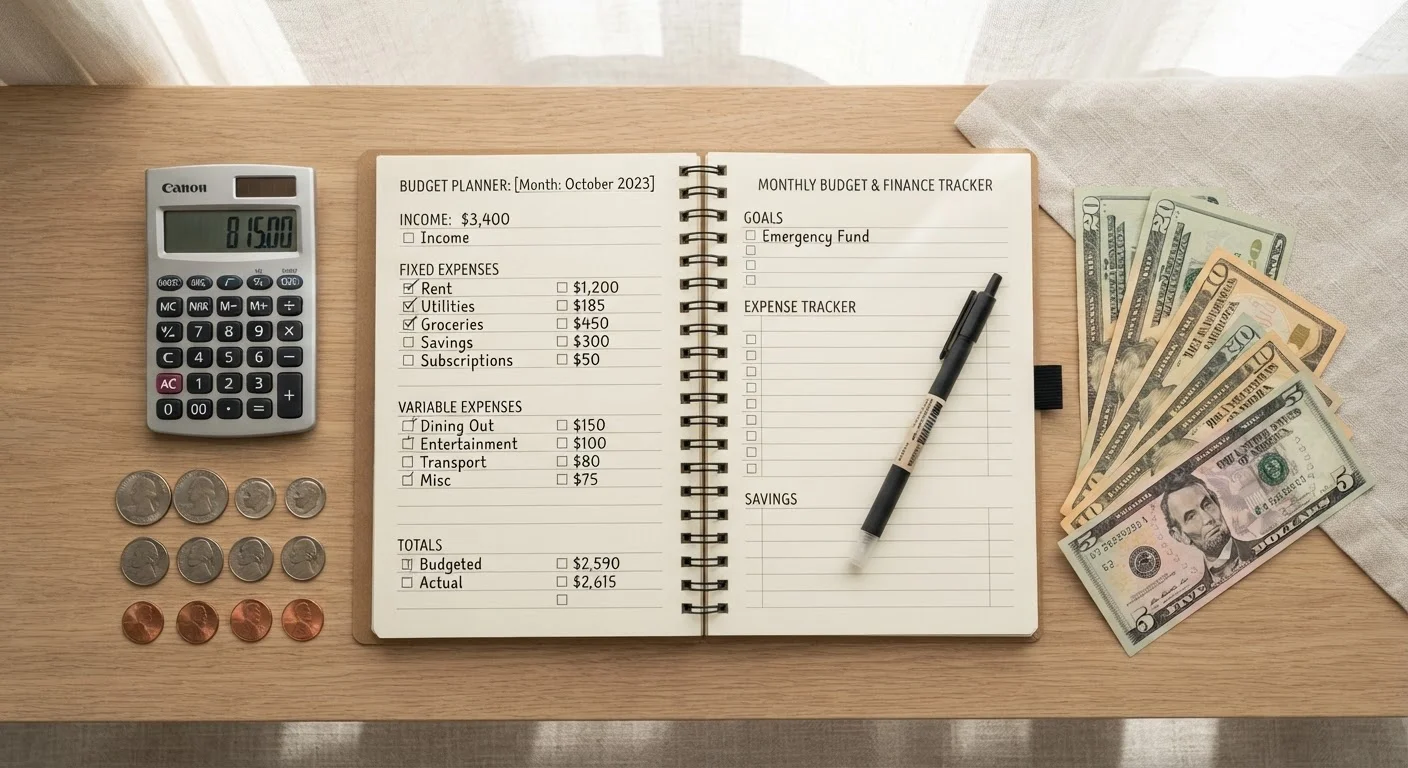

Why a Written Monthly Budget Changes the Equation
Most people have a general sense of what they earn and spend, but a sense is not a plan. Research consistently shows that households that actively track spending against a written budget are better positioned to reduce debt, grow savings, and weather financial disruptions. The act of writing figures down forces clarity that mental accounting simply cannot provide.
A monthly budget is the right unit of time for most Americans because income and most fixed obligations — rent, loan payments, insurance — run on a monthly cycle. Once you've built the habit, you can layer in longer-term planning. For a broader foundation on the concepts behind budgeting, see our comprehensive budgeting introduction or the plain-English starting guide for core frameworks.
This Is General Financial Education
The guidance in this article is for informational purposes only and does not constitute personalized financial, tax, or investment advice. Everyone's financial situation is different. Consider consulting a qualified financial adviser before making significant changes to how you manage your money.
What You Need Before You Start
Gathering the right materials before you sit down saves significant frustration. The most common mistake is starting from memory rather than data.
What you will need
Bank and credit card statements (2–3 months)
Provides accurate data on what you've actually spent, rather than estimates.
Spreadsheet software or budgeting app
Used to organize income and expense figures and recalculate totals quickly.
Pay stubs or direct deposit records
Confirms your true net (take-home) monthly income after taxes and deductions.
List of fixed recurring bills
Ensures no regular obligations — rent, subscriptions, loan payments — are overlooked.
Don't Rely on Memory for Expenses
Most people underestimate their monthly spending by 20–30% when relying on recall alone. Always pull actual bank and credit card statements for at least two to three months before finalizing your expense totals. Guessing leads to a budget that looks balanced on paper but fails in practice.
The Six Steps to Build Your First Budget
Follow these steps in order. Each one builds on the last, and skipping ahead typically means returning to correct errors. The entire process can take 30 to 60 minutes for a first attempt.
The 50/30/20 Rule as a Starting Framework
One widely used guideline allocates roughly 50% of take-home pay to needs, 30% to wants, and 20% to savings and debt repayment. This isn't a rigid law — your circumstances may call for different proportions — but it's a useful sanity check when you're categorizing spending for the first time.
Calculate Your Total Monthly Take-Home Income
Begin with what actually lands in your bank account after taxes, health insurance premiums, and any other payroll deductions — this is your net income. If your pay varies (freelance, hourly shifts, tips), use a conservative average of the last three months rather than your best month. Include all income streams: a side job, rental income, or regular child support payments.
List Every Fixed Monthly Expense
Fixed expenses are obligations that stay the same amount each month regardless of your choices: rent or mortgage, car loan payments, minimum credit card payments, insurance premiums, and fixed-rate utility contracts. Write these down in full. These are non-negotiable in the short term and form the floor of your budget.
Track and Total Your Variable Expenses
Variable expenses fluctuate month to month: groceries, dining out, gas, clothing, entertainment, and personal care. Review your actual statements — not your estimates — and categorize every transaction. Total each category separately. This step is where most first-time budgeters are surprised by how much certain categories cost.
Assign a Spending Limit to Each Category
Using your income total from Step 1 and your expense data from Steps 2 and 3, assign a realistic monthly spending target to every category. Start with fixed amounts (which you can't change immediately), then allocate the remainder across variable categories and savings. Every dollar of income should be assigned somewhere — including a savings line item, even if it's small.
Balance the Budget — Income Minus All Expenses Should Equal Zero
Subtract your total assigned expenses and savings from your net income. The goal is to reach zero — meaning every dollar has a job. If you have money left over, assign it intentionally (emergency fund, debt payoff, savings goal). If expenses exceed income, you have a shortfall to address in the next step.
Adjust Until the Numbers Work, Then Commit to Tracking
If you have a shortfall, look first at variable expenses — dining out, subscriptions, entertainment — since these are the fastest categories to reduce. If cuts alone aren't enough, explore whether income can be increased. Once the budget balances, commit to tracking actual spending against it throughout the month. Adjust the plan at month's end based on what you learned.
What to Do When the Budget Still Feels Tight
A balanced budget on paper doesn't always feel comfortable to live with. If your numbers balance but leave almost no flexibility, that's important information — not a failure. Look at your fixed expense list and ask whether any can be renegotiated over time: refinancing a high-interest loan, switching to a lower insurance tier, or eliminating a subscription you rarely use.
Building a small buffer — even $25 to $50 per month set aside for irregular costs — prevents a single unexpected expense from unraveling the whole plan. Once your budget is consistently followed for a month or two, you'll be ready to think about the next layer: saving and reducing debt. Our Saving & Debt hub offers practical guidance on both. And if follow-through is a concern, read about why budgets commonly fall apart after the first month so you can get ahead of those patterns now.
This article is for general informational and educational purposes only and does not constitute personalized financial advice. Consult a qualified financial professional for guidance specific to your situation.