Why a Budget Is Worth Your Time
A budget is not a punishment. It's a map — one that shows you where your money is currently going and gives you control over where it goes next. For many people, the act of writing out income and expenses for the first time reveals spending patterns they didn't know existed.
Research consistently finds that people who track their spending report feeling less financial stress, not because they suddenly earn more, but because uncertainty is replaced by information. The Budgeting Basics hub on this site offers a range of strategies for different situations, but this guide starts at the very beginning.
If you're wondering whether a formal budget is necessary at all, consider that without one, spending decisions are made by default — habit, convenience, or emotion — rather than by deliberate choice. A budget shifts that dynamic.
Budgeting Is General Financial Guidance
The strategies described in this article are general educational information, not personalized financial advice. Everyone's income, expenses, and financial obligations are different. A licensed financial adviser can help you apply these concepts to your specific situation.
The Building Blocks: Income, Expenses, and the Gap Between Them
Every budget starts with two numbers: how much money comes in and how much goes out. The difference between them — positive or negative — tells you whether you're living within your means.
Take-home pay (also called net income) is the number that matters here. That's your paycheck after taxes and any payroll deductions, not your gross salary. If you have irregular income, use a conservative monthly estimate based on your lower-earning months.
Expenses fall into two broad categories:
- Fixed expenses — amounts that stay the same each month, such as rent or mortgage, loan payments, and insurance premiums.
- Variable expenses — amounts that shift, including groceries, utilities, transportation costs, and discretionary spending like dining out or entertainment.
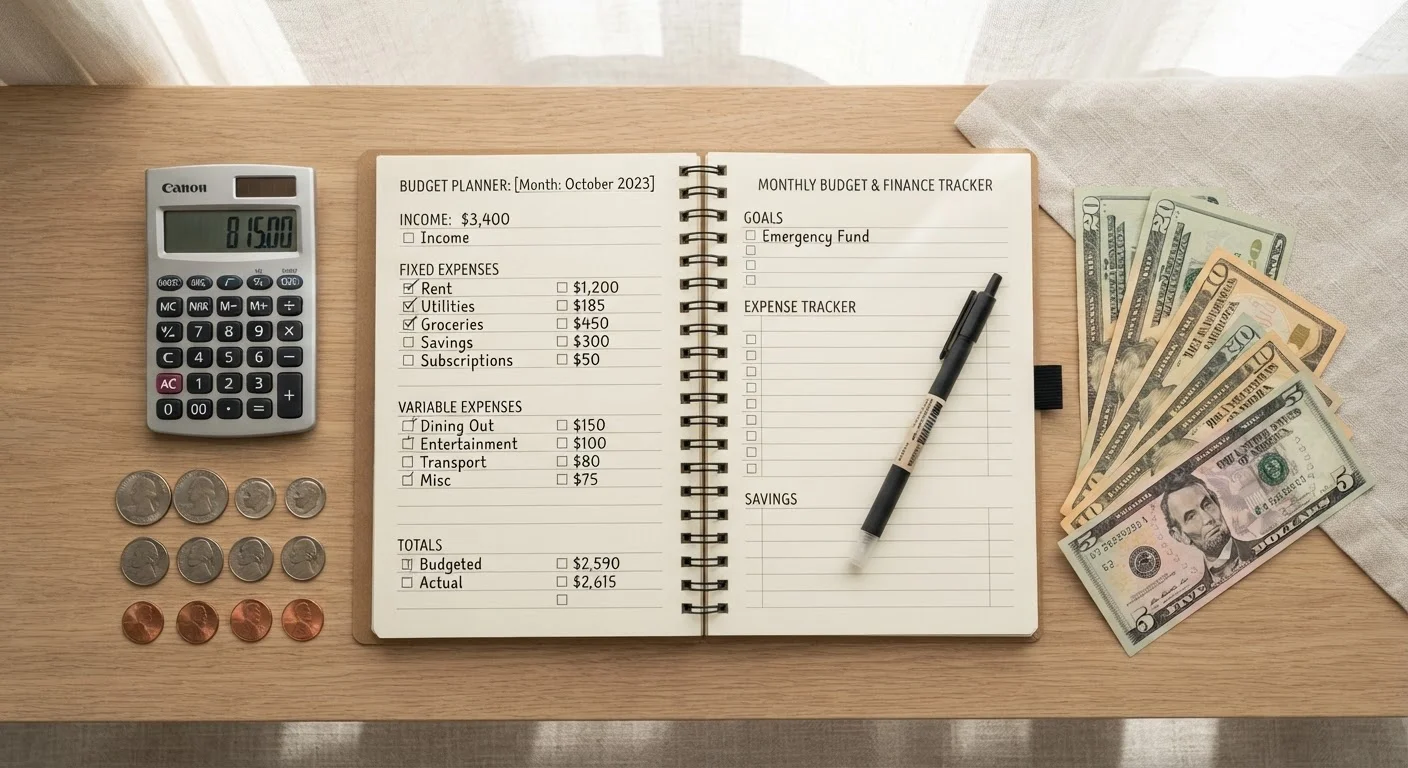
Once you've listed both, subtract total expenses from take-home pay. If the result is positive, you have money available to direct toward savings or debt. If it's negative, your budget will show you exactly where adjustments are possible. For a thorough breakdown of how to organize spending categories, see the budget categories reference guide built for American households.
Take-home pay
The amount you actually receive after taxes and payroll deductions are subtracted from your gross earnings. This is the number to use when building a budget.
Fixed expense
A regular cost that stays the same each month, such as rent, a car loan payment, or a streaming subscription.
Variable expense
A cost that changes from month to month, like groceries, gas, or dining out. These are usually the easiest expenses to adjust.
Emergency fund
Money set aside specifically to cover unexpected costs — like a medical bill or car repair — without going into debt.
Discretionary spending
Spending on non-essential items or experiences, such as entertainment, hobbies, or dining out. These are 'wants' rather than 'needs.'
Debt avalanche method
A debt payoff strategy where you direct extra payments to the balance with the highest interest rate first, minimizing the total interest you pay over time.
Choosing a Budgeting Framework
Several well-established frameworks make it easier to allocate money without building a complex spreadsheet from scratch.
- 50/30/20
- Divide take-home pay into three buckets: approximately 50% for needs (housing, food, utilities), 30% for wants (entertainment, hobbies), and 20% for savings and debt repayment. The percentages are guidelines, not rules — adjust them to your circumstances.
- Zero-based budgeting
- Assign every dollar a job so that income minus all allocations equals zero. This doesn't mean spending everything — savings and debt payments count as assignments. It simply ensures no dollar is unaccounted for.
- Pay-yourself-first
- Automatically transfer a set amount to savings or an investment account on payday, then budget the remainder for expenses. This approach prioritizes saving before discretionary spending competes for the same dollars.
No framework works perfectly for every situation. The step-by-step monthly budget guide walks through applying these concepts in practice. For tracking your spending once a framework is in place, the spending trackers comparison covers the trade-offs between apps, spreadsheets, and manual logs.
Start With a One-Month Spending Audit
Before choosing a framework, spend one full month simply tracking where your money actually goes — without trying to change anything. This baseline makes your first real budget far more accurate than one built on guesses. Your bank or credit card statements can do most of the work for you.
Balancing Savings Goals with Debt Reduction
One of the most common questions first-time budgeters ask is whether to focus entirely on paying off debt or building savings. The practical answer for most people is to do both — carefully.
High-interest debt, such as credit card balances, costs money every month it goes unpaid. But going into a month with zero savings means any unexpected expense — a car repair, a medical bill — may force you to take on more debt. A common starting approach is to build a small emergency cushion (often cited as one month of essential expenses) while making at least the minimum required payments on all debts, then directing additional dollars toward the highest-interest balance.
Once the emergency fund is in place, a more aggressive debt payoff strategy becomes sustainable. Two widely referenced approaches are the avalanche method (paying the highest-interest debt first to minimize total interest paid) and the snowball method (paying the smallest balance first for psychological momentum). Neither is universally superior — the better one is the approach you'll stick with.
For a broader look at how saving and debt reduction fit together as habits, the starting point for budgeting, saving, and debt provides practical context alongside the fundamentals covered here.
Avoid Skipping Minimum Debt Payments
While it can be tempting to pause debt payments to build savings faster, missing minimum payments triggers late fees and can damage your credit. Always factor minimum required payments into your budget before allocating money elsewhere. If you are struggling to meet minimum payments, consider reaching out to a nonprofit credit counselor for guidance.
Putting It Into Practice
The most effective budget is one you actually use. Here's a simple sequence to get started:
- Calculate your monthly take-home income. Use actual deposit amounts, not salary figures.
- List every recurring fixed expense. Rent, loan payments, subscriptions — anything with a set monthly amount.
- Estimate variable expenses. Review two to three months of bank or card statements to find realistic averages.
- Choose a framework. Start with 50/30/20 if you're unsure — you can refine it after one month of real data.
- Pick a tracking method. A notebook, a free spreadsheet template, or a budgeting app all work. Consistency matters more than the tool.
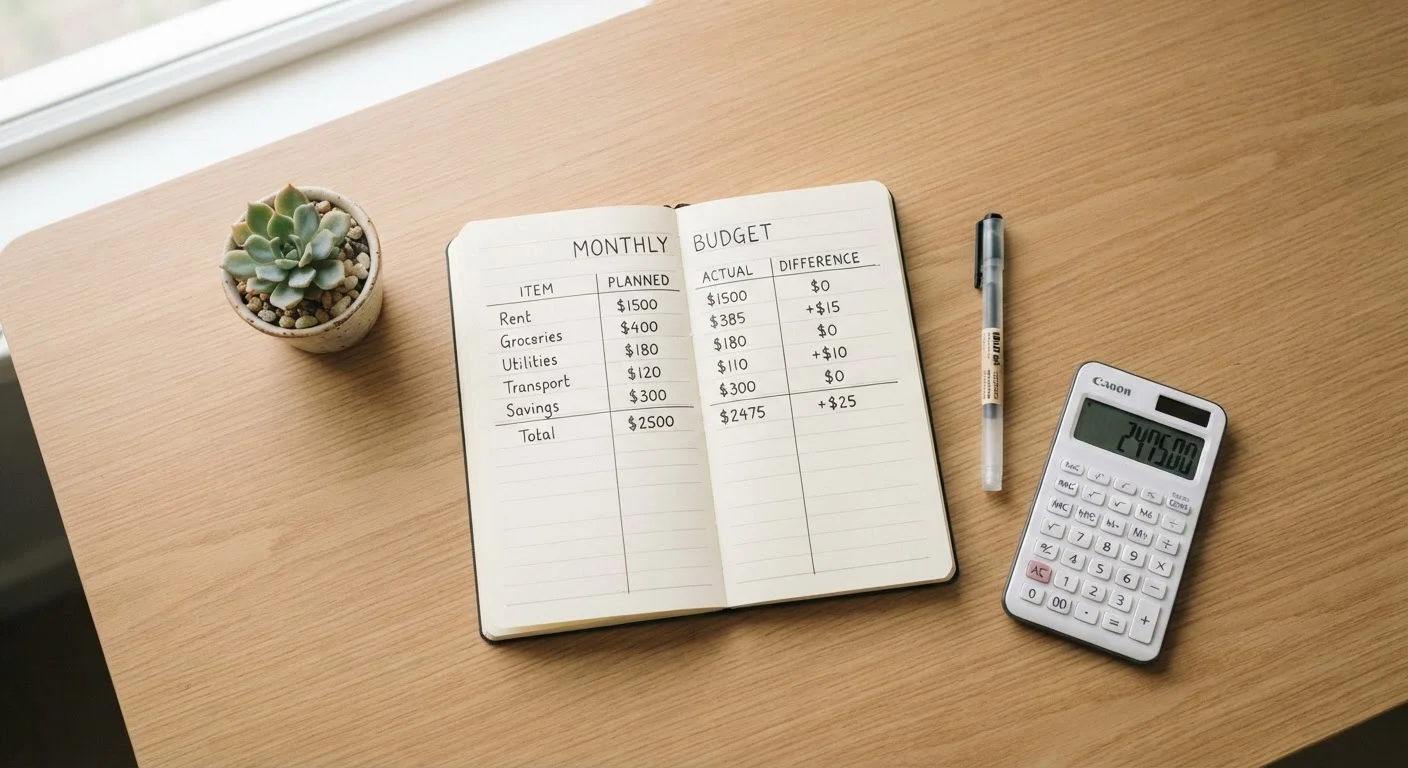
- Review at month's end. Compare what you planned to spend with what you actually spent, then adjust categories as needed.
Budgeting is a skill that improves with repetition. The first month will involve estimates; by the third month, your numbers will reflect reality more accurately. The plain-English budgeting glossary is a useful reference if you encounter unfamiliar terms along the way.
This article is for general informational and educational purposes only and does not constitute personalized financial, tax, or legal advice. For guidance specific to your financial situation, consult a qualified financial professional.