Why You Shouldn't Wait to Start Saving
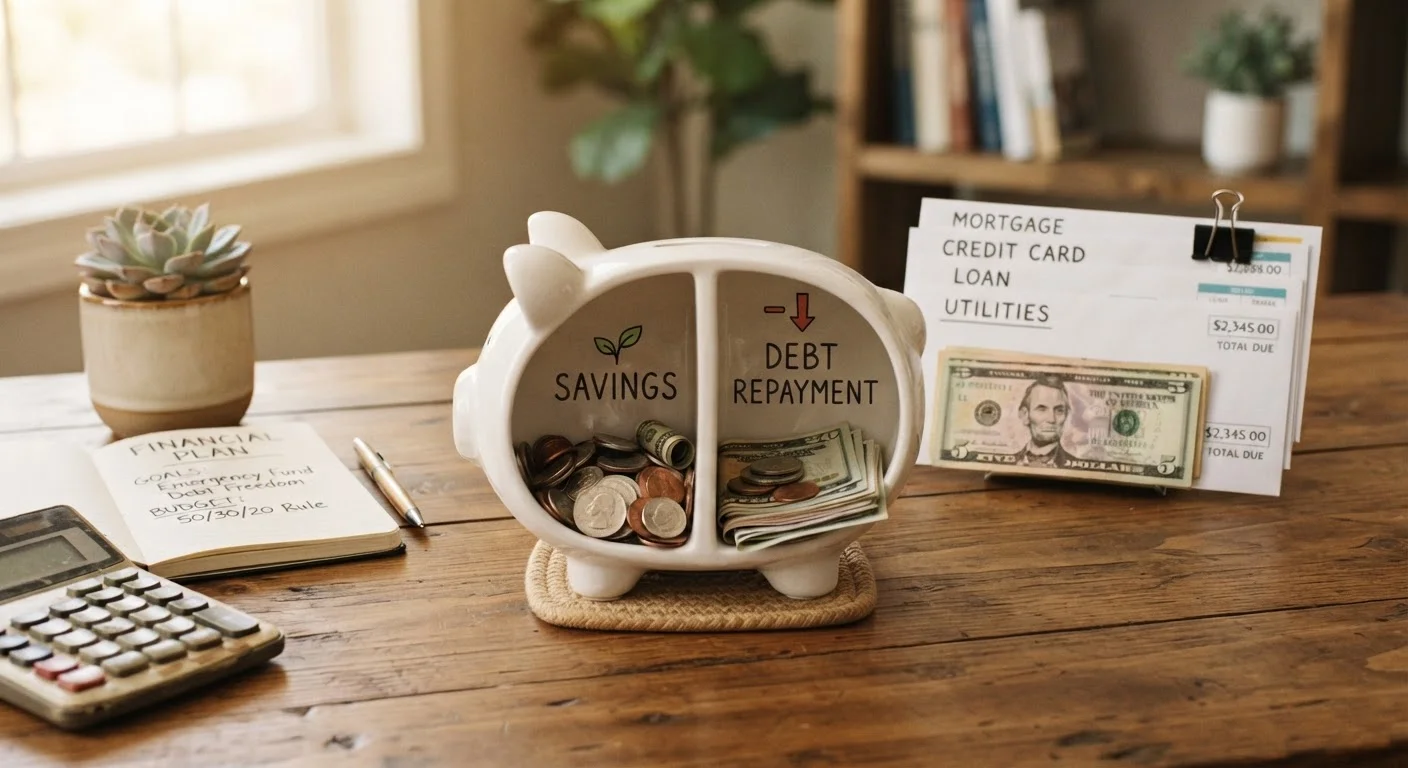
Many personal finance frameworks suggest paying off all debt before building savings, but this approach carries a significant practical flaw: life doesn't pause while you pay down balances. Without even a small emergency reserve, a single unexpected expense — a car repair, a medical bill, a job disruption — can force you back onto credit cards, undoing months of debt payoff progress.
The case for doing both simultaneously is grounded in risk management, not math optimization. A modest savings buffer doesn't just protect your finances; it protects your debt payoff plan itself. That said, the size of the buffer and how aggressively you save should scale with the interest rates on your debt.
This Is General Information, Not Personal Advice
This article provides general financial education and is not personalized financial, tax, or legal advice. Your situation — including your interest rates, income stability, and debt types — will shape the right approach for you. Consult a licensed financial professional before making significant changes to your financial plan.
What You'll Need Before You Begin
Getting started requires a few key inputs. Gather your debt statements, your most recent pay stubs or income records, and a reliable sense of your monthly spending. If you haven't tracked your expenses before, even one month of review will reveal patterns that make the following steps much easier.
What you will need
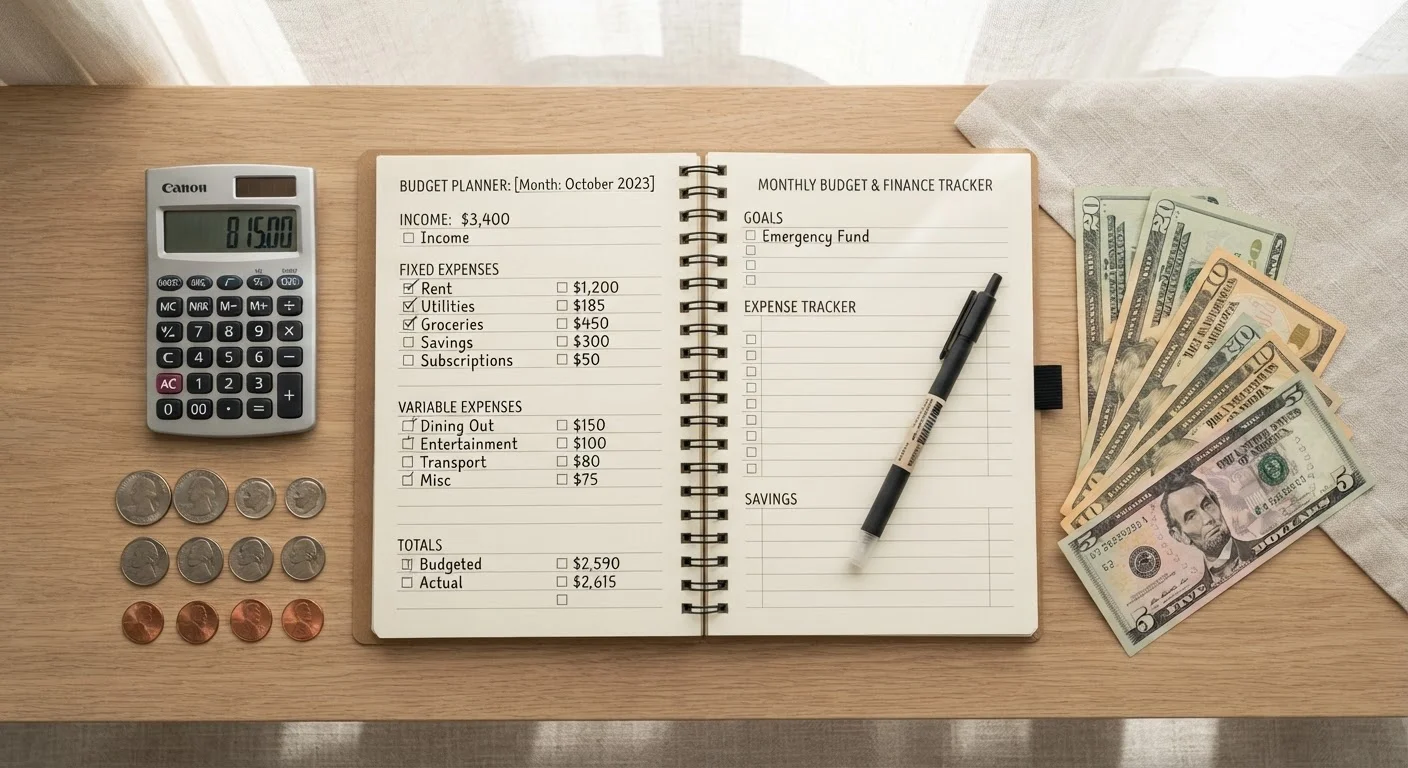
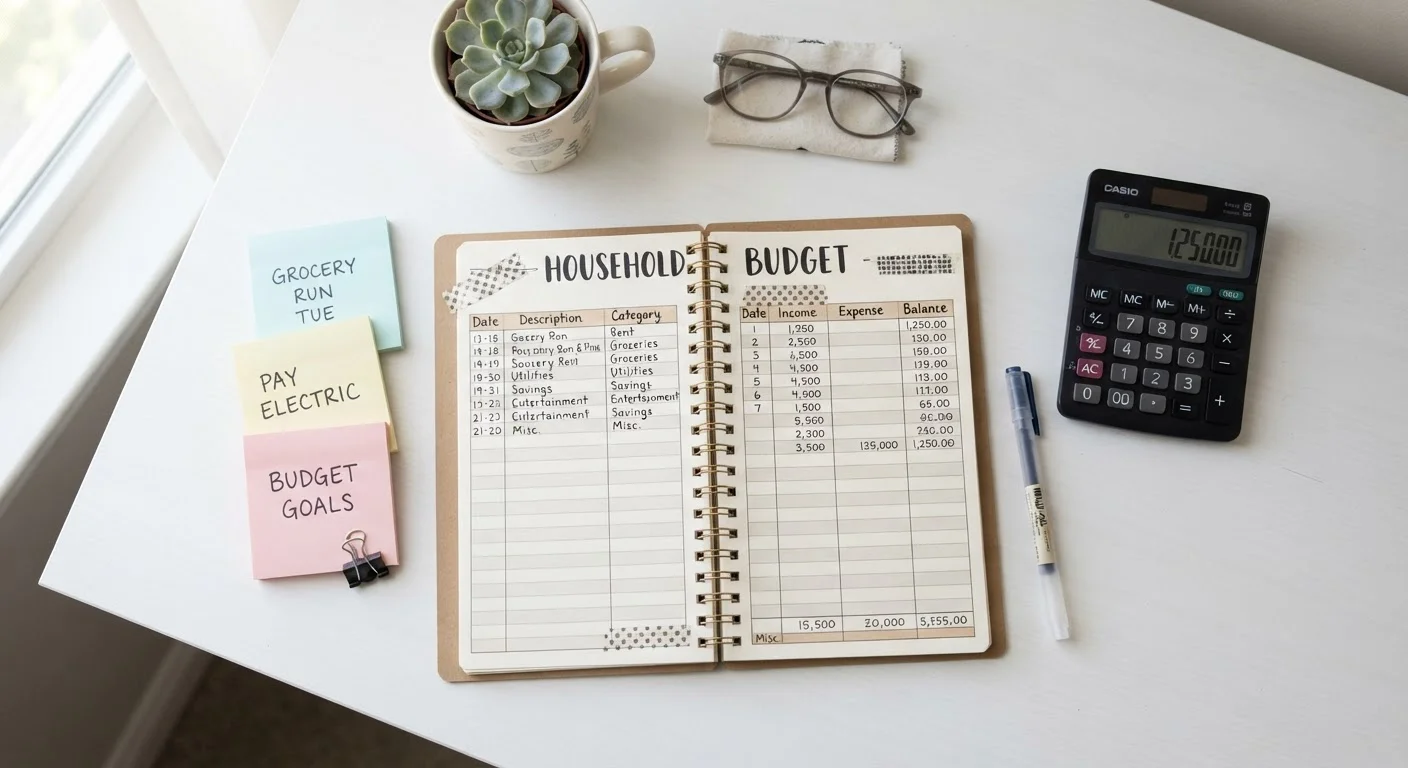
Budget or spending tracker
Identify how much free cash flow is available each month to split between savings and debt.
Debt payoff worksheet or app
Track balances, interest rates, and minimum payments to prioritize which debts to address first.
High-yield savings account
Hold your emergency fund separately from checking so it earns interest and isn't spent impulsively.
Automatic transfer feature (bank or credit union)
Schedule recurring transfers to savings and debt payments so both goals are funded without manual effort.
If your income varies month to month, the approach still applies — but you'll need to work from a conservative income baseline. Our guide to managing debt and savings on a variable income offers additional guidance for irregular earners.
Step-by-Step: The Dual-Track Approach
The steps below walk through a practical system for building an emergency fund and reducing debt at the same time. The core principle is straightforward: make minimum payments on all debts, direct a portion of remaining cash to a starter emergency fund, then pivot aggressively to debt once that buffer is secured.
List every debt with its interest rate and minimum payment
Before splitting any money, you need a complete picture of what you owe. Write down each debt — credit cards, personal loans, medical bills, student loans — along with the current balance, interest rate (APR), and required minimum payment. This inventory is the foundation of every decision that follows.
Calculate your available monthly cash flow
Subtract your total fixed and variable expenses — including all minimum debt payments — from your monthly take-home income. The number left is your discretionary cash flow: the pool you'll split between emergency savings and extra debt payments. If that number is zero or negative, review your budgeting basics before proceeding.
Set a starter emergency fund target of $500–$1,000
Rather than aiming for three to six months of expenses upfront — which can take years to reach while carrying high-interest debt — set an initial target of $500 to $1,000. This modest buffer covers common emergencies like a car repair or urgent medical co-pay, reducing the likelihood you'll reach for a credit card when the unexpected happens. See also our guide to building an emergency fund on a tight budget for more tactics.
Decide on a split ratio between savings and extra debt payments
A common starting approach is to direct 70–80% of your discretionary cash flow toward extra debt payments and 20–30% toward the emergency fund — until the starter fund target is reached. If your debt carries relatively low interest rates (under roughly 6–7%), a more even split may be reasonable. For high-interest debt, lean more heavily toward payoff. The saving vs. paying off debt trade-offs guide explores the math in greater detail.
Automate both transfers on payday
Schedule automatic transfers so that your designated savings amount moves to your emergency fund account and your extra debt payment posts — ideally on the same day you receive income. Automation prevents either goal from being deprioritized during stressful months.
Once the starter fund is funded, redirect savings contributions to debt
After your $500–$1,000 buffer is in place, shift the savings portion of your split toward extra debt payments. This accelerates payoff and reduces the total interest you pay over time. Use a structured approach — such as the debt avalanche or debt snowball method — to decide which balance to target first.
Build toward a full three-to-six month fund after debt is paid off
Once high-interest debts are cleared, redirect those freed-up payments into savings. At this stage, building toward a full three-to-six months of essential expenses becomes the priority. Once that milestone is reached, you'll be well positioned to consider longer-term goals — including the principles covered in our investing essentials hub.
Automate Both Goals From Day One
Set up two automatic transfers on payday — one to your emergency savings account and one as an extra debt payment. Automation removes decision fatigue and ensures neither goal gets skipped when money feels tight. Even small amounts, transferred consistently, build meaningful progress over time.
High-Interest Debt Can Erase Savings Progress
If you carry credit card debt at 20% APR or higher, every dollar sitting in a savings account earning 4–5% is effectively losing ground. While a small emergency buffer is still worthwhile, continuing to grow savings beyond that starter amount may cost more in interest than it earns. Review your interest rates carefully before deciding how much to save versus how aggressively to pay down debt.
For those carrying very high-interest balances, review when high-interest debt should take priority to calibrate how much weight to give debt payoff in your split. And if you're considering using existing savings to retire debt faster, work through this decision checklist first.
This article is for general informational and educational purposes only. It does not constitute personalized financial, tax, investment, or legal advice. Individual results will vary based on factors including income, debt levels, interest rates, and personal circumstances. Consult a qualified financial professional before making decisions about your specific situation.