
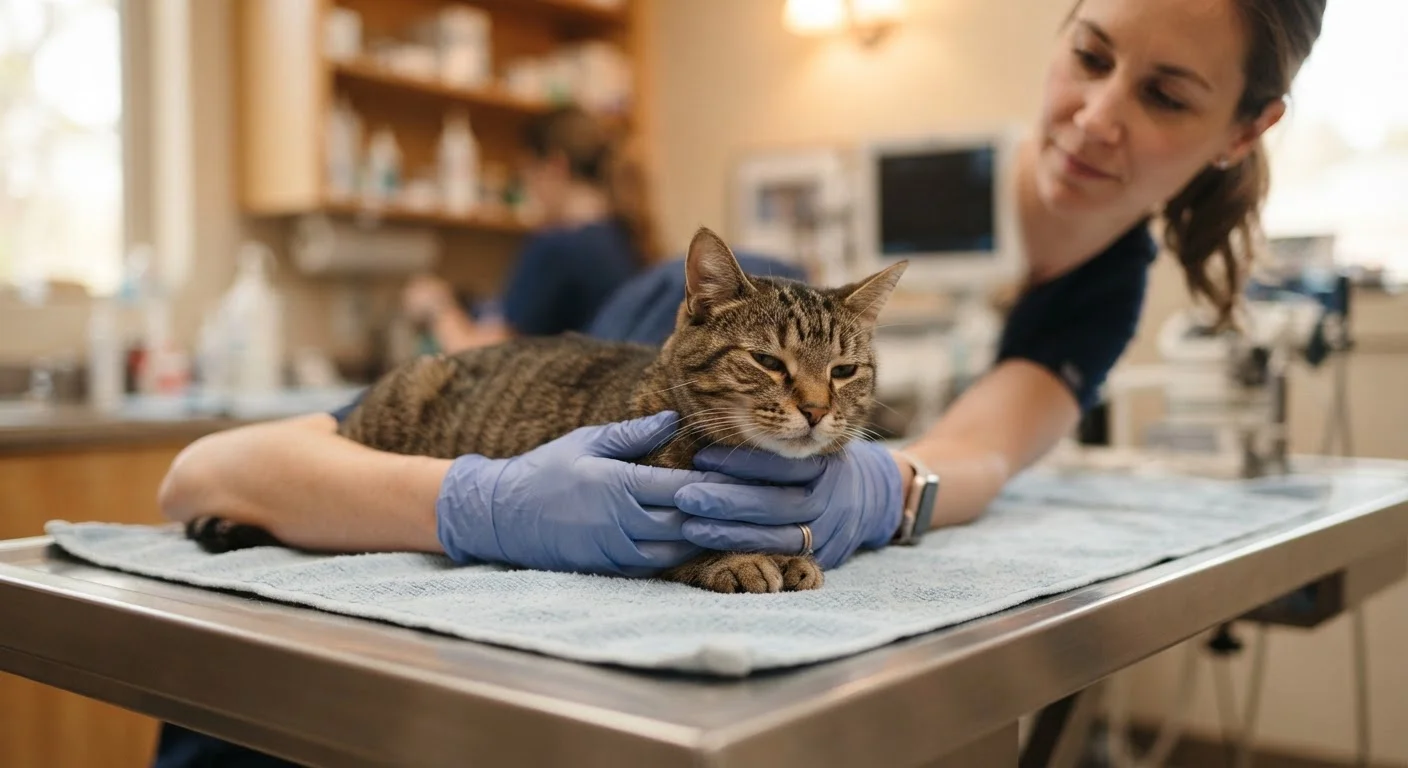
What Happens During Each Procedure
Both spaying and neutering are performed under general anesthesia in a veterinary clinic or hospital. Your cat will be assessed beforehand — typically including a physical exam and sometimes pre-anesthetic bloodwork — to confirm they are healthy enough for surgery.
Spaying (females): The surgeon makes a small incision in the abdomen and removes the ovaries and uterus (ovariohysterectomy). In some cases, only the ovaries are removed (ovariectomy). The incision is closed with sutures, which may be absorbable or require removal at a follow-up visit.
Neutering (males): One or two small incisions are made near the scrotum, and the testicles are removed. The procedure is generally quicker and involves a shorter recovery than spaying. Incisions are typically small and may not require sutures.
After surgery, cats are monitored as they recover from anesthesia before being sent home, usually the same day. For a broader look at how timing affects outcomes, see what veterinary guidance says about when to act.
Ask About Pre-Surgical Bloodwork
Even for young, healthy cats, some veterinarians recommend pre-anesthetic bloodwork to check organ function before surgery. Ask your vet whether this is advised for your cat — it can provide useful baseline health information and help flag any concerns before anesthesia is administered.
Why Veterinarians Commonly Recommend These Procedures
Veterinarians recommend spaying and neutering for a combination of health, behavioral, and population-related reasons.
Health Considerations
- Reduced cancer risk: Spaying before the first heat cycle significantly lowers the risk of mammary (breast) cancer in female cats. It also eliminates the risk of ovarian and uterine cancers and prevents pyometra — a serious, potentially life-threatening uterine infection.
- Neutering males: Eliminates the risk of testicular cancer and reduces the likelihood of certain prostate issues.
Behavioral Effects
- Intact female cats cycle into heat multiple times per year, often vocalizing loudly and attracting male cats. Spaying eliminates heat cycles entirely.
- Intact male cats are prone to urine spraying, roaming, and fighting — all of which decrease significantly after neutering.
Population Management
A single unspayed female cat and her offspring can theoretically produce a large number of kittens over several years. Animal welfare organizations and veterinarians widely support spaying and neutering as one of the most effective tools for reducing the number of homeless cats.
~90%
Reduction in mammary cancer risk when spayed early
According to veterinary literature, spaying before the first heat cycle is associated with roughly a 91% reduction in mammary tumor risk in cats.
2–3
Litters a year an intact female cat can produce
Unspayed cats can cycle into heat multiple times annually, with average litter sizes of four to six kittens, contributing significantly to feline overpopulation.
~1–2 weeks
Typical spay recovery time
Most cats recover from a spay procedure within seven to fourteen days, with male neuter recovery often shorter, according to general veterinary guidance.
Recovery: What to Expect at Home
Most cats recover from neutering within a few days; spay recovery typically takes seven to fourteen days. During this time, keeping your cat calm and limiting jumping or rough play is important to avoid straining the incision.
Watch the incision site daily for signs of infection: redness, swelling, discharge, or reopening. Your vet will give you specific aftercare instructions, which may include an e-collar (cone) to prevent licking. Pain management medication may be sent home as well.
If your cat seems lethargic beyond the first day or two, stops eating, or shows any signs of distress, contact your veterinarian promptly. For ongoing wellness, routine care habits — like regular grooming checks — can help you spot any unusual physical changes as your cat heals and beyond.
E-Collars Are There for a Reason
Many cats resist wearing an e-collar (cone), but licking or biting at a surgical incision is one of the most common causes of post-operative complications. If your cat finds a traditional cone stressful, ask your vet about alternative options such as soft collars or recovery suits — but do not skip incision protection entirely.
Weighing the Decision With Your Veterinarian
For most otherwise healthy cats, the veterinary consensus strongly supports spaying and neutering. That said, individual factors — including age, overall health, and lifestyle (indoor vs. outdoor) — can influence the ideal timing.
Research on the relationship between these procedures and long-term health outcomes continues to evolve. For a more detailed look at what current evidence shows, sorting through the claims around spay/neuter timing and health effects is a useful starting point. You can also explore what veterinary research currently says about timing and risk.
Your veterinarian is your most reliable resource for tailoring this decision to your specific cat. Open that conversation early — ideally before your kitten reaches sexual maturity — so you have time to consider all the factors together.
“Spaying and neutering remain cornerstones of preventive veterinary care for cats — they reduce the burden of reproductive disease and help address the ongoing challenge of pet overpopulation.”
— American Veterinary Medical Association, National veterinary professional organization representing U.S. veterinarians
This article is for general informational purposes only and does not constitute veterinary or medical advice. Always consult a licensed veterinarian for guidance specific to your cat's health and circumstances.