What Cat Grooming Actually Involves
Cats are famously self-grooming animals, but that doesn't mean they handle everything on their own. Routine maintenance — coat brushing, nail trimming, ear inspection, and occasional eye area cleaning — still falls to the owner. For some cats, especially long-haired breeds like Maine Coons or Persians, grooming is a significant time commitment.
The goal of a grooming routine isn't just aesthetics. Regular brushing reduces hairballs, which form when cats swallow loose fur during self-grooming. Nail trims prevent overgrowth that can curl into paw pads. Ear checks catch early signs of infection or mite activity. These aren't optional extras — they're part of responsible cat care.
If you're new to owning a cat, our guide on bringing home a cat for the first time includes helpful context on what to prepare before grooming routines even begin.
What You Can Realistically Do at Home
For most cat owners, several core grooming tasks are manageable with a bit of practice and the right equipment.
Reduces hairballs through regular coat brushing
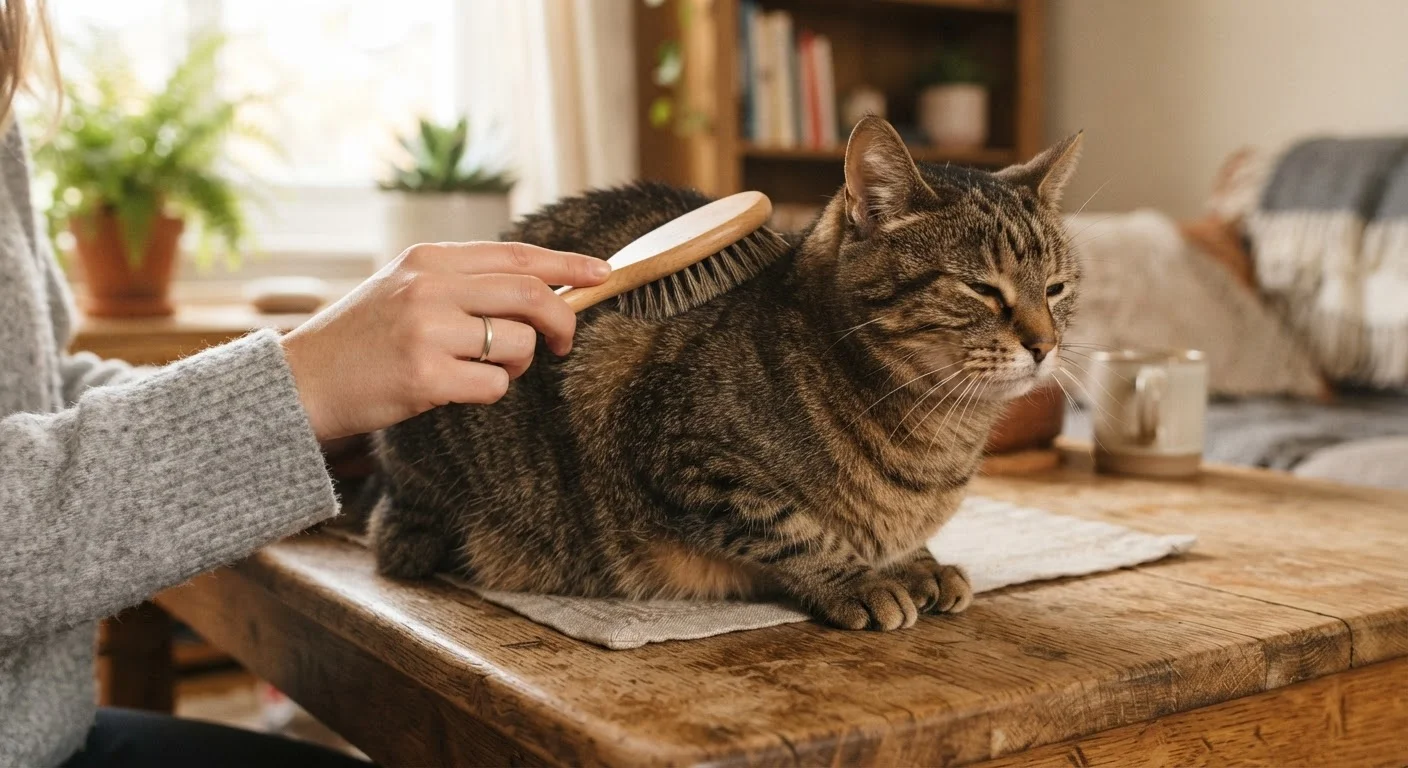
Brushing removes loose fur before your cat swallows it during self-grooming, which is the primary cause of hairballs. Consistent brushing can noticeably reduce how often hairballs occur, particularly in long-haired cats.
Prevents painful nail overgrowth at home
Overgrown nails can curl and press into a cat's paw pads, causing pain and potential infection. Regular at-home trims every two to three weeks keep nails at a safe, comfortable length.
Strengthens the bond between owner and cat
Calm, positive grooming sessions can build trust and familiarity between you and your cat. Many cats eventually come to enjoy the attention, especially when brushing is associated with gentle handling and treats.
Allows early detection of lumps, parasites, or skin issues
Running your hands through your cat's coat during grooming gives you the chance to notice anything unusual — bumps, bald patches, flea dirt, or skin irritation — before it becomes a larger problem.
Reduces grooming costs over time
Handling routine maintenance at home means fewer professional grooming appointments, which can add up in cost, especially for long-haired breeds requiring frequent sessions.
Brushing and Coat Maintenance
Short-haired cats generally need brushing once or twice a week; long-haired cats may need daily attention. A slicker brush or a fine-tooth comb works well for most coat types. Introduce brushing gradually — short sessions with treats go a long way toward making it a positive experience.
Nail Trimming
Cat nails should typically be trimmed every two to three weeks. Use scissors-style or guillotine cat nail clippers and trim only the clear tip — never the pink "quick," which contains blood vessels and nerves. Having a second person to gently hold the cat can help. If you're uncertain about technique, ask your veterinarian for a quick demonstration at your next visit.
Ear Checks
A healthy cat's inner ear should look clean and light pink, with minimal odor. You can gently inspect the outer ear using a cotton ball moistened with a vet-approved ear cleaner. Do not insert anything into the ear canal. If you notice dark discharge, a strong smell, or your cat scratching at their ears frequently, contact your vet — these can be signs of infection or ear mites.
~2–3 weeks
Recommended interval between nail trims
Most veterinary sources recommend trimming cat nails approximately every two to three weeks to prevent overgrowth and paw pad injury.
67%
Cat owners who report regular hairball issues
According to general veterinary guidance, hairballs are among the most common digestive complaints in cats, with long-haired breeds particularly affected.
What's Better Left to Professionals
Some grooming tasks carry enough risk — or require enough skill — that attempting them at home without training isn't a good idea.
Nail quicking causes pain and erodes trust
Accidentally cutting the quick — the blood vessel inside the nail — causes bleeding and pain, and can make a cat fearful of future nail trims. Proper technique and good lighting are essential to avoid this.
Mats can be dangerous to cut at home
Cat skin is thin and tends to tent up into mats, making scissor cuts a real injury risk. Attempting to remove severe mats without professional training often causes cuts that require veterinary attention.
Incorrect ear cleaning can cause harm
Inserting anything into the ear canal or using the wrong cleaning solution can damage sensitive ear tissue or push debris further inward. Ear cleaning should be limited to the outer ear unless your vet has given specific instructions.
Stress can make grooming counterproductive
Forcing a resistant cat through grooming can trigger defensive biting or scratching and erode your cat's trust over time. Cats with high anxiety may need a professional groomer experienced in low-stress handling techniques.
Full coat clips require specialized equipment and skill
Shaving or significantly trimming a cat's coat — sometimes needed for severely matted cats or medical procedures — should only be done by a trained groomer or veterinary staff to avoid skin injuries and temperature regulation issues.
Matted fur is a common issue in long-haired cats and can be painful if handled incorrectly. Attempting to cut out mats with scissors risks nicking the skin, which sits closer to the mat than it appears. Professional groomers have the tools and technique to safely remove mats or, when necessary, perform a full shave-down.
Dental hygiene is another area where professional care is often necessary. While you can introduce toothbrushing at home using pet-formulated toothpaste and a soft brush, most cats need periodic professional dental cleanings performed under anesthesia — a procedure done only by veterinarians. For a broader look at what's fact versus myth in cat health, see our article on common cat health myths.
When to Call the Vet Instead of the Groomer
Some signs during grooming warrant a veterinary visit rather than a grooming appointment. These include skin lesions, unusual lumps, severe ear odor or discharge, excessive scratching, or a coat that has changed texture or is falling out in patches. A groomer can handle presentation and maintenance — a veterinarian handles underlying health concerns. When in doubt, call your vet first.
Owners with dogs may find that the division of at-home versus professional tasks looks similar across species. Our companion piece on grooming your dog at home covers that territory in detail.
Making Home Grooming Work for Your Cat
Consistency and patience matter more than equipment. Cats tolerate grooming better when it's introduced early and repeated regularly — ideally starting in kittenhood. Adult cats can still learn to accept it, but progress may be slower and sessions should be kept short at first.
Pay attention to your cat's signals. Flattened ears, a lashing tail, or vocalizing are signs of stress, and pushing through those signals can make future sessions harder. End on a calm note, offer a treat, and try again another day.
Cats with significant anxiety, pain sensitivity, or health conditions — including older cats with arthritis — may struggle with home grooming regardless of your technique. In these cases, a professional cat groomer or veterinary grooming service is a reasonable and kind solution, not a failure. The cost is worth factoring into your regular pet care budget alongside veterinary visits and food.
This article is for general informational purposes only and does not constitute veterinary advice. Always consult a licensed veterinarian for guidance specific to your cat's health and grooming needs.