
What to Set Up Before Your Cat Arrives
Preparation done before your cat crosses the threshold makes the entire first week easier. Cats are highly sensitive to their environment, and walking into a well-organized, calm space lowers their stress from the start.
Start with a base room. Choose a quiet bedroom or spare room where your cat will spend the first few days. Stock it with everything they need: a litter box, fresh water, food bowls, a cozy bed or blanket, and a few hiding spots such as an open box or a covered crate. Avoid high-traffic or noisy areas like the kitchen or living room for this initial setup.
Key supplies to have ready before arrival:
- A sturdy, escape-proof carrier for transport
- Two litter boxes with unscented clumping litter
- Food and water bowls (ceramic or stainless steel tend to be easier to clean)
- Age-appropriate cat food matching what they were eating before
- A scratching post — cats need to scratch, and giving them an appropriate outlet protects your furniture
- A few simple toys for independent play
Base room
A single, quiet room used to confine a new cat during the first few days, giving them a manageable territory to explore before gradually introducing the rest of the home.
Crepuscular
Most active at dawn and dusk. Cats are naturally crepuscular, which explains why many are energetic early in the morning or late in the evening.
Slow blink
A relaxed, half-closing of the eyes that cats use as a signal of trust and comfort toward a person or other animal they feel safe around.
Litter box aversion
When a cat avoids or refuses to use the litter box, often due to it being dirty, poorly located, or the wrong type of litter. It is a common issue that is usually preventable with good litter hygiene.
Wellness exam
A routine veterinary check-up where a vet assesses a cat's overall health, reviews vaccination status, screens for parasites, and answers owner questions — even when the cat appears healthy.
If you have other pets at home, keep them separated initially. Introducing animals too quickly is one of the most common first-time mistakes. For a deeper look at multi-cat dynamics, see what owners often get wrong when introducing a second cat.
The First 24 Hours: What to Expect
The ride home is stressful for most cats. Keep the carrier covered with a light blanket to reduce visual stimulation, and resist the urge to open the carrier in the car — even briefly.
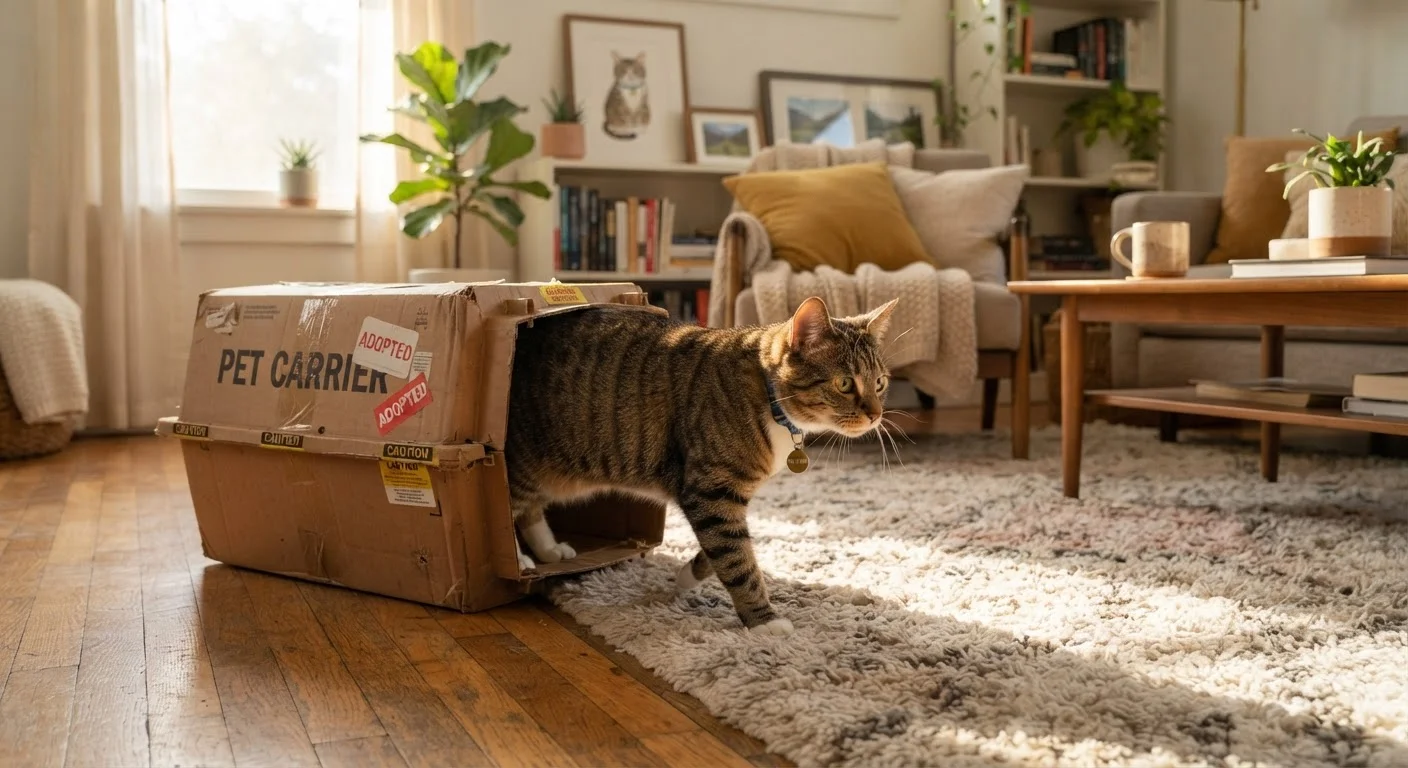
Once home, place the carrier inside the base room, open the door, and step back. Let your cat come out on their own schedule. Some cats emerge within minutes; others stay inside for an hour or more. Neither is unusual.
Let Your Cat Lead the Pace
Resist the urge to pick up or hold your cat during the first day, even if they seem curious. Allowing your cat to approach you on their own terms builds trust far more effectively than forced interaction. Sit on the floor at their level — it's less intimidating than looming from above.
Expect your cat to spend much of the first day hiding. This is normal adaptive behavior, not rejection. Sit quietly in the room, speak in a low voice, and avoid hovering. Short, calm visits throughout the day are more effective than prolonged attempts at interaction.
Watch for eating, drinking, and litter box use — these are the clearest early signs that your cat is managing the stress. A cat that eats and eliminates normally within the first day is typically adjusting well.
Reading Your Cat's Body Language
Cats communicate primarily through posture, tail position, and ear orientation rather than vocalizations. Learning a few basic signals helps you know when to engage and when to give space.
- Relaxed and approachable
- Slow blinking, a loosely curled tail, and ears pointed forward signal comfort. A slow blink directed at you is often described as a 'cat kiss' — a sign of trust.
- Anxious or overstimulated
- Flattened ears, a low-carried or tucked tail, dilated pupils, and a crouched posture mean your cat needs more space. Stop interactions and allow them to retreat.
- Playful
- A raised, slightly curved tail, wide eyes, and quick, bouncy movements indicate your cat is ready to engage. This is the right time to introduce a wand toy or a crinkle ball.
Understanding these cues also helps during grooming and handling. Our guide to grooming a cat at home covers how body language fits into safe handling during brushing and nail trims.
Feeding, Litter, and Daily Routines
Consistency is one of the most important things you can give a new cat. Predictable feeding times, a stable litter box location, and a calm household routine all help cats settle faster.
Feeding: Feed your cat at the same times each day — most adult cats do well with two meals. Use the food they were eating before adoption for at least the first week. If you plan to transition to a different food, do so gradually by mixing increasing amounts of the new food with the old over seven to ten days. Sudden changes in diet frequently cause digestive upset.
Litter: Scoop the litter box at least once daily. A dirty box is one of the top reasons cats eliminate outside it. Keep boxes in quiet, low-traffic spots, and never place them next to food or water bowls. For a single cat, two boxes in different locations gives them choice and backup.
Watch for Hidden Household Hazards
Several common houseplants — including lilies, pothos, and philodendrons — are toxic to cats. Secure or remove them before your cat arrives. Also check for small objects that can be swallowed, open windows without secure screens, and unsecured cabinets containing cleaning products or medications.
Routine: Cats are crepuscular by nature — most active around dawn and dusk. Expecting your cat to match a human sleep schedule may lead to early morning activity. Enrichment before bed, such as a short play session, can help burn energy and encourage calmer overnight behavior.
Your Cat's First Vet Visit
A wellness exam in the first week is one of the highest-value steps new owners can take. Even if your cat came from a reputable shelter with health records, a veterinarian can catch issues that aren't immediately visible — intestinal parasites, early dental disease, ear mites, or signs of an upper respiratory infection picked up during transport.
Bring any paperwork provided by the shelter or rescue: vaccination records, spay/neuter certificates, and any treatment history. This saves time and avoids duplicate vaccinations.
At the appointment, ask about:
- Vaccine schedule — what's been given and what's due next
- Parasite prevention (fleas, ticks, and intestinal worms)
- Microchipping if not already done
- Spay or neuter timing if your cat is a kitten
- Diet and nutrition for your cat's age and health status
For kitten owners, the new kitten wellness checklist covers the full first-year health milestone schedule in detail. If you are also considering other small companion animals, the small pet readiness checklist offers comparable preparation guidance.
This article is for general informational purposes only and is not a substitute for professional veterinary advice. Always consult a licensed veterinarian for guidance specific to your cat's health and care needs.